
Chiropractic first visit
$49
- Consultation
- Full exam and movement screen
- First chiropractic treatment
Updated October 11, 2026
A spinal disc that has bulged or herniated beyond its normal boundary, often pressing on a nerve root and causing back, neck, or radiating limb pain.

Quick answer
A spinal disc that has bulged or herniated beyond its normal boundary, often pressing on a nerve root and causing back, neck, or radiating limb pain. New patients start with the $49 special: consultation, exam and first treatment in Oceanside or Carlsbad.
New patient offer
$49
First visit
About 45 to 60 minutes
Offices
Oceanside + Carlsbad (Bressi Ranch)
Insurance
PI and MedPay accepted. Most health plans not accepted.
Disc injury
A bulging or herniated disc is one of the most over-diagnosed and over-feared findings on MRI. Many adults have disc bulges with zero pain — what matters is whether the disc is irritating a nerve.
We treat symptomatic disc cases with non-surgical chiropractic care and progressive rehab. Most patients avoid surgery entirely.
Is this you?
New patient special
Pick your first visit at our Oceanside or Carlsbad office. Same-day appointments most weekdays.
Chiropractic first visit
$49
Shockwave first visit
$75
New patients only. Same-day first treatment when appropriate. Personal injury and auto accident claims are billed on lien instead. Available at both offices. See details
Causes
Discs herniate from a combination of long-term wear and a specific triggering event — a heavy lift, a twist, or simply bending over to pick something up. The trigger gets the credit; the years of stress did the work.
Lumbar (lower back) discs are by far the most commonly herniated, followed by cervical (neck) discs. Thoracic disc herniations are rare.
Risk factors
Diagnosis
Diagnosis combines symptom pattern, exam findings, and — when needed — MRI. Important: an MRI without a matching exam is not a diagnosis. We treat the patient, not the picture.
| Nerve-involved disc cases | Mechanical disc pain without radiation | |
|---|---|---|
| Typical symptoms | Pain radiating into the leg or arm, numbness, tingling or weakness | Back or neck pain that stays local |
| First phase of care | Gentle adjustments and nerve-calming rehab exercise | Progressive rehab first |
| MRI | Referral for severe, progressive or surgical-candidate cases | Referral for severe, progressive or surgical-candidate cases |
Your first visit
We review your history and goals before any hands-on work.
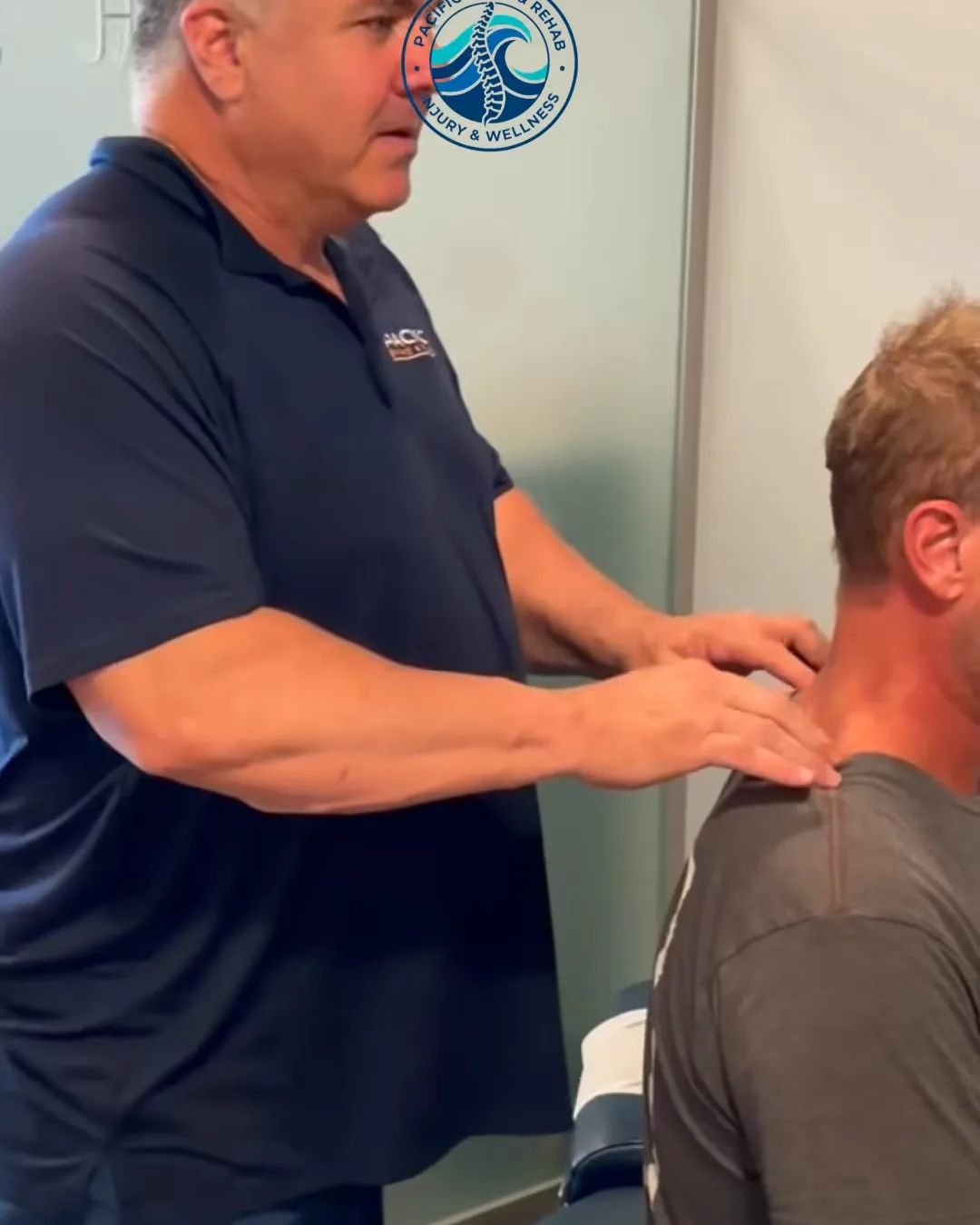
Posture, range of motion, joint mechanics and orthopedic or neurological tests.
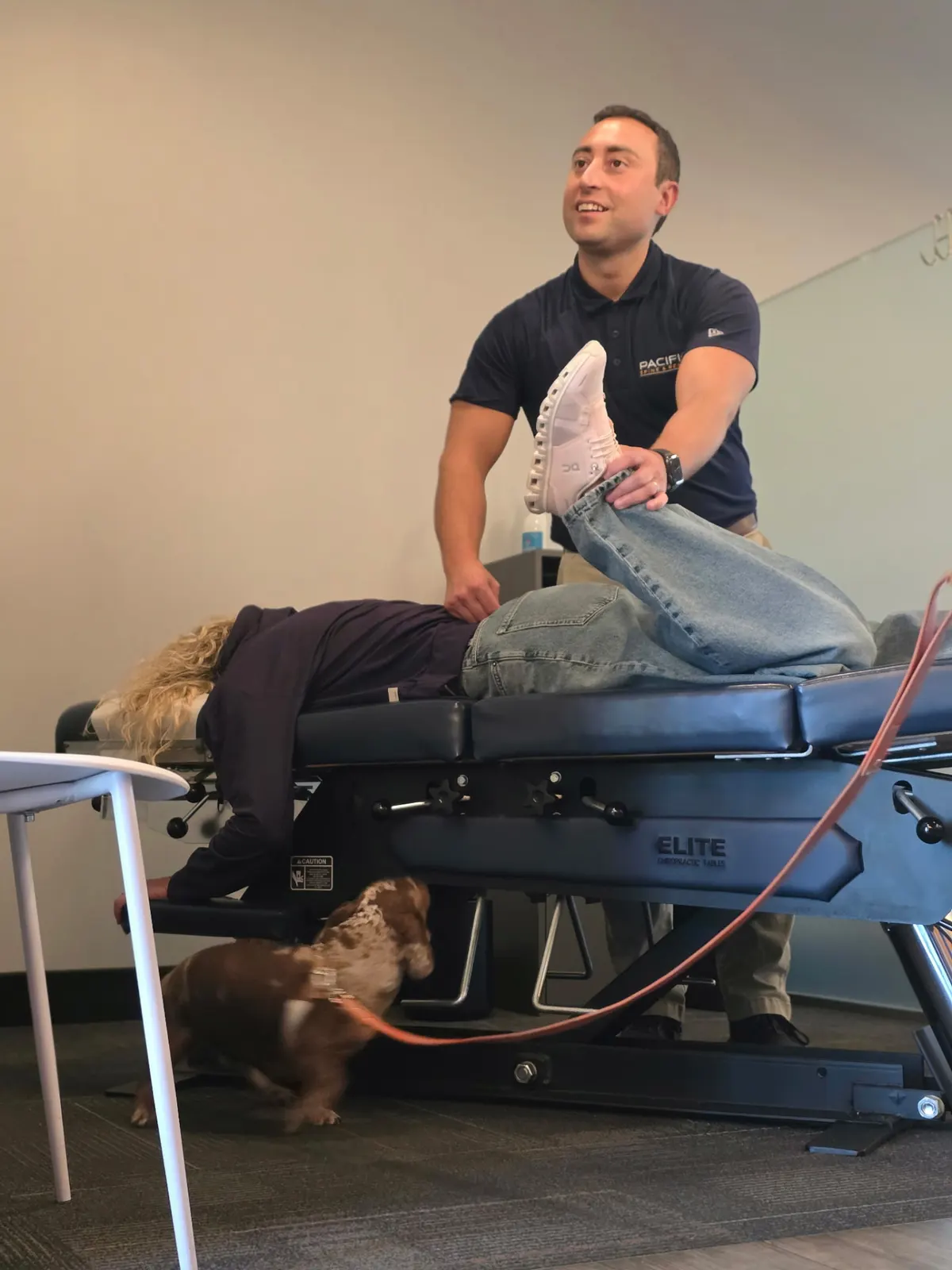
When the exam clears you, your first treatment happens the same visit.
Before you arrive
When to get seen
See a provider promptly if you have radiating leg or arm pain, numbness, or weakness. Early conservative care prevents many cases from progressing to surgery.
Seek urgent evaluation if you have any of these:
Treatment
Non-surgical care resolves the vast majority of disc cases. Surgery is reserved for true red flags or failed conservative care.
Prevention
Tips
Your doctors
Oceanside
Carlsbad (Bressi Ranch)
FAQ
Yes — the majority do. Disc material can shrink and the body can adapt with the right combination of chiropractic care, rehab, and time.
Most protocols run 12–24 visits over 6–8 weeks. We assess progress every two weeks and adjust.
No. MRI shows structure but not pain. We use it to confirm what the exam suggests, not to replace clinical reasoning.
Often yes — with specific modifications. We give you a clear do/avoid list based on your case.
Common symptoms include: sharp, deep back or neck pain; pain that radiates into the leg or arm; numbness or tingling in the limb; weakness in the foot, hand, or grip; pain worse with sitting or coughing; reduced range of motion, and muscle spasm protecting the area.
Seek urgent evaluation if you have: loss of bladder or bowel control; saddle-region numbness; progressive limb weakness; sudden inability to walk on heels or toes, and severe pain unrelieved by any position.
These habits help: hinge from the hips when lifting; keep the load close to your body; strengthen deep core and glutes consistently; stand and walk every 30 minutes; don't sit slouched — use a lumbar roll, and stop smoking — it accelerates disc degeneration.
Ask the office to check your specific MedPay or personal injury claim. Pacific Spine & Rehab does not participate with most health plans.
Keep reading
Disc injury
New-patient visit includes exam, diagnosis, and a written treatment plan — same-day appointments most weekdays at our Oceanside and Carlsbad offices.