
Chiropractic first visit
$49
- Consultation
- Full exam and movement screen
- First chiropractic treatment
Updated October 11, 2026
Rehab and therapy is the structured, in-clinic program that rebuilds the strength, stability, and motor control needed to keep an injury from coming back after the initial pain is gone.
Quick answer
Rehab and therapy is the structured, in-clinic program that rebuilds the strength, stability, and motor control needed to keep an injury from coming back after the initial pain is gone. New patients start with the $49 special: consultation, exam and first treatment in Oceanside or Carlsbad.
New patient offer
$49
First visit
About 45 to 60 minutes
Offices
Oceanside + Carlsbad (Bressi Ranch)
Insurance
PI and MedPay accepted. Most health plans not accepted.
Active rehab
Treating pain without rebuilding the tissue underneath it is how patients end up in a cycle of feeling better, then re-injuring, then needing another round of care. Our rehab and therapy program closes that loop.
We design rehab around the specific deficit your exam revealed. Your plan progresses in stages, in the clinic, with a clinician next to you, until you can load the injured area at full demand without symptoms.
Most patients also receive supporting modalities — hydrotherapy massage, manual mobilization, and shockwave therapy — to manage pain and accelerate tissue recovery while the active work is going on.
Key fact
Rehab is a graded loading program designed to restore three specific things: range of motion, the strength and endurance to hold that range under load, and the motor control to use it in real-world tasks.
Therapy refers to the modalities we use alongside active rehab — hydrotherapy massage, manual mobilization for pain modulation and muscle re-education, shockwave therapy for deeper soft-tissue work, and instrument-assisted soft-tissue release. These tools accelerate the active work, they do not replace it.
Every rehab patient at Pacific Spine & Rehab is fully supervised, and adjusted in real time based on how you are loading.
Who it helps
Not appropriate when…
New patient special
Pick your first visit at our Oceanside or Carlsbad office. Same-day appointments most weekdays.
Chiropractic first visit
$49
Shockwave first visit
$75
New patients only. Same-day first treatment when appropriate. Personal injury and auto accident claims are billed on lien instead. Available at both offices. See details
How it works
Pain creates protective patterns. The brain stops trusting the injured tissue, surrounding muscles shut down or overfire, and the body builds workarounds. Even after the original injury heals, these compensations remain — and they are usually what brings the pain back.
Rehab works by progressively reintroducing load to the area in a way the nervous system accepts. Done correctly, this rebuilds tissue capacity, restores normal motor patterns, and gives the brain a reason to stop guarding.
Your first visit
We review how you tolerated the previous session and any flares since, then adjust the day's plan accordingly.
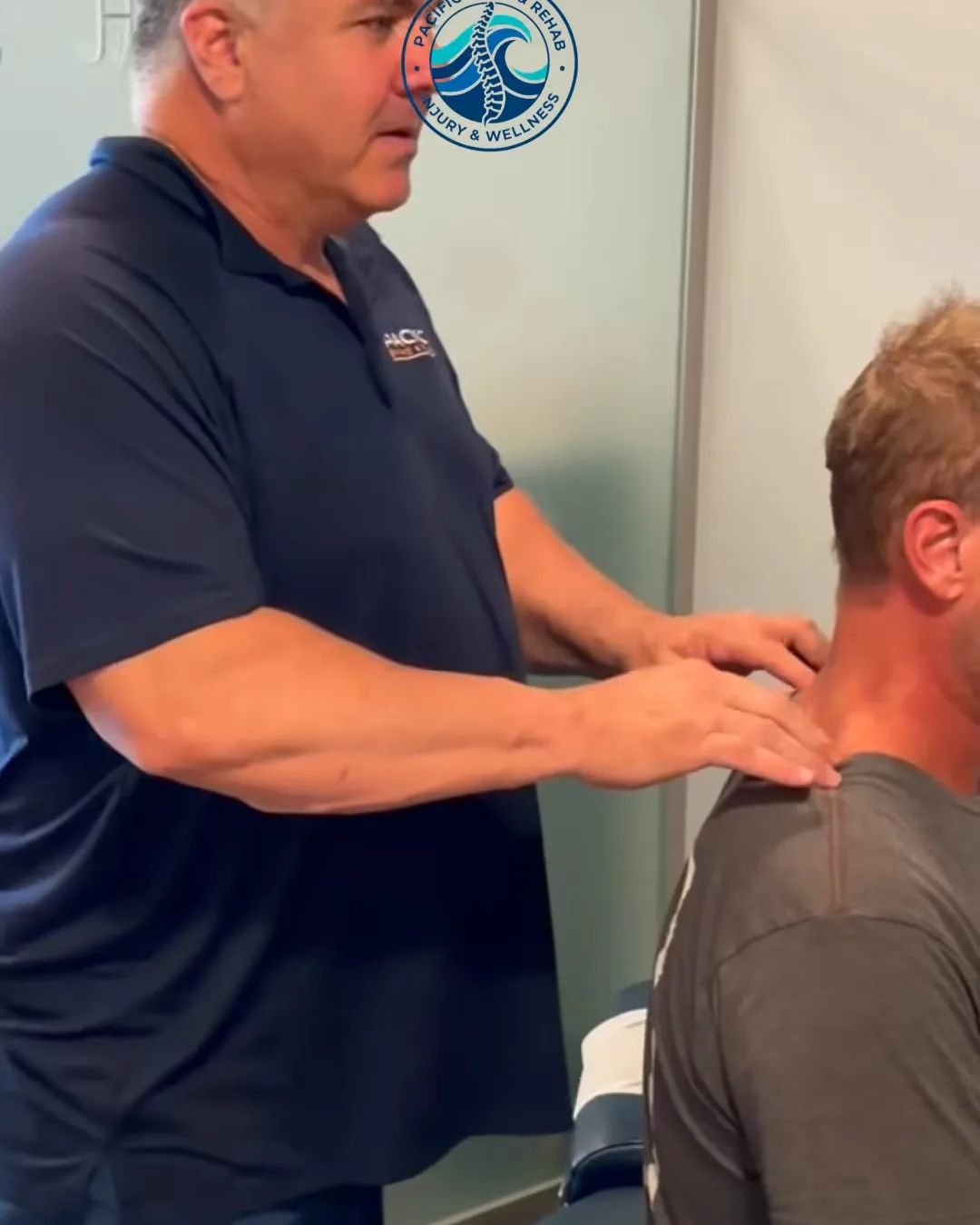
Manual release, mobility exercise and modalities like hydrotherapy massage to prime the tissue.
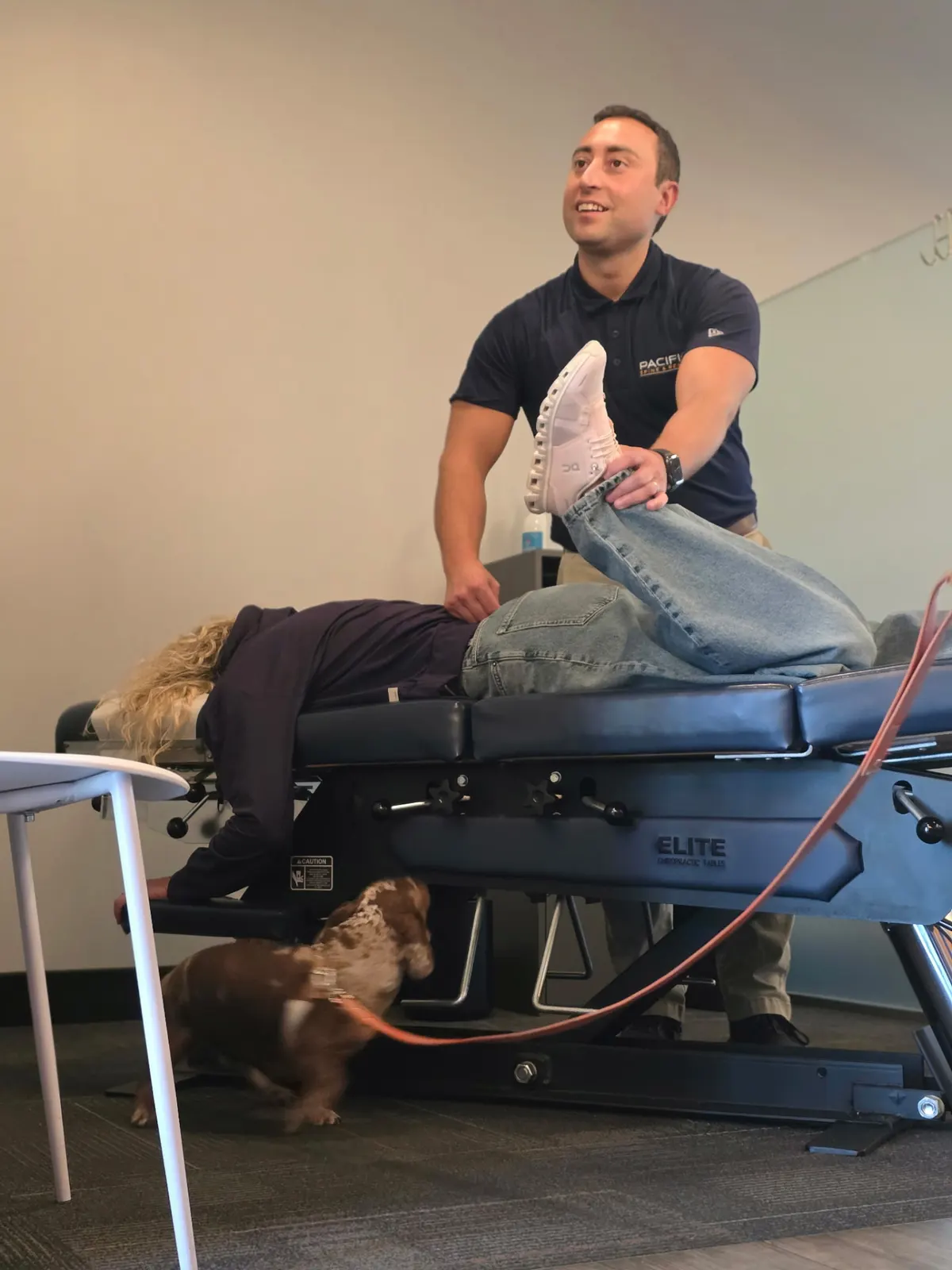
Exercises specific to your stage, supervised in real time with feedback on form, tempo, and load.
Before you arrive
What a rehab visit looks like
Rehab visits are designed according to your specific condition or injury and your program updates as you progress, so you keep moving forward.
Benefits
Recovery
Most patients run a 6–12 week active rehab program with 1–2 supervised visits per week. Lighter cases may resolve in four weeks; post-surgical patients often run 12–16 weeks.
Progress is measured objectively at the start, midpoint, and end — range-of-motion, strength tests, single-leg balance, and pain-free load — so you can see exactly how far you have come.
Once you graduate, we send you home with a written maintenance program. Most patients keep their gains for years if they hold a two-day-a-week minimum.
Conditions
Rehab is part of nearly every treatment plan we build. The following conditions almost always require it to fully resolve.
Your doctors
Oceanside
Carlsbad (Bressi Ranch)
FAQ
There is significant overlap. Both rebuild movement after injury. At Pacific Spine & Rehab our rehab is delivered by chiropractic and rehab clinicians and is integrated with adjustments and soft-tissue work in the same visit — you do not bounce between offices.
You should feel work, not pain. Some exercises produce mild muscle soreness afterward, similar to a workout. Sharp or radiating pain during a rep means we modify the exercise — we do not push through real symptoms.
Most patients run one or two supervised visits per week, with two to four short home sessions in between. We taper visit frequency as you progress.
Electric muscle stimulation (EMS) sends low-level electrical pulses through adhesive pads on the skin to either modulate pain or activate weak muscles. It is widely used in PT and chiropractic clinics and is safe for most adults — we screen for the few contraindications like pacemakers or pregnancy over certain areas.
No. Rehab meets you where you are. We have programs for people who cannot stand for 60 seconds without pain and programs for athletes returning from ACL surgery — and everything between.
Sometimes. For many disc, rotator cuff, and meniscus issues, structured conservative care produces outcomes comparable to surgery at 1–2 years out. We will be honest with you when surgery is the better path.
Yes — we routinely take over rehab after spinal, shoulder, hip, and knee surgery once your surgeon clears you for active care.
It is usually a good fit for: patients who have completed initial pain-relief care and need to rebuild capacity; people with a recurring injury that keeps coming back after treatment ends; post-surgical patients cleared for active rehab by their surgeon; athletes returning from injury who need to bridge the gap to full play; office workers with chronic neck, upper back, or hip stiffness from prolonged sitting, and patients with poor balance, falls history, or pre-frail older adults.
It is not appropriate when: acute, severely inflamed injuries within the first 24–48 hours — passive care first; conditions requiring surgical clearance that has not been obtained, and unstable cardiac or respiratory conditions without physician sign-off.
At our offices we use it for: Lower Back Pain; Neck Pain; Sciatica; Whiplash; Sports Injuries; Shoulder Pain; Knee Pain; Tennis & Golfer's Elbow, and Herniated / Bulging Disc.
Yes. Bring recent imaging on a disc, a portal link, or your phone. A photo of the report is also useful.
Ask the office to check your specific MedPay or personal injury claim. Pacific Spine & Rehab does not participate with most health plans.
Keep reading
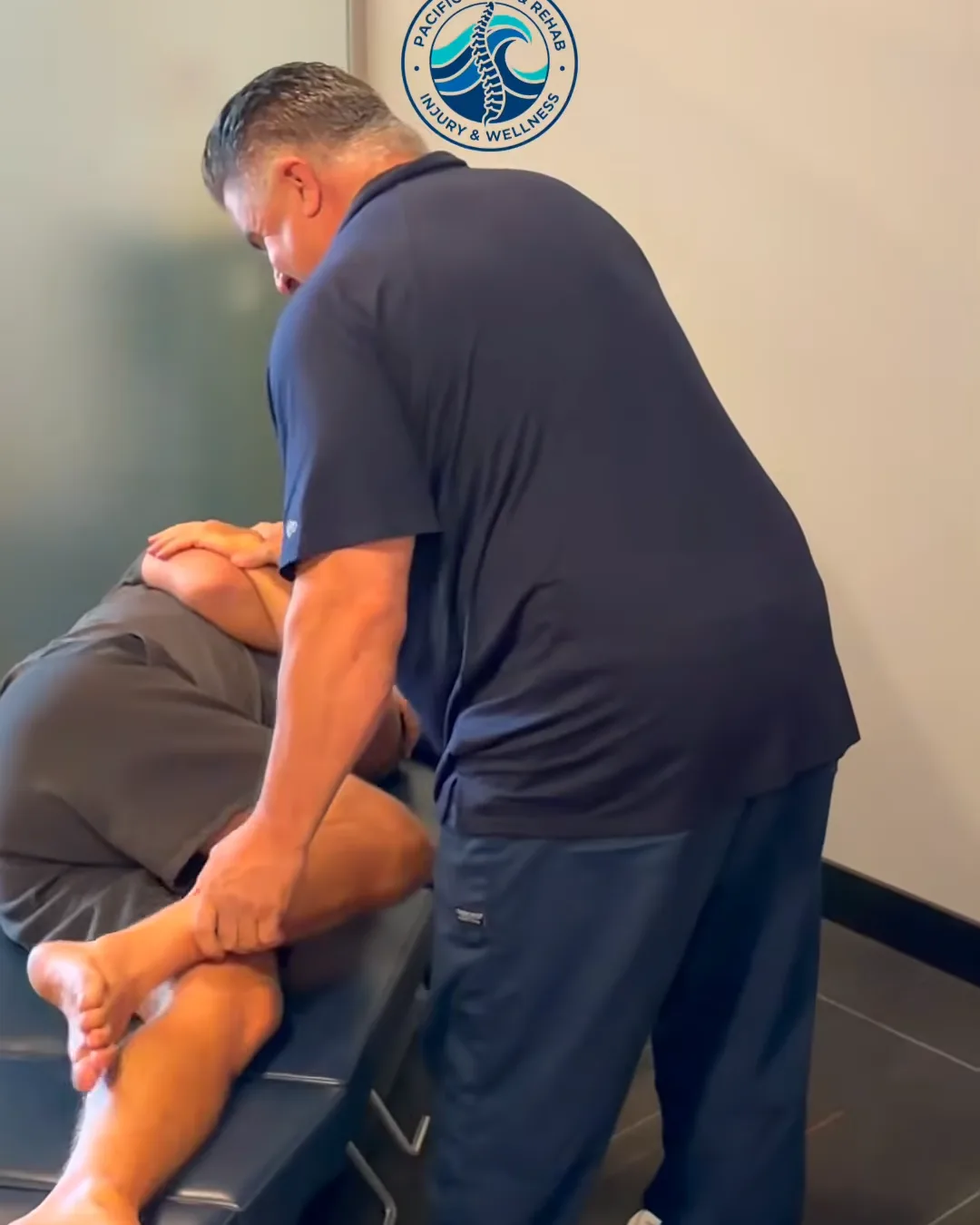
Active rehab
New-patient visit includes exam, consult, and a clear plan — no surprise pricing, same-day appointments most weekdays.