
Chiropractic first visit
$49
- Consultation
- Full exam and movement screen
- First chiropractic treatment
Updated October 11, 2026
Chiropractic care is the hands-on assessment and adjustment of spinal and peripheral joints to restore motion, reduce nerve irritation, and let the body move and heal the way it was built to.
Quick answer
Chiropractic care is the hands-on assessment and adjustment of spinal and peripheral joints to restore motion, reduce nerve irritation, and let the body move and heal the way it was built to. New patients start with the $49 special: consultation, exam and first treatment in Oceanside or Carlsbad.
New patient offer
$49
First visit
About 45 to 60 minutes
Offices
Oceanside + Carlsbad (Bressi Ranch)
Insurance
PI and MedPay accepted. Most health plans not accepted.
Hands-on care
At Pacific Spine & Rehab, chiropractic care is the first step in a coordinated plan — not a stand-alone fix. Every adjustment is preceded by a real exam and followed by the rehab work that keeps the correction in place.
Our chiropractors work from the principle that pain is usually a downstream symptom of a movement problem somewhere upstream. A locked-up mid back can show up as neck pain. A stiff ankle can show up as knee pain. We look for the source, treat it directly, and explain what we found in plain English.
If you have been told to live with chronic pain, or your last adjustment never seemed to hold, this page explains exactly how we approach chiropractic differently and what you can expect at your first visit.
Key fact
Chiropractic care is a regulated healthcare profession focused on diagnosing and treating disorders of the spine, joints, and surrounding soft tissue. Doctors of Chiropractic (DC) complete a four-year doctoral program after their undergraduate degree and are licensed by the California Board of Chiropractic Examiners.
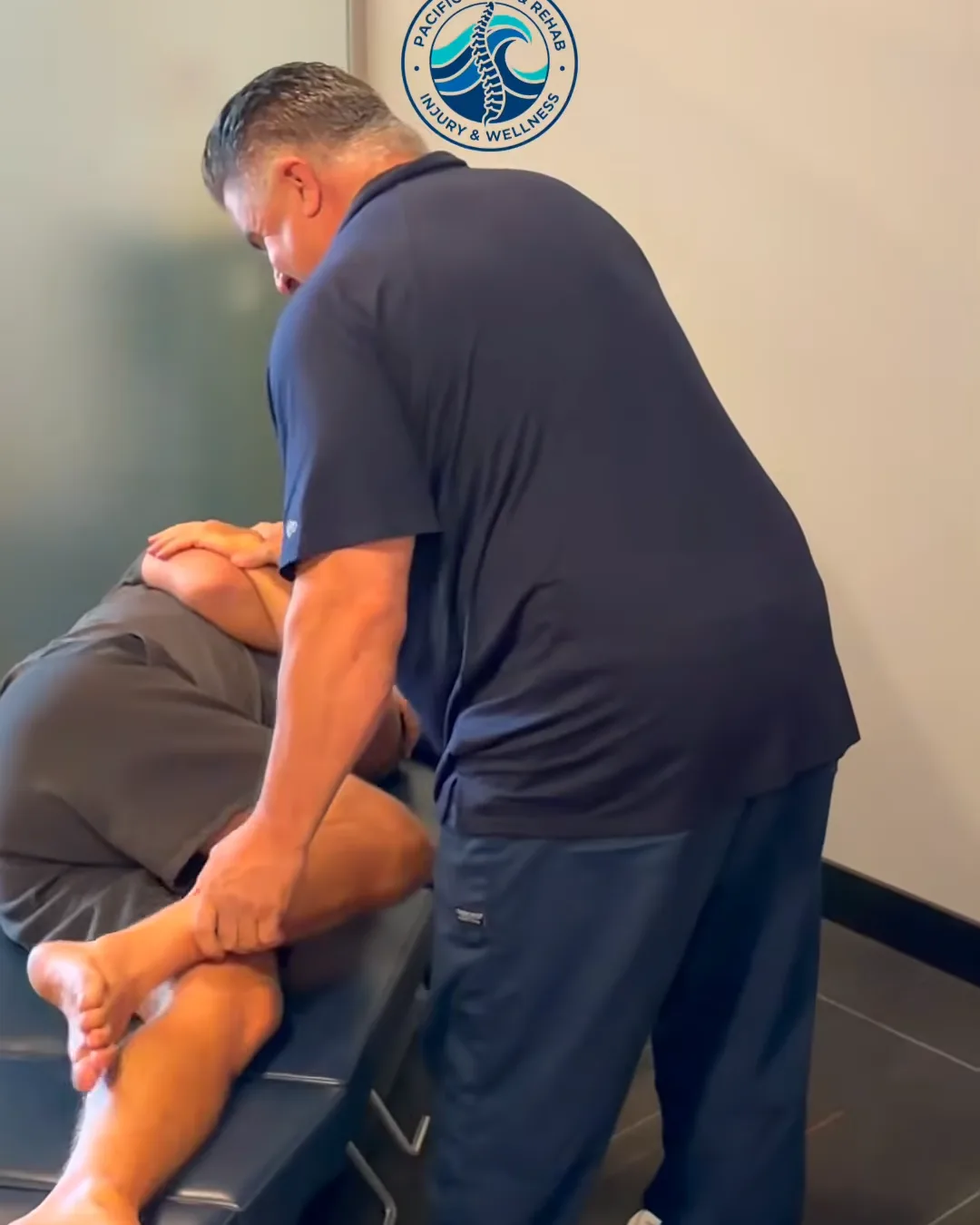
The core tool is the spinal adjustment — a controlled, high-velocity, low-amplitude (HVLA) input delivered to a specific joint to restore normal motion. When a vertebra or peripheral joint is not moving correctly, the surrounding muscles guard, the local nerves become irritated, and the body compensates in ways that show up as pain, stiffness, or weakness. An adjustment unsticks that joint so the surrounding system can reset.
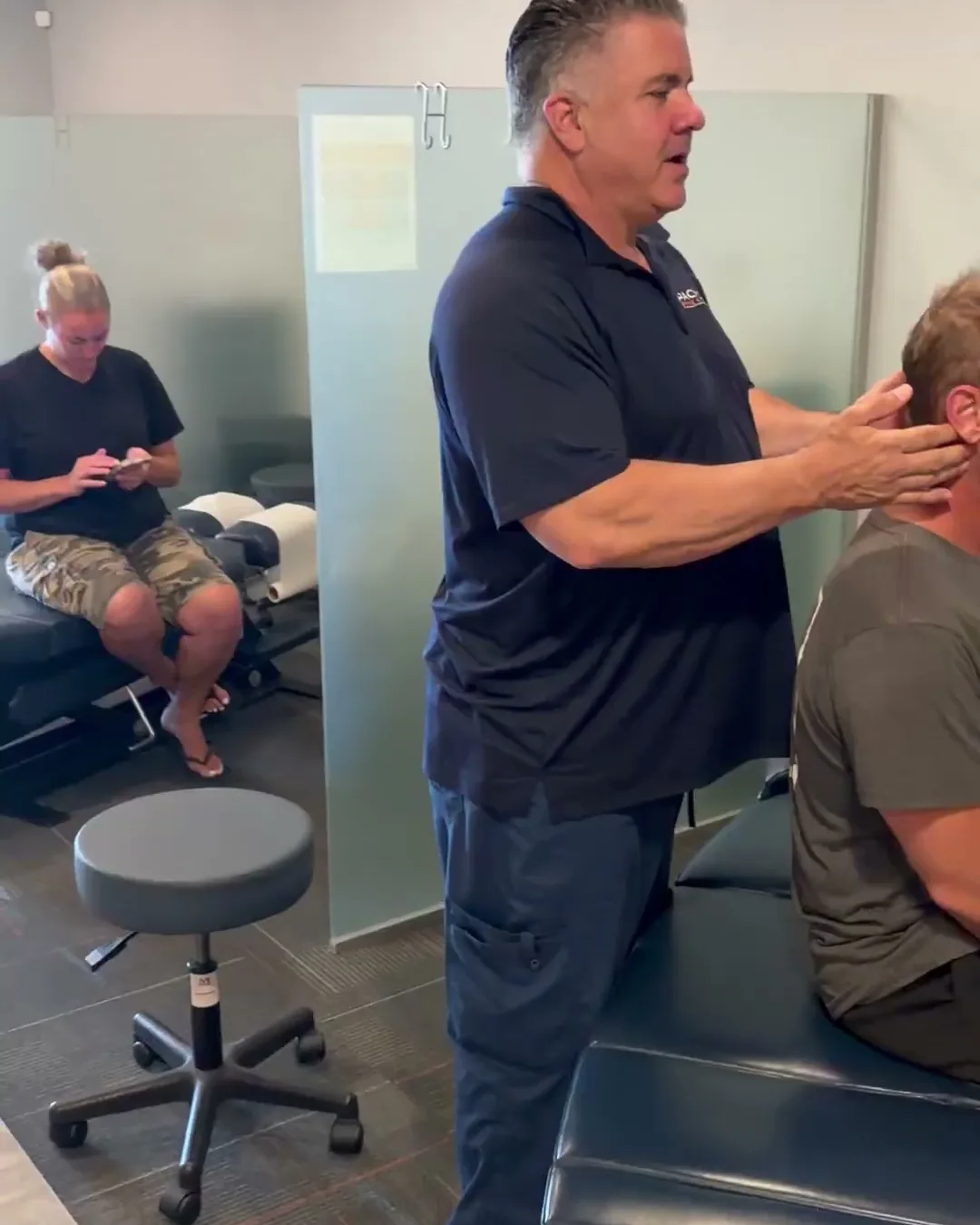
Modern chiropractic care is not the only-cracking-backs caricature. At our clinic, an adjustment is one technique inside a broader visit that often also includes soft-tissue work, mobility drills, and active rehab exercises tailored to your specific finding.
A short look at a chiropractic adjustment and how the team builds a care plan around each patient.

Who it helps
Not appropriate when…
If your exam suggests anything outside the scope of conservative care, we co-manage with local orthopedists, neurologists, and primary care physicians — we will not adjust through a red flag.
New patient special
Pick your first visit at our Oceanside or Carlsbad office. Same-day appointments most weekdays.
Chiropractic first visit
$49
Shockwave first visit
$75
New patients only. Same-day first treatment when appropriate. Personal injury and auto accident claims are billed on lien instead. Available at both offices. See details
How it works
When a joint is not moving through its full range, mechanoreceptors in the joint capsule stop firing normally, the brain perceives the area as unstable, and protective muscle tension increases. That tension is what most people feel as the ache.
An adjustment restores that lost motion in a fraction of a second. The audible pop you sometimes hear is gas releasing from synovial fluid inside the joint capsule — it is not bone cracking and it is not required for the adjustment to work. What matters is that the joint moves again, the protective tension drops, and normal sensory input returns to the nervous system.
| Chiropractor | Physical therapist | Pacific Spine & Rehab | |
|---|---|---|---|
| Main focus | Joint manipulation and diagnosis of mechanical spine conditions | Movement retraining and progressive loading | Both: adjustments to restore motion, rehab to keep it |
Your first visit
We sit down before any exam to understand your pain pattern, daily demands, medical history, and what success looks like for you — whether that is sleeping through the night, lifting your kid again, or getting back in the lineup at Pier View.
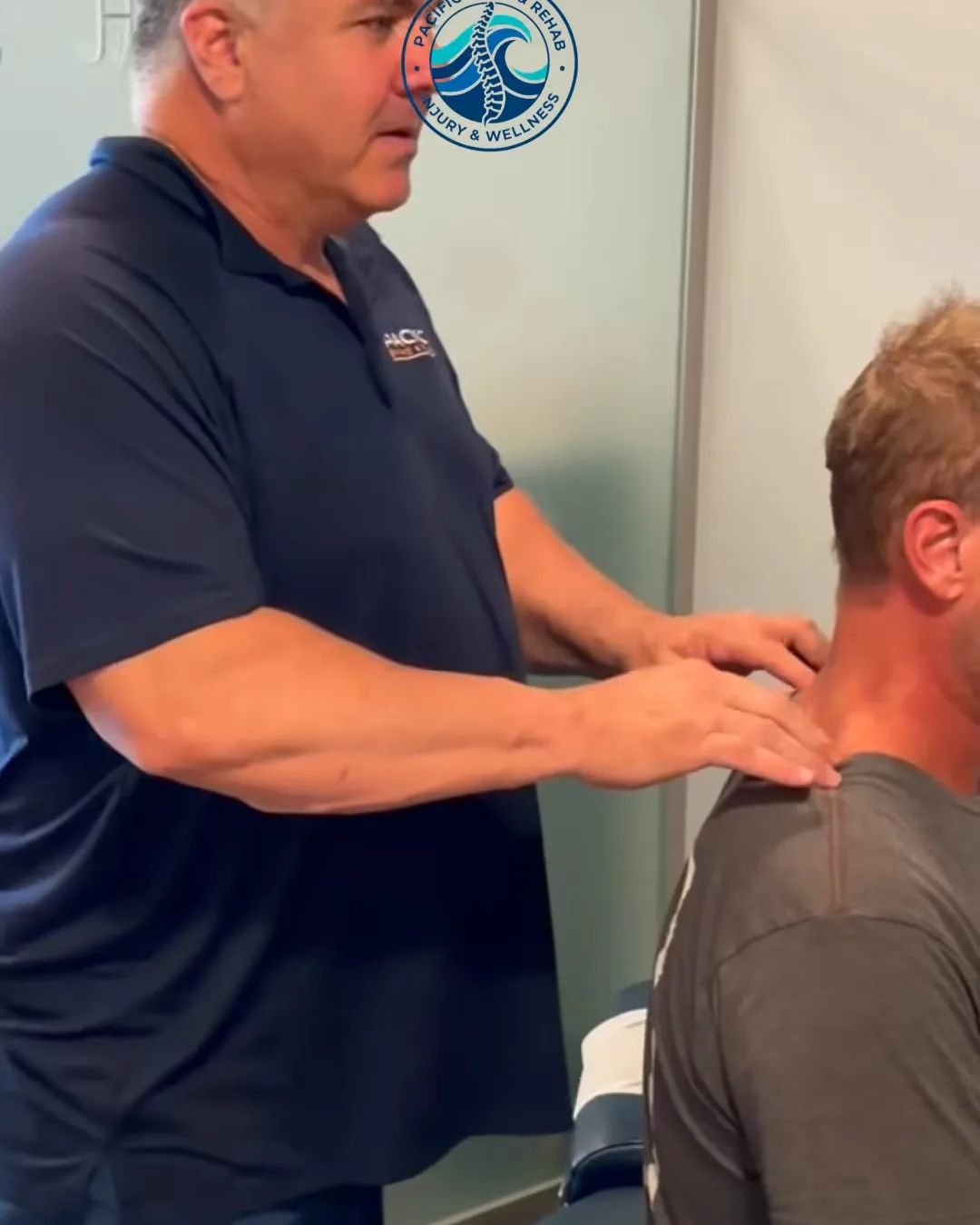
We test active and passive range of motion, run the orthopedic tests relevant to your complaint, and check reflexes and strength when nerve involvement is suspected.
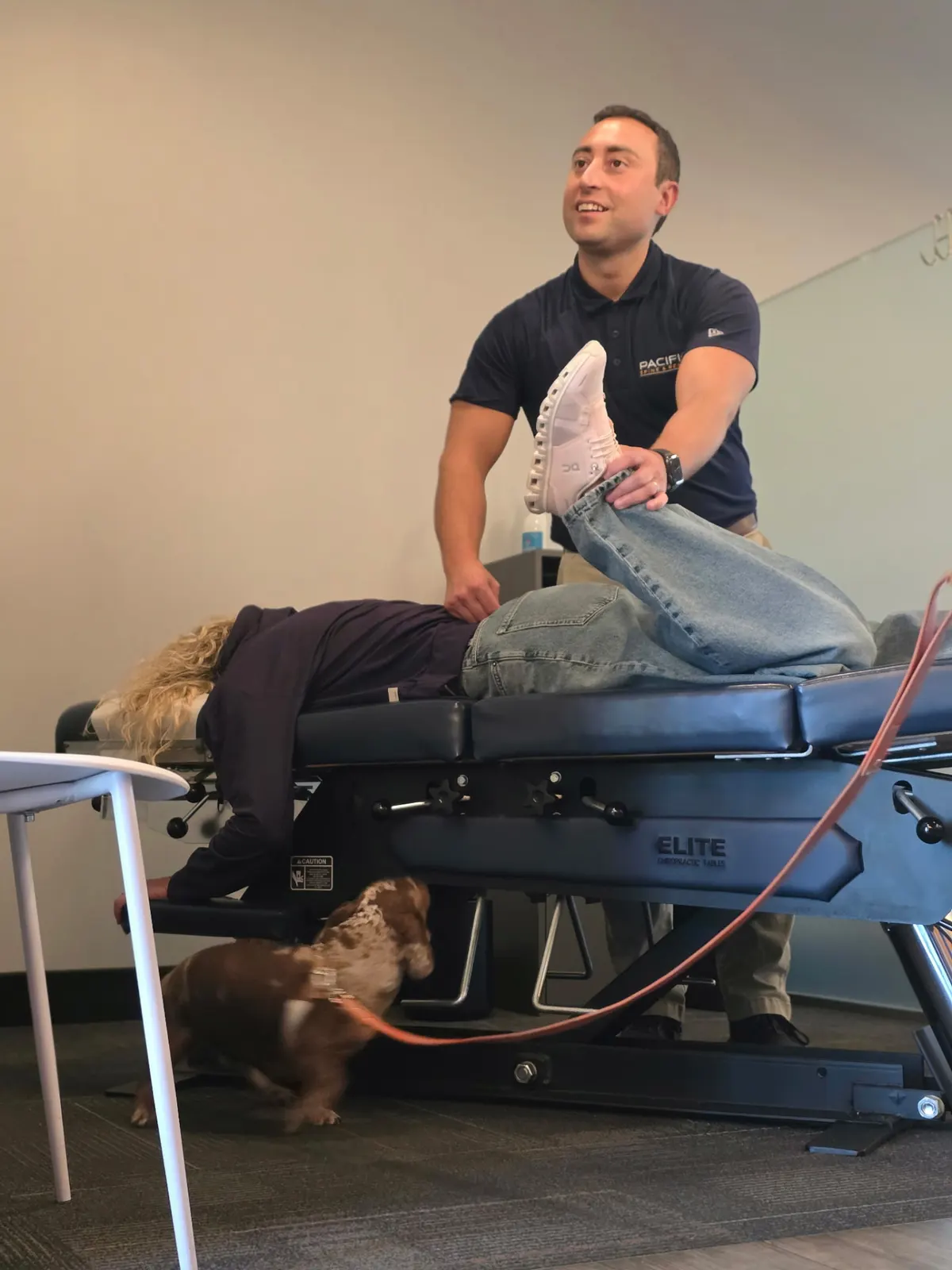
We walk you through what we found, point at the relevant anatomy, and explain the working diagnosis and treatment plan in plain English before you decide whether to proceed.
Before you arrive
What to expect at your first visit
Your first chiropractic visit takes about 45–60 minutes. You do not need a referral, and you can wear comfortable clothes — we will not ask you to change into a gown for most exams.
There is no surprise treatment. We will tell you what we found, what we recommend, and what it costs before anything happens.
Benefits
Chiropractic care is not a cure-all, but for the right conditions the evidence is strong and the results are fast.
Recovery
Most patients with acute mechanical pain notice meaningful relief within 2–4 visits. Chronic conditions that have been building for years typically need 6–12 visits over four to eight weeks before the new pattern holds.
We re-evaluate at visit four. If you are not making clear, measurable progress by then, we either change the plan or refer you to the right specialist — we do not keep adjusting and hope something different happens.
Once you are out of pain, most patients move to a maintenance schedule of every 4–6 weeks to keep the gains. There is no obligation to continue, and we will tell you when you have graduated.
Conditions
Click any condition below to learn about its symptoms, causes, and the full range of treatment options we offer.
Your doctors
Oceanside
Carlsbad (Bressi Ranch)
FAQ
For appropriate patients, yes. Adjustments to the lumbar and thoracic spine carry a risk profile lower than most over-the-counter medications. We screen for the red flags that would make manipulation inappropriate before any treatment, and we modify technique based on your age, bone density, and condition.
No. The active care plan is finite — typically 6–12 visits — and we re-evaluate at visit four to confirm you are progressing. After you are out of pain, monthly maintenance is optional, not required.
An adjustment itself is not painful — most patients describe relief, not pain. Some people experience mild soreness for 12–24 hours afterward, similar to starting a new workout. We use lower-force instrument-assisted technique when you are very sensitive or fearful.
No referral is required in California. We only order imaging when there are specific clinical indications — pain after trauma, suspected fracture, persistent symptoms not responding to care, or neurological red flags. Most patients do not need X-rays before treatment.
Yes. We use prenatal-modified technique, supportive bolsters, and avoid prone (face-down) positioning after the first trimester. Chiropractic is a common, evidence-supported option for pregnancy-related back, hip, and pelvic pain.
Chiropractors specialize in joint manipulation and the diagnosis of mechanical spine conditions. Physical therapists focus on movement retraining and progressive loading. At Pacific Spine & Rehab we blend both — adjustments to restore motion, rehab to keep it.
We accept first-party (MedPay) and third-party PI claims directly. For most other cases we offer transparent self-pay pricing including a $49 New Patient Special. Call either office to confirm coverage for your specific claim.
Yes — and the sooner the better. Soft-tissue and joint injuries from whiplash respond best when treatment starts within the first two weeks. We document all findings to the standard required by attorneys and adjusters, and we can bill the at-fault carrier directly.
It is usually a good fit for: mechanical low-back or neck pain that has not improved in 1–2 weeks; recent whiplash or motor-vehicle accident injuries; disc-related sciatica, radiating arm pain, or numbness and tingling; tension and cervicogenic headaches from desk posture; athletes with movement restrictions limiting performance; pregnancy-related back, hip, and pelvic pain (we use prenatal-modified technique), and post-surgical recovery once cleared by your surgeon.
It is not appropriate when: suspected fracture, infection, or tumor — we will refer for imaging first; severe progressive neurologic deficit (loss of bowel or bladder control, rapidly worsening weakness); active inflammatory arthritis flares in the cervical spine, and unstable spinal conditions or recent significant spinal surgery without clearance.
At our offices we use it for: Lower Back Pain; Neck Pain; Sciatica; Whiplash; Headaches & Migraines; Herniated / Bulging Disc; Shoulder Pain; Sports Injuries, and TMJ / Jaw Pain.
Allow about 45 to 60 minutes for the first visit. Completing intake forms beforehand leaves more time for your history and exam.
Keep reading
Hands-on care
New-patient visit includes exam, consult, and a clear plan — no surprise pricing, same-day appointments most weekdays.