
Chiropractic first visit
$49
- Consultation
- Full exam and movement screen
- First chiropractic treatment
Updated October 11, 2026
Corrective exercise is a program of targeted, individualized drills designed to fix the specific muscle imbalances, mobility limits, and motor-control errors that keep causing your pain to come back.
Quick answer
Corrective exercise is a program of targeted, individualized drills designed to fix the specific muscle imbalances, mobility limits, and motor-control errors that keep causing your pain to come back. New patients start with the $49 special: consultation, exam and first treatment in Oceanside or Carlsbad.
New patient offer
$49
First visit
About 45 to 60 minutes
Offices
Oceanside + Carlsbad (Bressi Ranch)
Insurance
PI and MedPay accepted. Most health plans not accepted.
Movement coaching
Pain is usually a story about how you move. Two people can have the exact same disc bulge or the exact same shoulder finding on MRI — one is in agony, the other is asymptomatic. The difference is almost always the movement pattern on top of the structure.
Corrective exercise is the work of identifying which patterns are driving your pain and replacing them with patterns that protect the area instead. It is precise, progressive, and built around the specific findings on your exam — never a generic protocol.
This service is for patients who have had recurring injuries, who want to prevent the next one, or who are ready to move from pain-relief care into making sure they never come back.
Key fact
Corrective exercise is a structured movement program that targets the specific deficits found in a comprehensive movement assessment. It is different from rehab in scope and from personal training in precision.
A typical assessment evaluates hip and ankle mobility, single-leg balance, core endurance, breathing pattern, scapular control, and the way you actually load common positions like a squat, hinge, or overhead reach. The findings drive the program — not the diagnosis on your chart.
The exercises themselves are usually low-load and slow. You are not lifting heavy weight. You are teaching the nervous system to recruit the right muscles in the right order before adding load. Once the pattern is grooved, we add real-world demand back in.
Who it helps
Not appropriate when…
New patient special
Pick your first visit at our Oceanside or Carlsbad office. Same-day appointments most weekdays.
Chiropractic first visit
$49
Shockwave first visit
$75
New patients only. Same-day first treatment when appropriate. Personal injury and auto accident claims are billed on lien instead. Available at both offices. See details
How it works
Most chronic and recurring musculoskeletal pain comes from one of three patterns: a joint that has lost mobility, a stabilizer that is not firing, or a global motor pattern that is overusing one structure to compensate for another. Corrective exercise addresses all three.
Once the body relearns the correct pattern and the supporting muscles have the capacity to hold it, the chronic overload disappears — and so, usually, does the pain.
Your first visit
We re-test one or two of the original deficits and warm up with breathing and mobility work specific to that day's program.
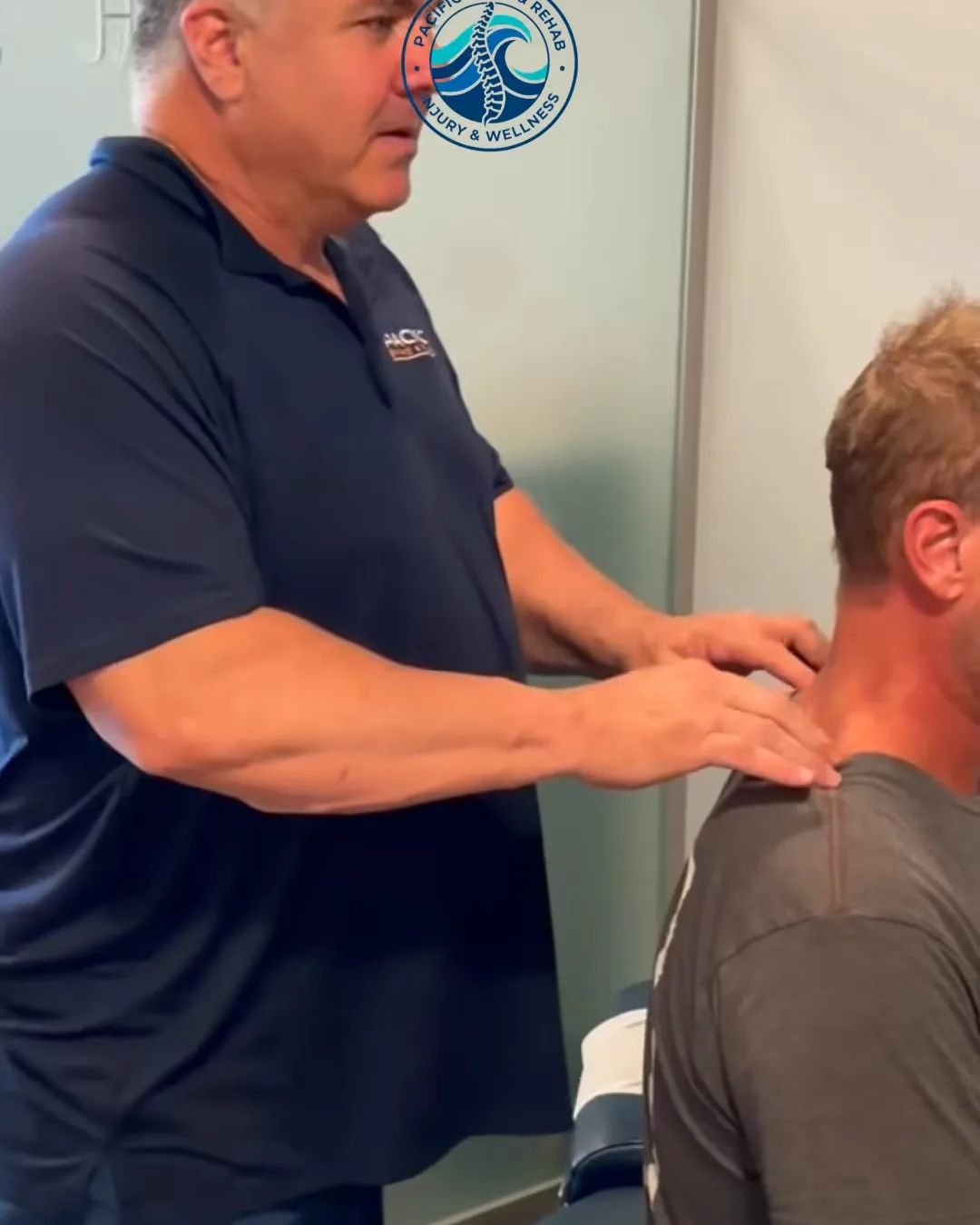
Two or three pattern-specific drills with direct cueing. We use video feedback when it helps you see what we are seeing.
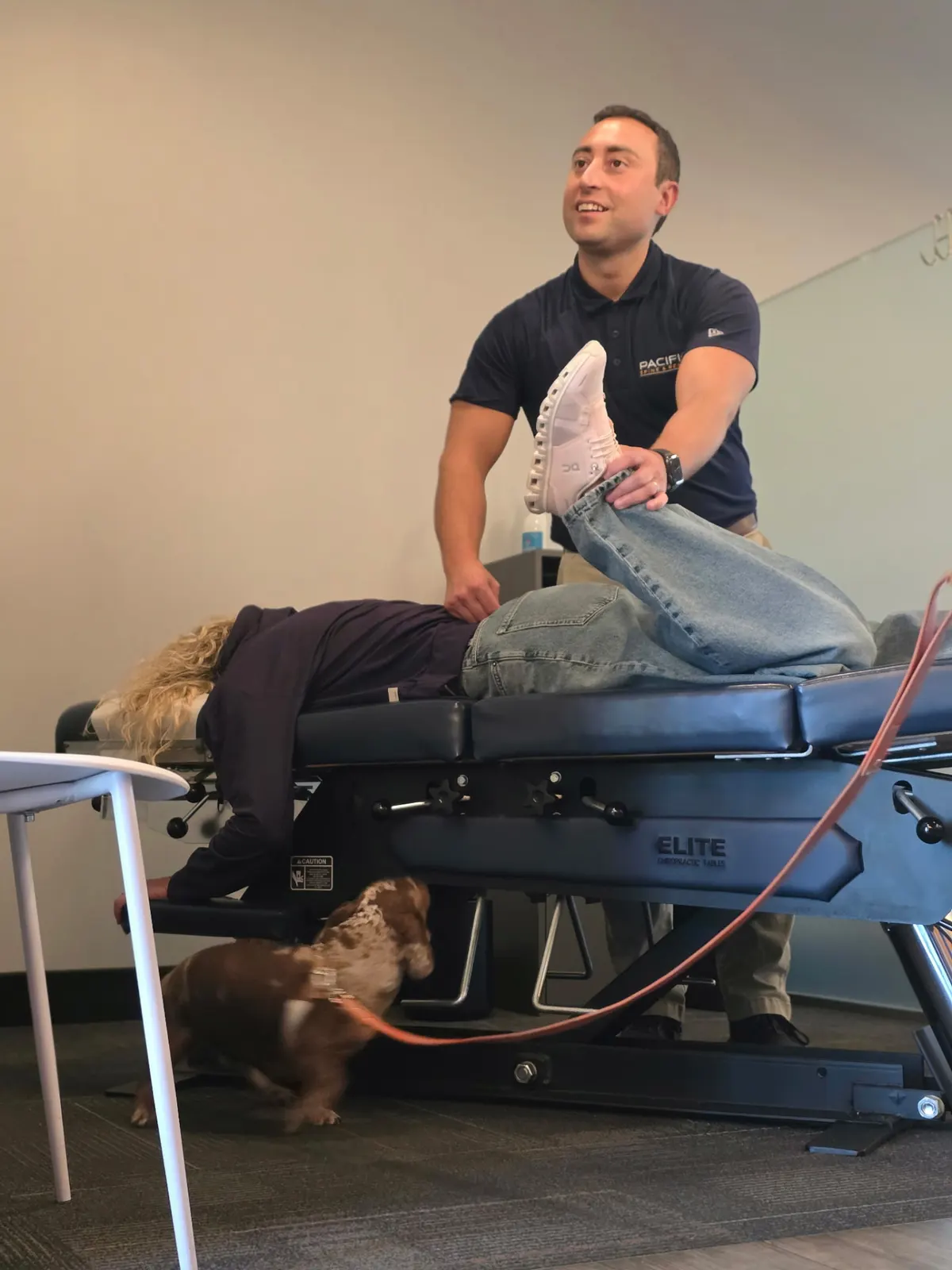
We layer the corrected pattern into a strength or carry-style movement so your nervous system uses the pattern under real demand.
Before you arrive
What a corrective session looks like
Sessions are one-on-one with a clinician can feel like a precise, slow workout. You will not leave dripping with sweat. You will leave with a clearer sense of how your body is supposed to move.
Benefits
Recovery
Most corrective programs run six to twelve weeks, with one to two sessions per week and a short home program in between. Real movement change takes 6–8 weeks of consistent practice — there is no shortcut.
You will feel some change inside the first three weeks. The bigger payoff arrives at the 8–12 week mark, when the new pattern becomes automatic and the body stops overloading the painful tissue.
Graduates typically move to a monthly maintenance session or roll their corrective work into a long-term strength program — we can also coordinate with your personal trainer or coach.
Conditions
Most chronic and recurring conditions need a corrective phase to stay resolved. Click any condition for symptoms, causes, and the full set of treatments.
Your doctors
Oceanside
Carlsbad (Bressi Ranch)
FAQ
Personal training is built around hitting fitness goals — strength, body composition, conditioning. Corrective exercise is built around fixing the specific movement deficits identified in a clinical assessment. The exercises are usually lower load, slower, and more precise.
Rehab gets you out of pain and back to baseline function after an injury. Corrective exercise picks up after rehab and addresses the patterns that caused the injury so it does not return. Many patients do both.
Some sessions produce mild muscle soreness, particularly when we wake up deep stabilizers that have been quiet for years. Sharp pain during a drill is a signal to modify, not to push through.
No. Most home programs use a resistance band, body weight, and 6–10 feet of floor. Anyone can do them in a small bedroom or living room.
Yes — but the work is mobility and motor control, not stand-up-straight cues. We restore the thoracic mobility, deep neck flexor control, and scapular positioning that make better posture possible without conscious effort.
Yes. Corrective work is one of the safest forms of structured movement at any age and is particularly valuable for adults over 50 working on mobility, balance, and bone-loading capacity.
Yes, and we routinely do. We will send a summary of findings and the recommended modifications so your trainer can keep you safe and on track between visits.
It is usually a good fit for: anyone with a recurring injury that never fully resolves; patients finishing pain-relief care who want to keep the gains; office workers with chronic stiffness, posture-driven pain, or weak hips; athletes who have plateaued or whose old injuries keep flaring; postpartum patients rebuilding deep core and pelvic floor function, and adults over 50 working to maintain mobility, balance, and bone-loading capacity.
It is not appropriate when: acute, severely painful injuries — pain-relief care first; conditions requiring imaging or specialist evaluation that has not happened, and patients seeking a high-intensity workout rather than skill-based correction.
At our offices we use it for: Lower Back Pain; Neck Pain; Shoulder Pain; Knee Pain; Sports Injuries; Sciatica; Tennis & Golfer's Elbow, and Plantar Fasciitis.
Allow about 45 to 60 minutes for the first visit. Completing intake forms beforehand leaves more time for your history and exam.
Ask the office to check your specific MedPay or personal injury claim. Pacific Spine & Rehab does not participate with most health plans.
Keep reading
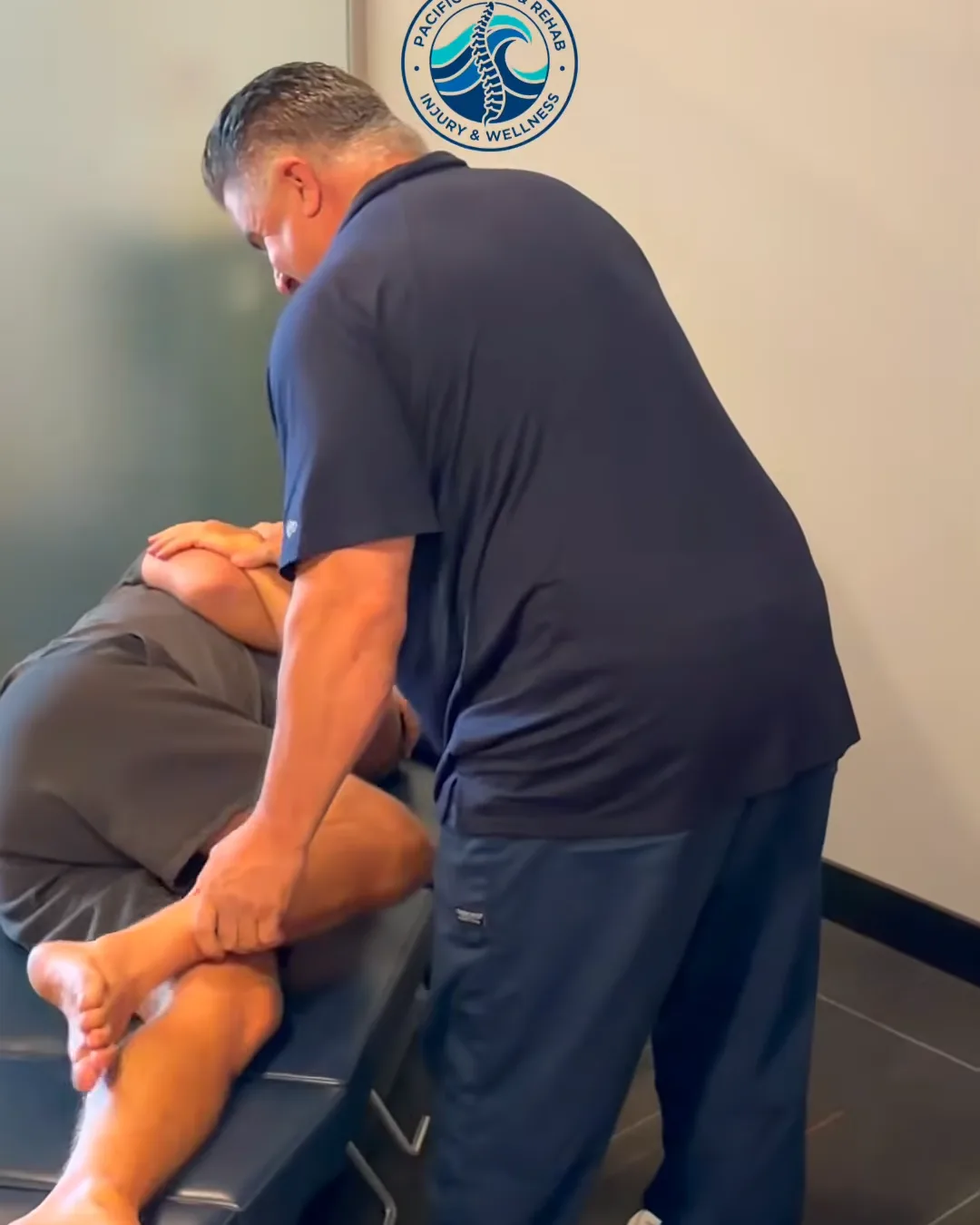
Movement coaching
New-patient visit includes exam, consult, and a clear plan — no surprise pricing, same-day appointments most weekdays.