
Chiropractic first visit
$49
- Consultation
- Full exam and movement screen
- First chiropractic treatment
Updated October 11, 2026
Pain that travels from the lower back through the buttock and down the leg, caused by irritation of the sciatic nerve or its roots.

Quick answer
Pain that travels from the lower back through the buttock and down the leg, caused by irritation of the sciatic nerve or its roots. New patients start with the $49 special: consultation, exam and first treatment in Oceanside or Carlsbad.
New patient offer
$49
First visit
About 45 to 60 minutes
Offices
Oceanside + Carlsbad (Bressi Ranch)
Insurance
PI and MedPay accepted. Most health plans not accepted.
Nerve pain
Sciatica is a symptom, not a diagnosis. The pain follows the nerve, but the actual problem is usually in the lower back or hip — and that's what we find and treat.
Our sciatica protocol combines chiropractic care, targeted rehab, and soft-tissue work to restore stability. Most patients improve significantly within 4–6 weeks.
Is this you?
New patient special
Pick your first visit at our Oceanside or Carlsbad office. Same-day appointments most weekdays.
Chiropractic first visit
$49
Shockwave first visit
$75
New patients only. Same-day first treatment when appropriate. Personal injury and auto accident claims are billed on lien instead. Available at both offices. See details
Causes
True sciatica means the sciatic nerve or one of its roots is being irritated. The most common cause is a lumbar disc bulge or herniation pressing on the L4, L5, or S1 nerve root.
Less commonly, sciatica is caused by piriformis syndrome, where the deep buttock muscle compresses the nerve as it exits the pelvis, or by spinal stenosis in older patients.
Risk factors
Diagnosis
Not all leg pain is sciatica. We use targeted neurological testing to separate true nerve-root pain from SI joint, hip, or muscle-driven referral.
Your first visit

We review your history and goals before any hands-on work.
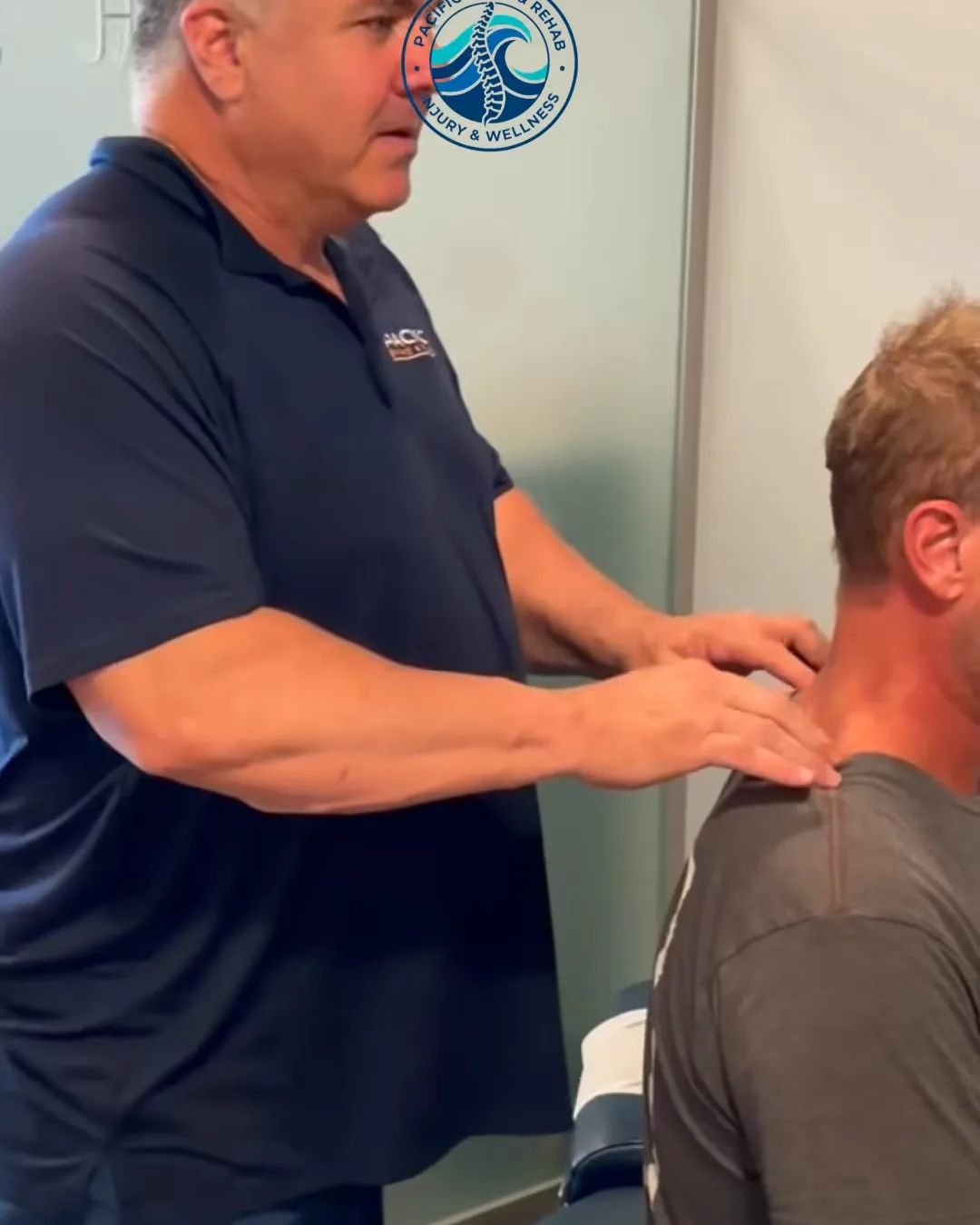
Posture, range of motion, joint mechanics and orthopedic or neurological tests.
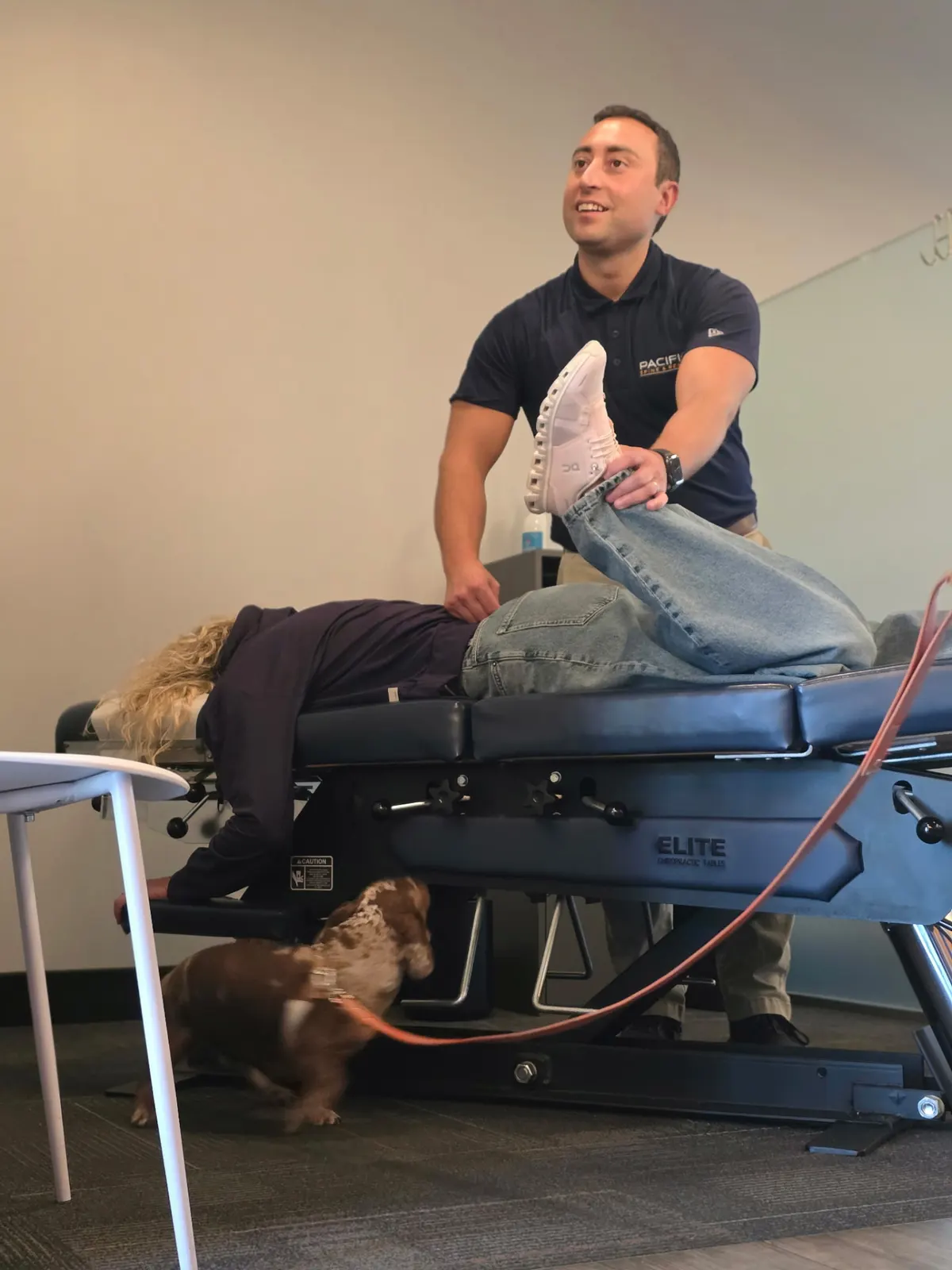
When the exam clears you, your first treatment happens the same visit.
Before you arrive
When to get seen
See a provider within 1–2 weeks if sciatica is not improving with rest. Earlier care leads to faster recovery and fewer recurrences.
Seek urgent evaluation if you have any of these:
Treatment
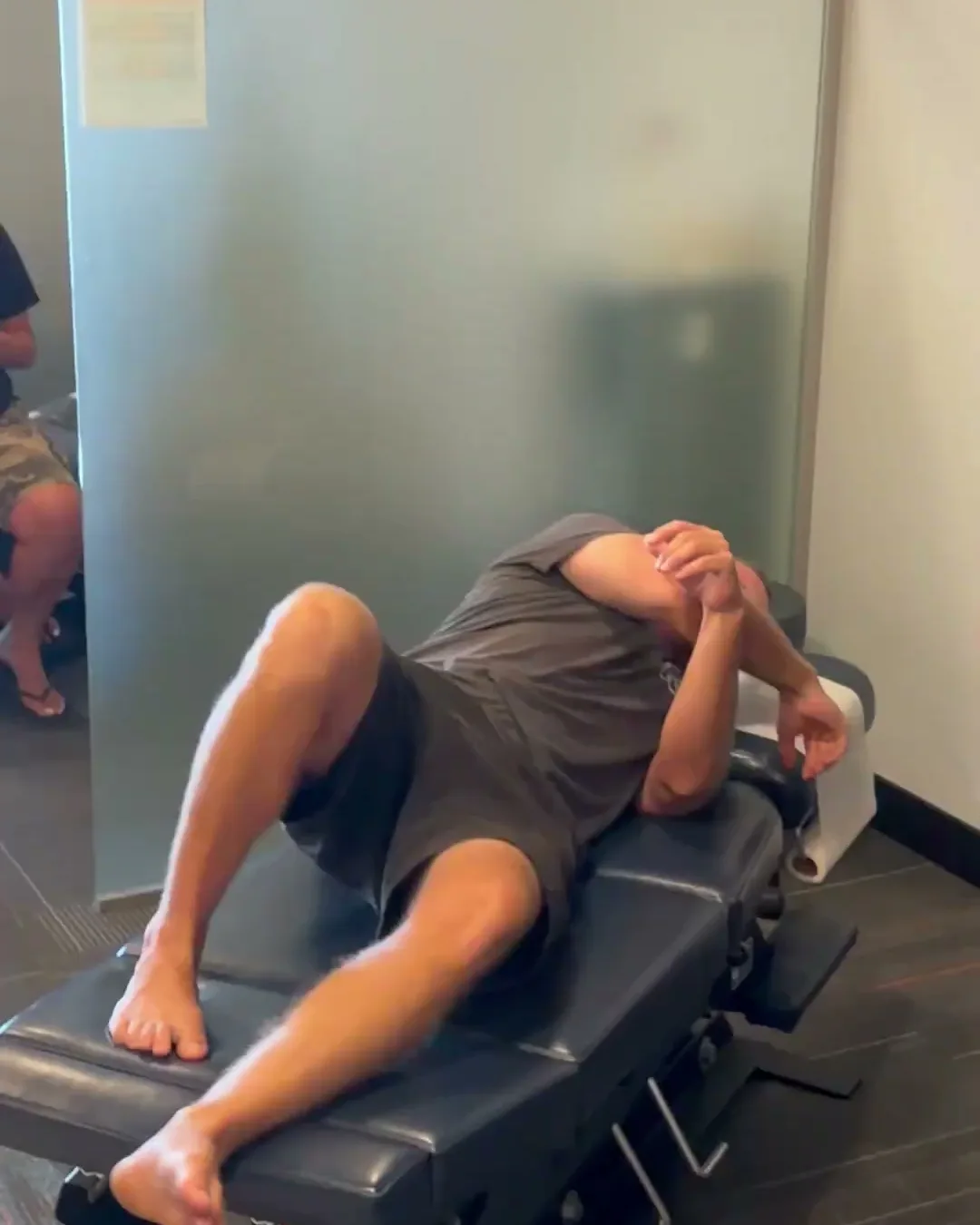
Treatment depends on the source. Joint-driven cases respond best to adjustments and rehab; disc-driven cases benefit from chiropractic care paired with progressive nerve-glide rehab.
Prevention
Tips
Your doctors
Oceanside
Carlsbad (Bressi Ranch)
FAQ
Mild cases sometimes resolve within 4–6 weeks. Cases with leg weakness, numbness, or pain past the knee benefit significantly from active treatment.
Most patients — even with confirmed disc herniations — improve with non-surgical care. We refer to a surgeon only for true red flags or failed conservative care.
Often, yes. Prolonged sitting is a common trigger, and many patients notice more pain while seated or when standing up afterward. Walking daily and breaking up long sits usually helps.
Most patients feel meaningful relief within 2–4 weeks. Full resolution and recurrence prevention takes 6–12 weeks of structured care.
Yes, with the right exercises. We give you a list of what to do, what to avoid, and what to modify.
Common symptoms include: sharp, electric, or burning pain down one leg; pain that worsens when sitting; numbness or tingling in the calf, foot, or toes; weakness in the foot or ankle; pain when bending forward or coughing, and difficulty standing up after sitting.
Seek urgent evaluation if you have: loss of bladder or bowel control; numbness in the groin or saddle area; progressive foot or leg weakness; sudden inability to walk on tiptoes or heels, and pain that's severe even at rest.
These habits help: walk daily — sitting is the #1 aggravator; strengthen glutes and deep core; lift with the hips, not the back; maintain a healthy body weight; stretch hip flexors and piriformis, and use a lumbar roll on long drives.
Yes. Bring recent imaging on a disc, a portal link, or your phone. A photo of the report is also useful.
Ask the office to check your specific MedPay or personal injury claim. Pacific Spine & Rehab does not participate with most health plans.
Keep reading
Nerve pain
New-patient visit includes exam, diagnosis, and a written treatment plan — same-day appointments most weekdays at our Oceanside and Carlsbad offices.