
Shockwave first visit
$75
- Consultation
- Exam
- First shockwave therapy treatment
Updated October 11, 2026
Pain or restricted motion in the shoulder — often involving the rotator cuff, impingement, frozen shoulder, or referred pain from the neck.

Quick answer
Pain or restricted motion in the shoulder — often involving the rotator cuff, impingement, frozen shoulder, or referred pain from the neck. The shoulder is the body's most mobile joint, which makes it the most vulnerable. New patients start with the $75 special: consultation, exam and first treatment in Oceanside or Carlsbad.
New patient offer
$75
First visit
About 45 to 60 minutes
Offices
Oceanside + Carlsbad (Bressi Ranch)
Insurance
PI and MedPay accepted. Most health plans not accepted.
Shoulder
The shoulder is the body's most mobile joint, which makes it the most vulnerable. Most chronic shoulder pain comes from rotator cuff dysfunction, impingement, or scapular instability — and most of it responds well to non-surgical care.
We diagnose the specific shoulder pattern first, then build a plan that combines manual therapy, rehab, and (for stubborn rotator cuff cases) shockwave therapy.
Is this you?
New patient special
Pick your first visit at our Oceanside or Carlsbad office. Same-day appointments most weekdays.
Shockwave first visit
$75
Chiropractic first visit
$49
New patients only. Same-day first treatment when appropriate. Personal injury and auto accident claims are billed on lien instead. Available at both offices. See details
Causes
Most shoulder pain is a combination of two things: weak or poorly coordinated rotator-cuff and scapular muscles, plus a daily activity that loads the shoulder in the wrong position.
Common diagnoses we see: rotator cuff tendinopathy, subacromial impingement, frozen shoulder (adhesive capsulitis), and bicep tendinopathy. Less commonly, true rotator cuff tears.
Risk factors
Diagnosis
There are 6+ common shoulder diagnoses — each with a different treatment. We test all of them on the first visit so the plan matches the actual driver.
Your first visit
We review your history and goals before any hands-on work.
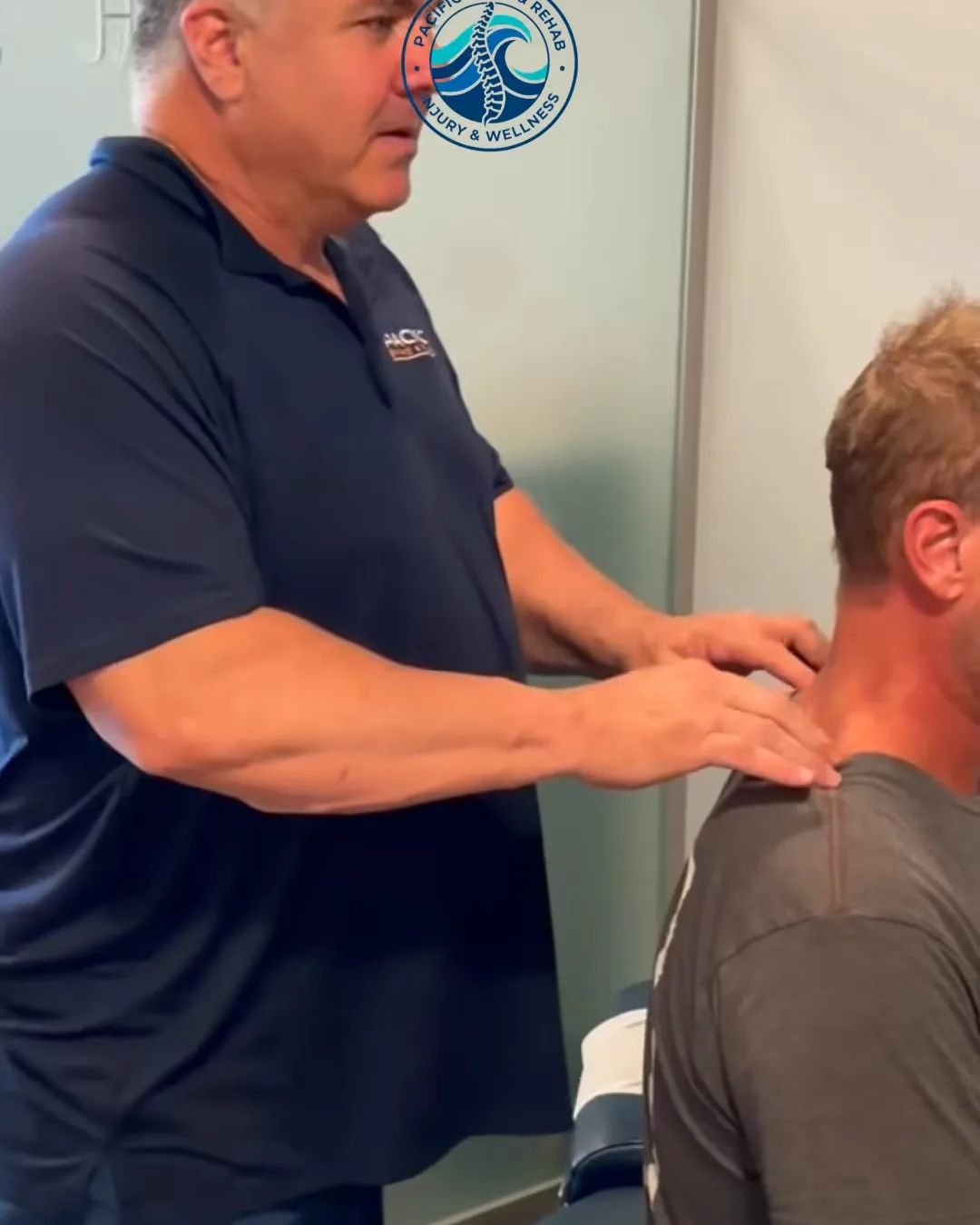
Posture, range of motion, joint mechanics and orthopedic or neurological tests.
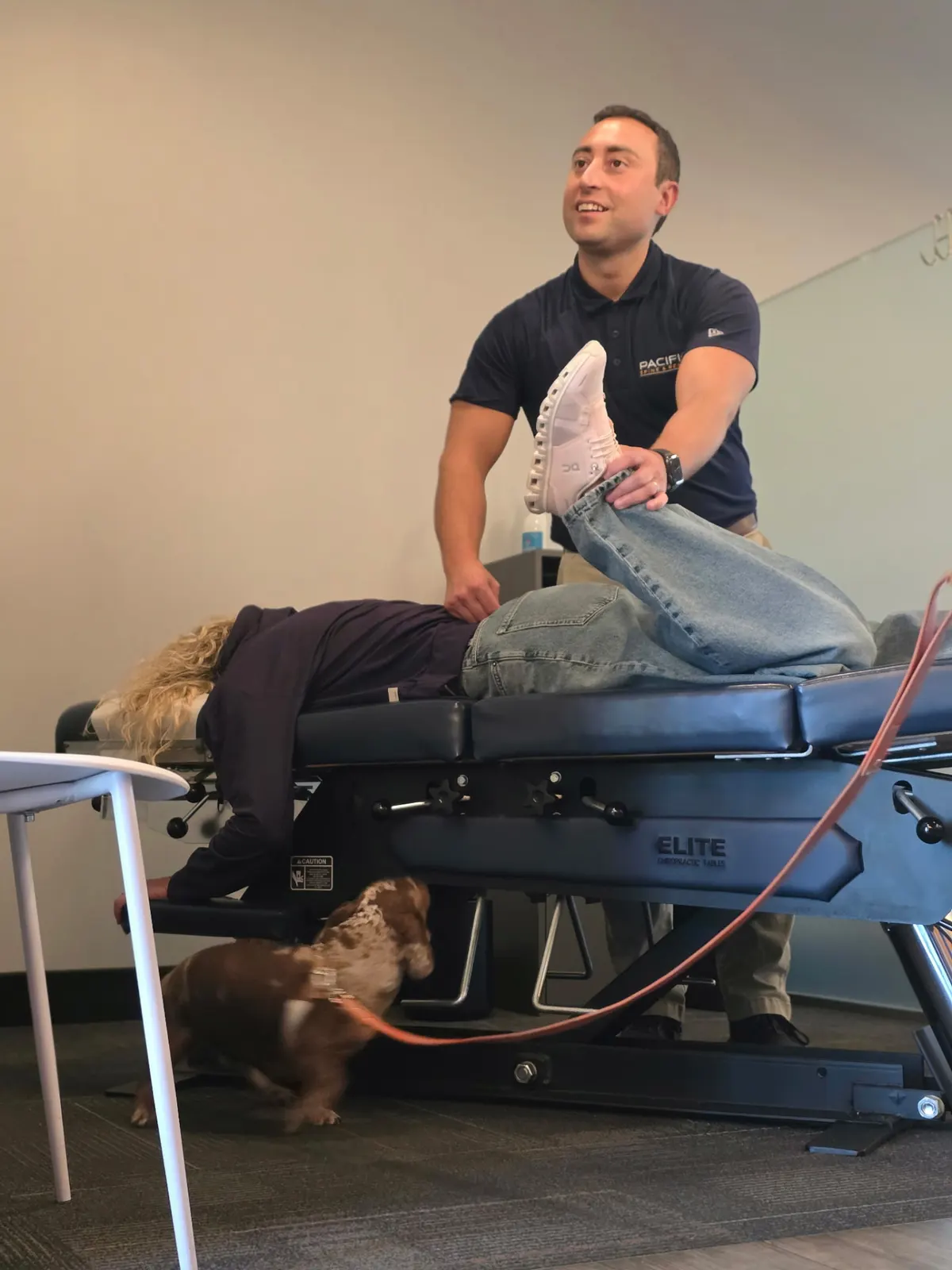
When the exam clears you, your first treatment happens the same visit.
Before you arrive
When to get seen
See a provider if shoulder pain lasts more than 2 weeks, disrupts sleep, or limits overhead motion.
Seek urgent evaluation if you have any of these:
Treatment
Prevention
Tips
Your doctors
Oceanside
Carlsbad (Bressi Ranch)
FAQ
Usually not initially. We refer if symptoms are severe, fail conservative care, or surgical consultation is being considered.
Many partial tears improve dramatically with rehab. Most full-thickness tears in active patients eventually need surgical opinion — but rehab still plays a major role.
Frozen shoulder runs in phases over 12–18 months. Conservative care significantly reduces pain and speeds the motion-recovery phase.
Often, yes. We screen the neck on every shoulder case.
Yes — particularly for chronic rotator cuff tendinopathy and calcific tendinitis.
Common symptoms include: pain reaching overhead; pain sleeping on the affected side; weakness lifting or carrying; clicking, popping, or catching; pain in the front, side, or top of the shoulder; loss of range of motion, and pain radiating into the upper arm.
Seek urgent evaluation if you have: sudden inability to lift the arm after injury; visible deformity (suspect dislocation); numbness or tingling down the arm; severe swelling, and chest pain or shortness of breath with shoulder pain (emergency).
These habits help: strength-train the rotator cuff and mid-back weekly; don't sleep on the same shoulder every night; set workstation so monitor is at eye level; warm up overhead activity gradually; avoid sudden returns to heavy lifting, and stretch the chest and pec minor daily.
Ask the office to check your specific MedPay or personal injury claim. Pacific Spine & Rehab does not participate with most health plans.
Keep reading
Shoulder
New-patient visit includes exam, diagnosis, and a written treatment plan — same-day appointments most weekdays at our Oceanside and Carlsbad offices.