
Chiropractic first visit
$49
- Consultation
- Full exam and movement screen
- First chiropractic treatment
Updated October 11, 2026
Hydrotherapy massage is a fully clothed, warm-water jet massage delivered on a HydroMassage table — it loosens tight muscles, calms the nervous system, and primes the body for the chiropractic and rehab work in the rest of your plan.

Quick answer
Hydrotherapy massage is a fully clothed, warm-water jet massage delivered on a HydroMassage table — it loosens tight muscles, calms the nervous system, and primes the body for the chiropractic and rehab work in the rest of your plan. New patients start with the $49 special: consultation, exam and first treatment in Oceanside or Carlsbad.
New patient offer
$49
First visit
About 45 to 60 minutes
Offices
Oceanside + Carlsbad (Bressi Ranch)
Insurance
PI and MedPay accepted. Most health plans not accepted.
Soft-tissue work
Hydrotherapy massage at Pacific Spine & Rehab is not a spa add-on. The HydroMassage table uses pressurized warm-water jets under a waterproof membrane to deliver a full-body massage in about 10–15 minutes — no undressing, no oils, no waiting.
Most patients use hydrotherapy as part of a coordinated visit — water massage first to release muscle guarding, then an adjustment, sometimes a quick rehab cue at the end. Done together, the three multiply each other.
We also see patients for stand-alone hydrotherapy sessions when chronic tension, work stress, or training load is the driver — no medical diagnosis required.
Key fact
Hydrotherapy massage uses heated water and pressurized jets to do what hands do — knead, compress, and release muscle and fascia — without the need for a therapist, oils, or undressing. You lie fully clothed on the table and a barrier of waterproof material keeps you completely dry while warm-water jets travel along your back, hips, and legs.
You control the intensity, the focus area, and the duration from a simple panel. Settings range from broad, gentle full-body work to targeted, deeper pressure on specific zones like the lumbar spine, glutes, or calves.
It is a clinical modality used in chiropractic, rehab, and physical-therapy offices across the country — designed to prep tissue, reduce muscle guarding, and improve the response to the active care that follows.
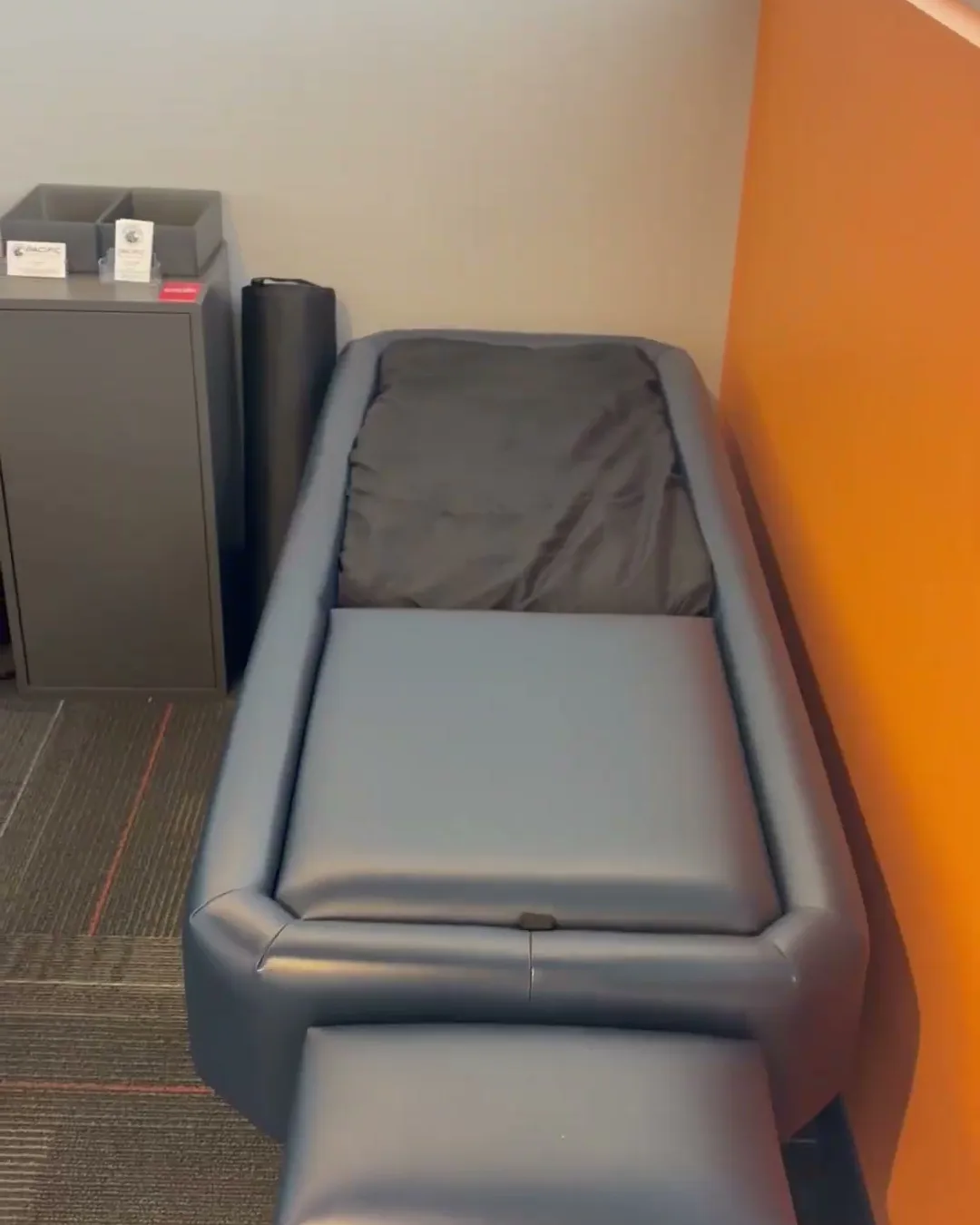
See the hydrotherapy massage bed that uses warm water and gentle pressure to help relax the back before treatment.

Who it helps
Not appropriate when…
If hydrotherapy is not appropriate for you on a given day, your provider will modify the plan or recommend you skip it — and tell you why.
New patient special
Pick your first visit at our Oceanside or Carlsbad office. Same-day appointments most weekdays.
Chiropractic first visit
$49
Shockwave first visit
$75
New patients only. Same-day first treatment when appropriate. Personal injury and auto accident claims are billed on lien instead. Available at both offices. See details
How it works
Warm-water massage changes both the tissue and the nervous system. Mechanically, the jets improve local blood flow, reduce muscle stiffness, and lengthen tight fascia. Neurologically, the warmth and rhythmic pressure reduce sympathetic (fight-or-flight) tone and lower the brain's perception of threat in the area being worked on.
When that nervous-system calming happens before an adjustment, the body is less defensive and the adjustment is more effective. When it happens after rehab, over-recruited compensating muscles let go and the new movement pattern locks in faster.
Your first visit
Front desk gets you onto the HydroMassage table and walks you through the controls if it's your first visit.
Slow, broad-pressure jets warm the tissue from neck to calves and let your body settle into the table.
Switch to zone mode and direct the jets to the lumbar spine, glutes, hamstrings, or shoulders — whatever your plan calls for that day.
Before you arrive
What a hydrotherapy visit looks like
Sessions run 10 or 15 minutes. The room is warm, the lights are dim, and you stay fully dressed throughout.
There is no therapist in the room — you control everything from a panel on the side of the table. Staff are available if you need help with settings or have questions.
Benefits
Recovery
Most patients feel meaningfully looser within minutes of getting off the table. Mild soreness in worked areas for 24 hours can happen if you used deeper pressure — it is a normal response, not a sign something is wrong.
Hydrate well after the session, keep moving gently for the rest of the day, and let your provider know at the next visit what carried over and what tightened back up.
For best long-term results, most patients use hydrotherapy at every visit while in active care, then drop to once or twice a month for maintenance.
Conditions
Hydrotherapy is rarely a stand-alone fix for a medical condition — but it is a powerful adjunct for nearly every musculoskeletal problem we treat.
Your doctors
Oceanside
Carlsbad (Bressi Ranch)
FAQ
No. Hydrotherapy massage is delivered on a HydroMassage table — you lie fully clothed on top of the table and a waterproof barrier keeps you completely dry. Just take off your shoes.
No. The HydroMassage table delivers the massage through pressurized warm-water jets that you control from a side panel. Staff are nearby if you need help with the settings.
10 or 15 minutes. Most patients use hydrotherapy as a warm-up before an adjustment or as a quick recovery session on its own.
Most plans run hydrotherapy first to warm and release tissue, then the adjustment. Done in that order, the adjustment is more effective and tends to hold longer.
Usually yes, with timing that matches where you are in healing. In the first few days we often skip heat and pressure work; as tissue calms, hydrotherapy becomes a useful part of the plan.
While in active care, most patients add hydrotherapy to every visit. For maintenance, once or twice a month is enough for most patients to keep the gains.
Hydrotherapy is rarely covered by health insurance as a stand-alone service. It is often included as part of a documented PI visit — we can bill MedPay and third-party PI directly. Call either office for current self-pay pricing.
It is usually a good fit for: patients receiving chiropractic care who want soft tissue to release faster; athletes in a high-load training cycle who need quick recovery work; office workers with chronic upper-back, neck, and low-back tension; post-collision patients with guarded, splinted soft tissue; people with stress-driven shoulder and lumbar tension, and patients in active rehab whose surrounding muscles are over-recruiting.
It is not appropriate when: acute injuries in the first 24–72 hours where heat and compression would worsen swelling; active deep vein thrombosis (DVT) or unmanaged blood clotting disorders; open wounds or recent surgical sites without provider clearance; uncontrolled high blood pressure or cardiovascular instability, and pregnancy first trimester or high-risk pregnancy without OB sign-off.
At our offices we use it for: Neck Pain; Lower Back Pain; Headaches & Migraines; Whiplash; Shoulder Pain; Sports Injuries; TMJ / Jaw Pain, and Sciatica.
Yes. Bring recent imaging on a disc, a portal link, or your phone. A photo of the report is also useful.
Keep reading
Soft-tissue work
New-patient visit includes exam, consult, and a clear plan — no surprise pricing, same-day appointments most weekdays.