
Shockwave first visit
$75
- Consultation
- Exam
- First shockwave therapy treatment
Updated October 11, 2026
Shockwave therapy (ESWT) uses focused acoustic pressure waves to restart the body's healing process in tendons and soft tissue that have become chronically painful and have stopped responding to rest, ice, and stretching.
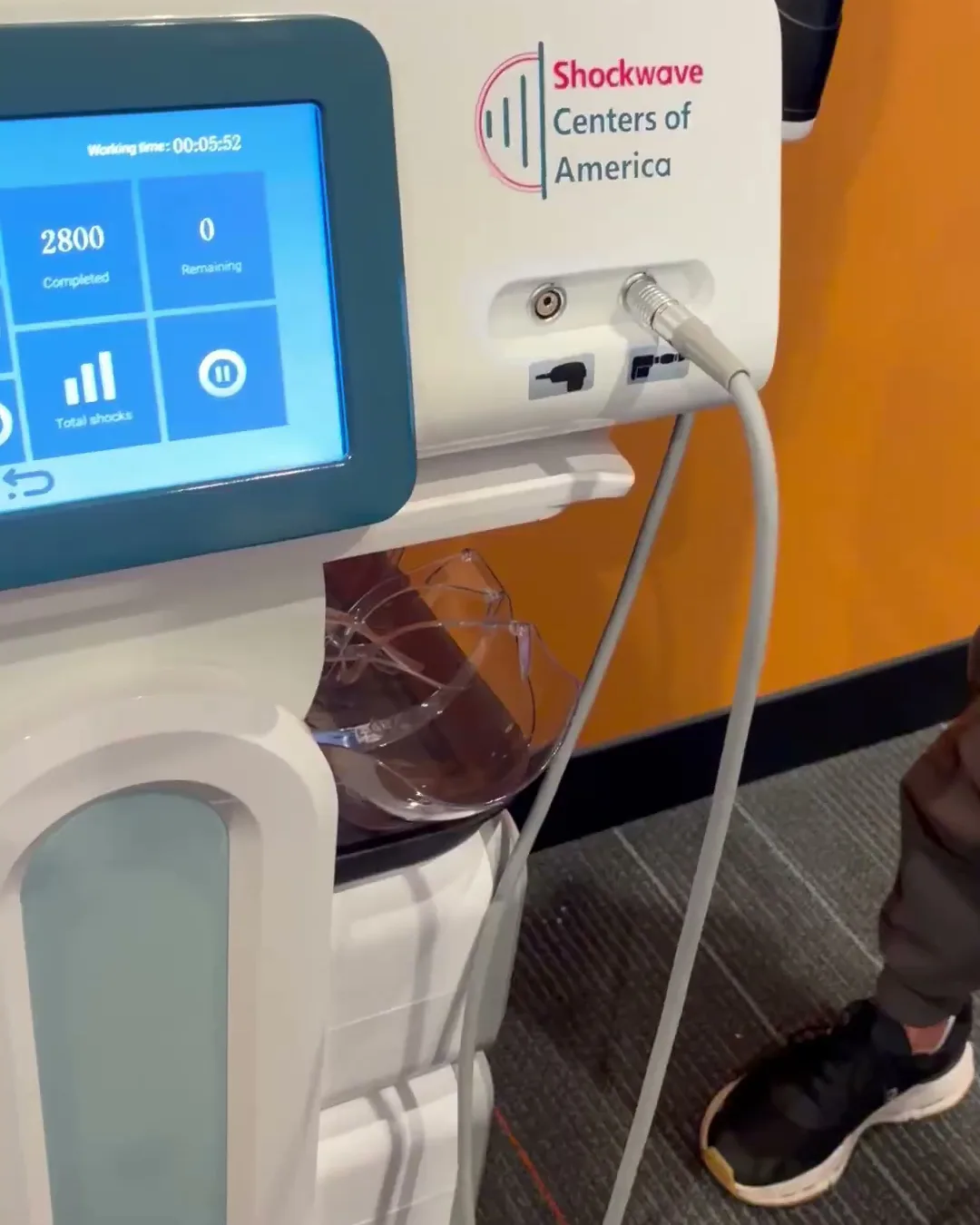
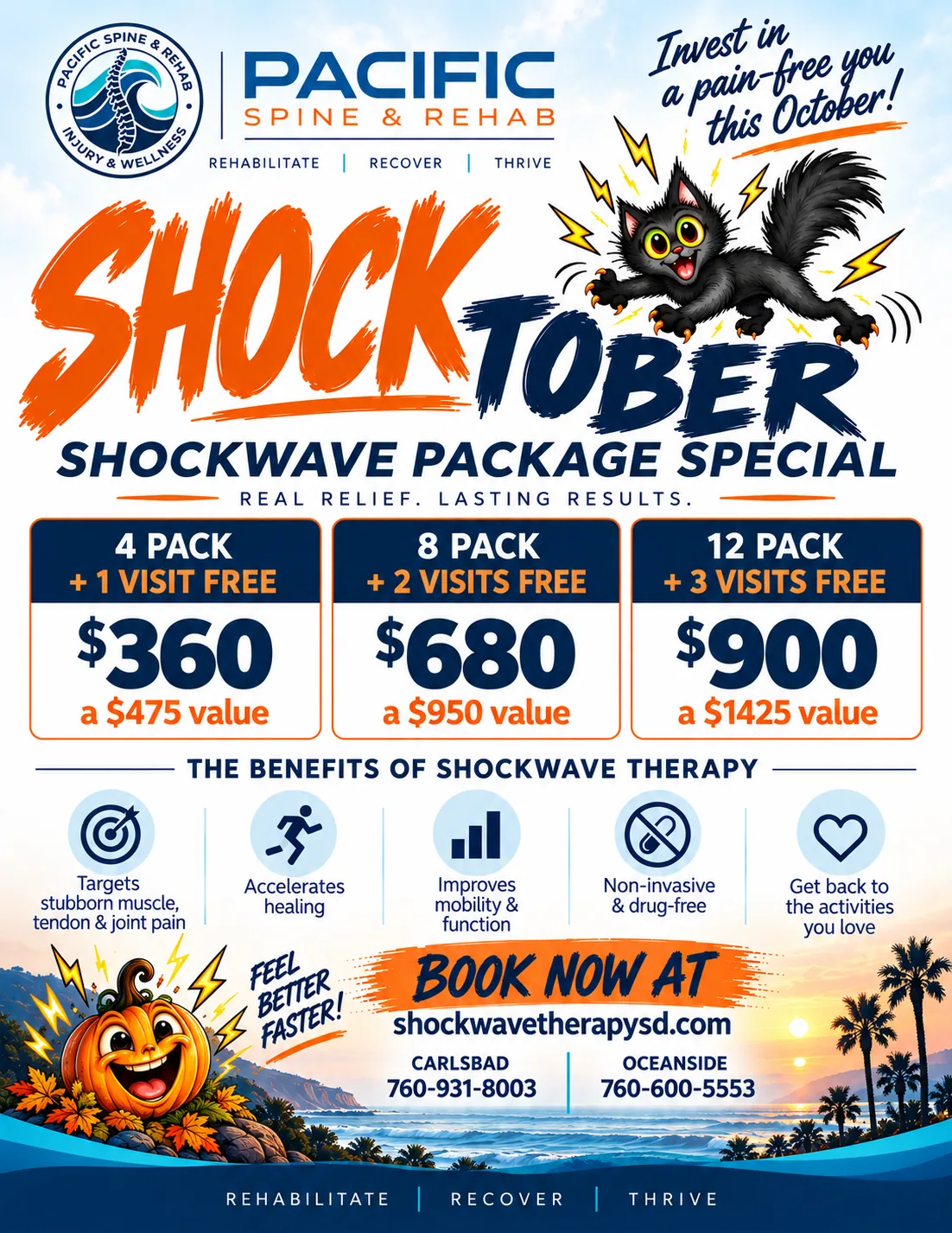
Real relief for plantar fasciitis, tennis elbow and rotator cuff pain. Buy a package, get free visits added.
4 pack + 1 visit free
$360
a $475 value
8 pack + 2 visits free
$680
a $950 value
12 pack + 3 visits free
$900
a $1,425 value
Offer ends October 31, 2026. Available at both offices.
Quick answer
Shockwave therapy (ESWT) uses focused acoustic pressure waves to restart the body's healing process in tendons and soft tissue that have become chronically painful and have stopped responding to rest, ice, and stretching. New patients start with the $75 special: consultation, exam and first treatment in Oceanside or Carlsbad.
New patient offer
$75
First visit
About 45 to 60 minutes
Offices
Oceanside + Carlsbad (Bressi Ranch)
Insurance
PI and MedPay accepted. Most health plans not accepted.
Tendon protocol
If you have been managing plantar fasciitis, tennis elbow, rotator cuff pain, or another stubborn tendinopathy for months — through stretching, NSAIDs, injections, or boots — shockwave therapy is often the missing piece.
Chronic tendon pain is not just inflammation. By the time you have had it for three months, the tissue itself has changed: collagen fibers become disorganized, blood supply drops, and the body essentially gives up on the repair process. Shockwave forces it to start over.
Our shockwave protocols are short, predictable, and drug-free. Most patients complete care in three to six visits, one to two weeks apart, and feel meaningful change within the first two.
Key fact
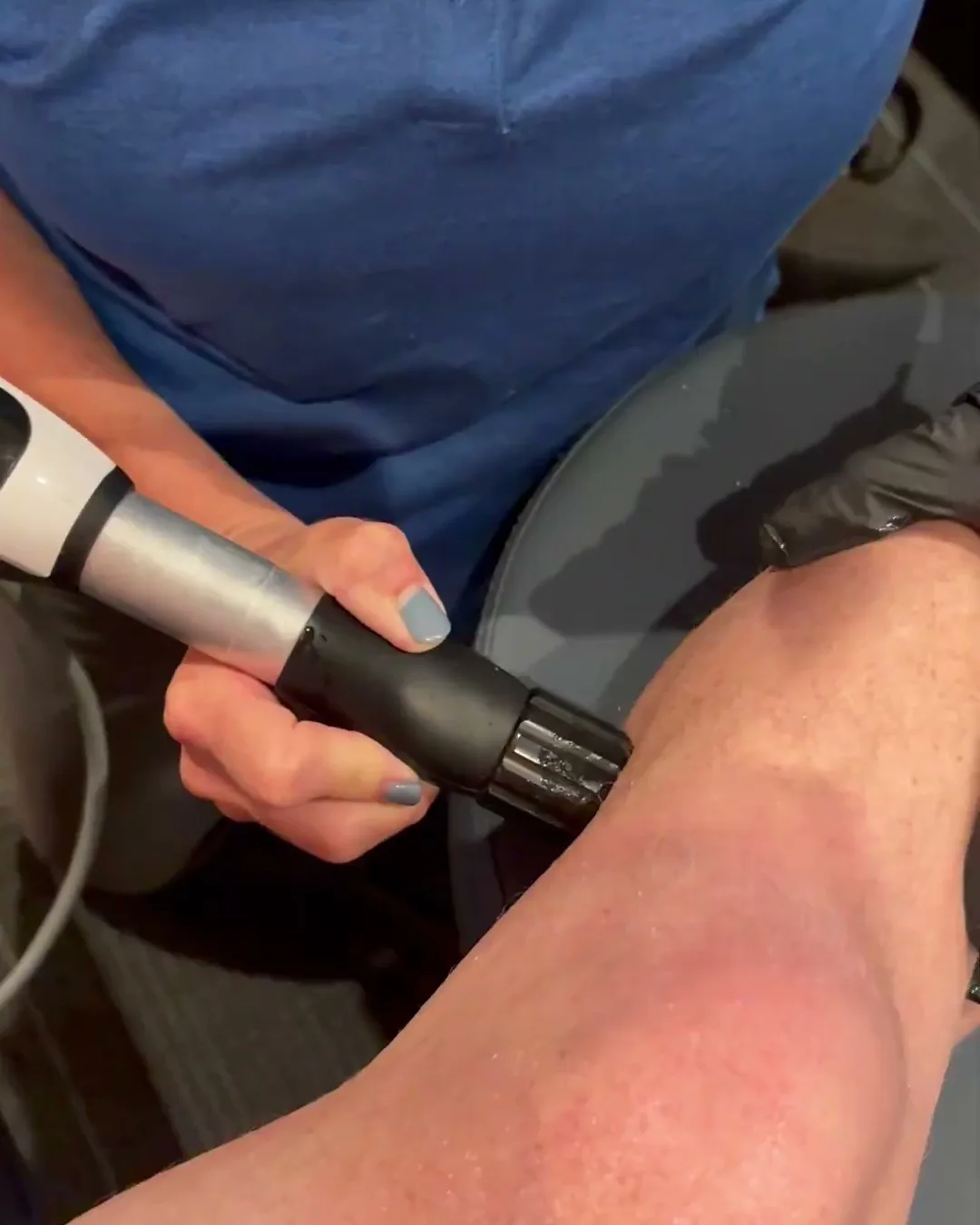
Extracorporeal shockwave therapy (ESWT) is an FDA-cleared, non-invasive treatment originally developed in the 1980s to break up kidney stones. Researchers noticed that the same acoustic waves also accelerated healing in the surrounding bone and soft tissue, and over the past two decades it has become a mainstream treatment for chronic tendinopathy.
Our clinic uses radial shockwave technology, modulated according to the depth and type of tissue being treated. This lets us deliver controlled mechanical energy through the skin and into the target tissue without any incision or needle.
Shockwave is not the same as ultrasound therapy and it is not the same as the TENS-style electric stim used in rehab. The mechanism, dose, and clinical use are entirely different.
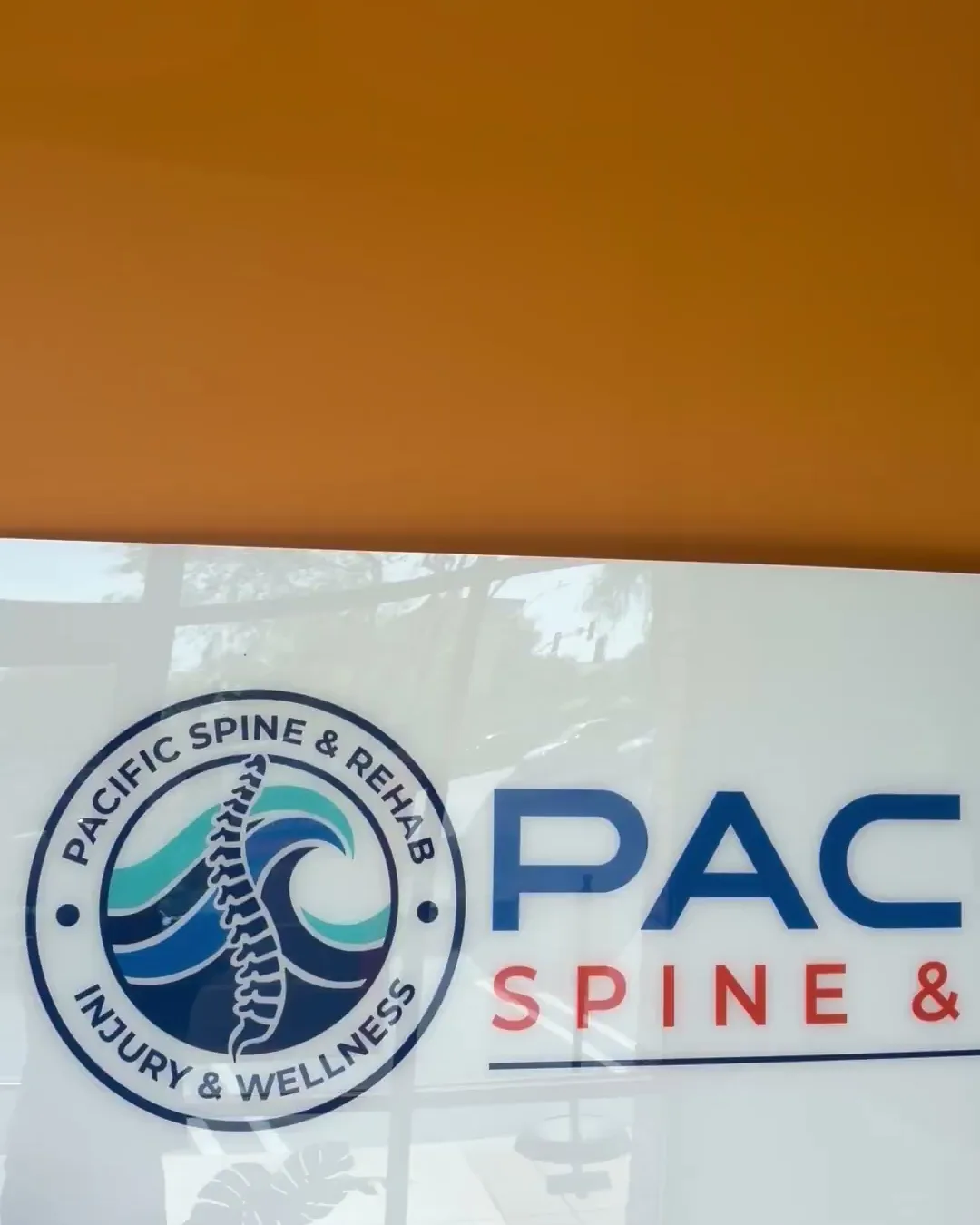
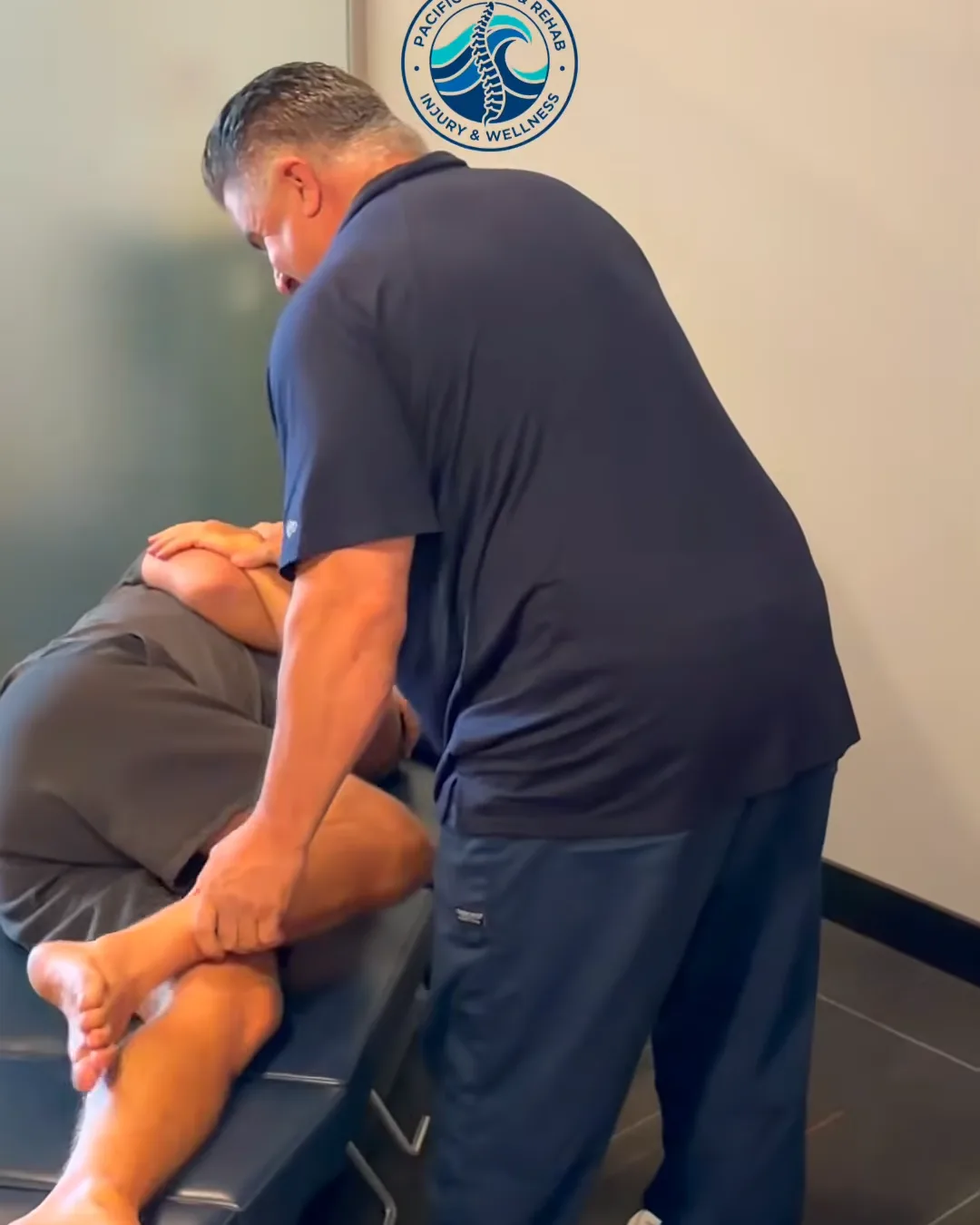
A patient shares his shockwave therapy experience at the Pacific Spine & Rehab office in Carlsbad.

Who it helps
Not appropriate when…
If shockwave is not appropriate or unlikely to help, we will tell you up front and recommend a different path.
New patient special
Pick your first visit at our Oceanside or Carlsbad office. Same-day appointments most weekdays.
Shockwave first visit
$75
Chiropractic first visit
$49
New patients only. Same-day first treatment when appropriate. Personal injury and auto accident claims are billed on lien instead. Available at both offices. See details
How it works
The acoustic waves create controlled micro-trauma in the chronically degenerated tissue. That micro-trauma triggers three responses: it disrupts the disorganized scar tissue, stimulates new blood vessel formation, and recruits the body's own healing cells back to the area.
Within four to six weeks of a shockwave series, the treated tendon begins remodeling. New, properly aligned collagen replaces the degraded tissue, blood supply improves, and the pain signals from the area drop. It is the body doing the repair — shockwave just restarts the process.
| Shockwave therapy | Cortisone injections | Rest, ice and stretching | |
|---|---|---|---|
| Effect on a chronic tendon | Restarts the healing process | Weakens tendon long-term | Chronic tendons often stop responding |
| Drug-free | Yes | No | Yes |
| Typical course | 3–6 visits over 4–8 weeks | — | — |
| Downtime | Usually none; normal activity the same day | — | — |
Your first visit
We rate your pain on a standard scale and document any change since the last session so we can track objective progress.
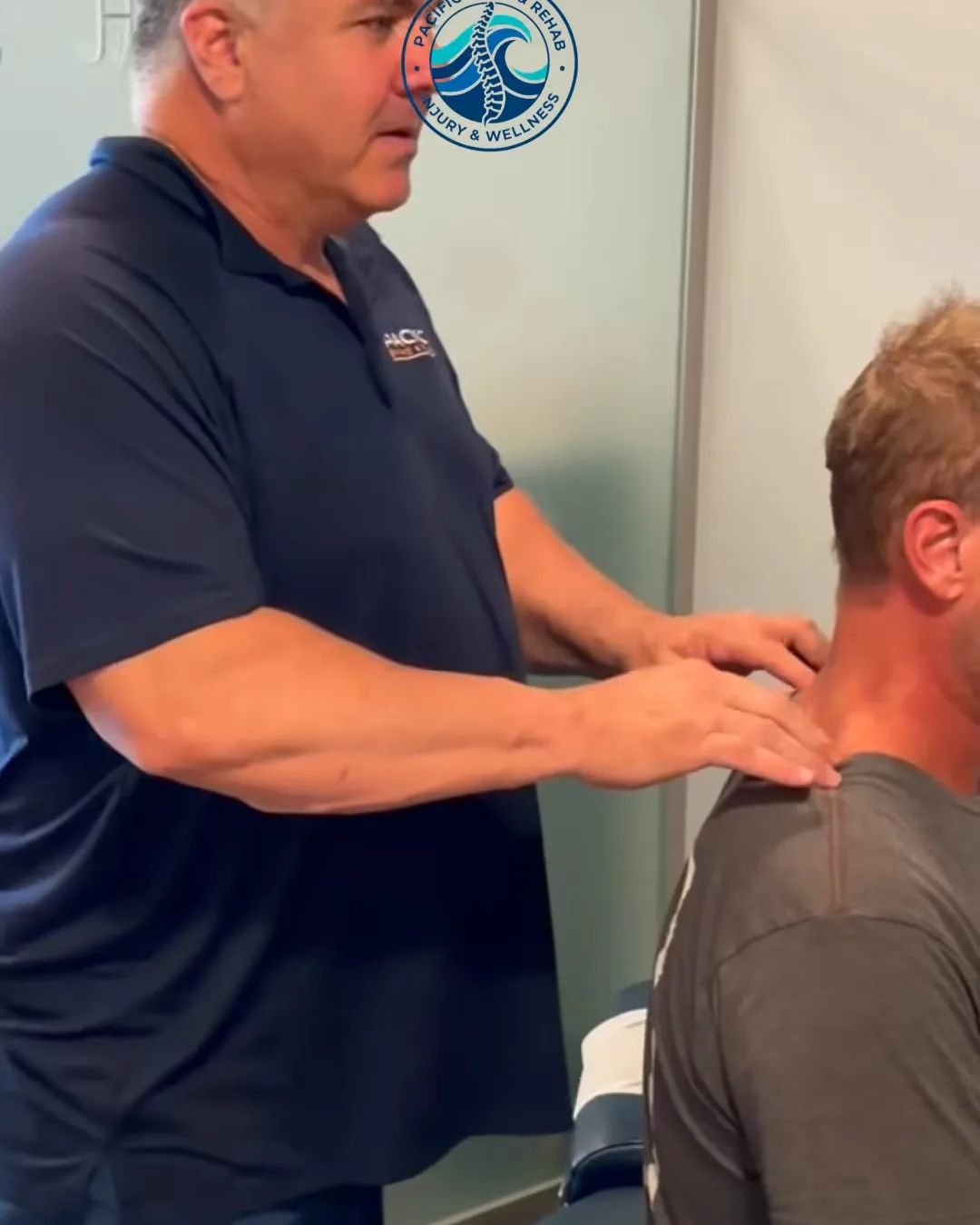
We palpate and ask you to point to the most painful spot — that is where the energy is concentrated.
Conductive gel is applied, the handpiece is placed, and pulses are delivered over 8–15 minutes. Intensity is dialed up gradually to your tolerance.
Before you arrive
What a shockwave visit feels like
Visits are short — usually 20 minutes door-to-door — and require no preparation. You stay fully dressed except for exposing the target area.
Most patients describe the sensation as a strong, rapid tapping. It is not numbing but it is tolerable, and we can adjust intensity throughout the session.
Benefits
Recovery
Most patients notice an initial change in pain after the second session. Full benefit accumulates over six to eight weeks as new tissue remodels, even after the visits are done.
Published outcomes for plantar fasciitis and lateral epicondylitis report 65–85 percent of patients achieving significant pain reduction at three months. We track your symptom score every visit so we can see whether you are tracking toward the same outcome.
We always combine shockwave with a short corrective exercise program. Restarting tissue healing without giving the tendon a reason to remodel correctly leaves results on the table.
Conditions
Shockwave has the strongest evidence base for chronic tendon and fascia conditions. Click any condition for symptoms, causes, and the full treatment menu.
Your doctors
Oceanside
Carlsbad (Bressi Ranch)
FAQ
You feel rapid, firm tapping at the target site. Most patients tolerate it well at therapeutic intensity, and we can ramp up gradually within each session. It is not numbing-required and there is no needle.
Most protocols run three to six sessions, scheduled one to two weeks apart. Plantar fasciitis often resolves in three to four; calcific shoulder tendinitis sometimes needs five or six.
No real downtime. We ask you to avoid high-impact loading on the treated area for 48 hours so the healing cascade can start, but most patients walk in and walk out the same.
Cortisone reduces inflammation short-term but can weaken tendon tissue with repeated use. Shockwave does the opposite — it stimulates new, healthier tissue to form. For chronic tendinopathy the evidence increasingly favors shockwave over cortisone for long-term outcomes.
Most patients notice some change after session two. The largest gains accumulate four to eight weeks after the final session, as the tissue continues to remodel.
No. Therapeutic ultrasound uses continuous, low-energy sound waves to gently heat tissue. Shockwave uses high-energy, pulsed acoustic waves to create a controlled mechanical effect that stimulates healing. The technologies, indications, and outcomes are different.
Most U.S. health insurers still classify ESWT as investigational for musculoskeletal conditions and do not cover it. We offer transparent self-pay pricing and bundle packages for the typical 3–6 session protocol. Call either office for current pricing.
We recommend waiting at least six weeks after a corticosteroid injection before starting shockwave so the tissue has stabilized.
It is usually a good fit for: chronic plantar fasciitis that has not responded to stretching, orthotics, or boots; tennis elbow (lateral epicondylitis) or golfer's elbow (medial epicondylitis); rotator cuff tendinopathy and calcific tendinitis of the shoulder; patellar tendinopathy (jumper's knee) and Achilles tendinopathy; greater trochanteric pain syndrome and hamstring origin tendinopathy; patients who want to avoid cortisone injections or surgery, and tendon pain that has lasted longer than 6–8 weeks.
It is not appropriate when: acute injuries within the first two weeks — rest, ice, and graded loading first; pregnancy (in the treatment area); active cancer in the treatment area; bleeding disorders or current anticoagulant therapy without physician clearance; pacemakers or implants near the treatment field — case-by-case review, and open wounds, active infection, or recent corticosteroid injection in the area (wait six weeks).
At our offices we use it for: Plantar Fasciitis; Tennis & Golfer's Elbow; Shoulder Pain; Knee Pain, and Sports Injuries.
Yes. Bring recent imaging on a disc, a portal link, or your phone. A photo of the report is also useful.
Allow about 45 to 60 minutes for the first visit. Completing intake forms beforehand leaves more time for your history and exam.
Keep reading
Tendon protocol
New-patient visit includes exam, consult, and a clear plan — no surprise pricing, same-day appointments most weekdays.