
Shockwave first visit
$75
- Consultation
- Exam
- First shockwave therapy treatment
Updated October 11, 2026
Chronic tendon degeneration on the outside (tennis elbow) or inside (golfer's elbow) of the elbow, caused by repetitive gripping and wrist motion.

Quick answer
Chronic tendon degeneration on the outside (tennis elbow) or inside (golfer's elbow) of the elbow, caused by repetitive gripping and wrist motion. Rest alone rarely solves chronic elbow tendinopathy. New patients start with the $75 special: consultation, exam and first treatment in Oceanside or Carlsbad.
New patient offer
$75
First visit
About 45 to 60 minutes
Offices
Oceanside + Carlsbad (Bressi Ranch)
Insurance
PI and MedPay accepted. Most health plans not accepted.
Tendon
Tennis and golfer's elbow are tendinopathies — degenerative changes in the tendons that attach near the elbow. The name is misleading: most patients we see don't play either sport.
Stubborn elbow tendinopathy responds exceptionally well to shockwave therapy paired with eccentric loading rehab. Most patients see significant relief within 4–6 sessions.
Is this you?
New patient special
Pick your first visit at our Oceanside or Carlsbad office. Same-day appointments most weekdays.
Shockwave first visit
$75
Chiropractic first visit
$49
New patients only. Same-day first treatment when appropriate. Personal injury and auto accident claims are billed on lien instead. Available at both offices. See details
Causes
These conditions are overuse injuries. Repeated gripping, typing, lifting, or racket-sport swinging creates micro-damage in the tendon faster than the body can repair it.
Most cases are not from a single event — they're months of accumulated load. Common culprits: typing without a wrist break, heavy gripping work, weight training, and yes, racket sports.
Risk factors
Diagnosis
Diagnosis is clinical. The location of pain and a few specific provocation tests are usually all we need to confirm and classify the case.
Your first visit
We review your history and goals before any hands-on work.
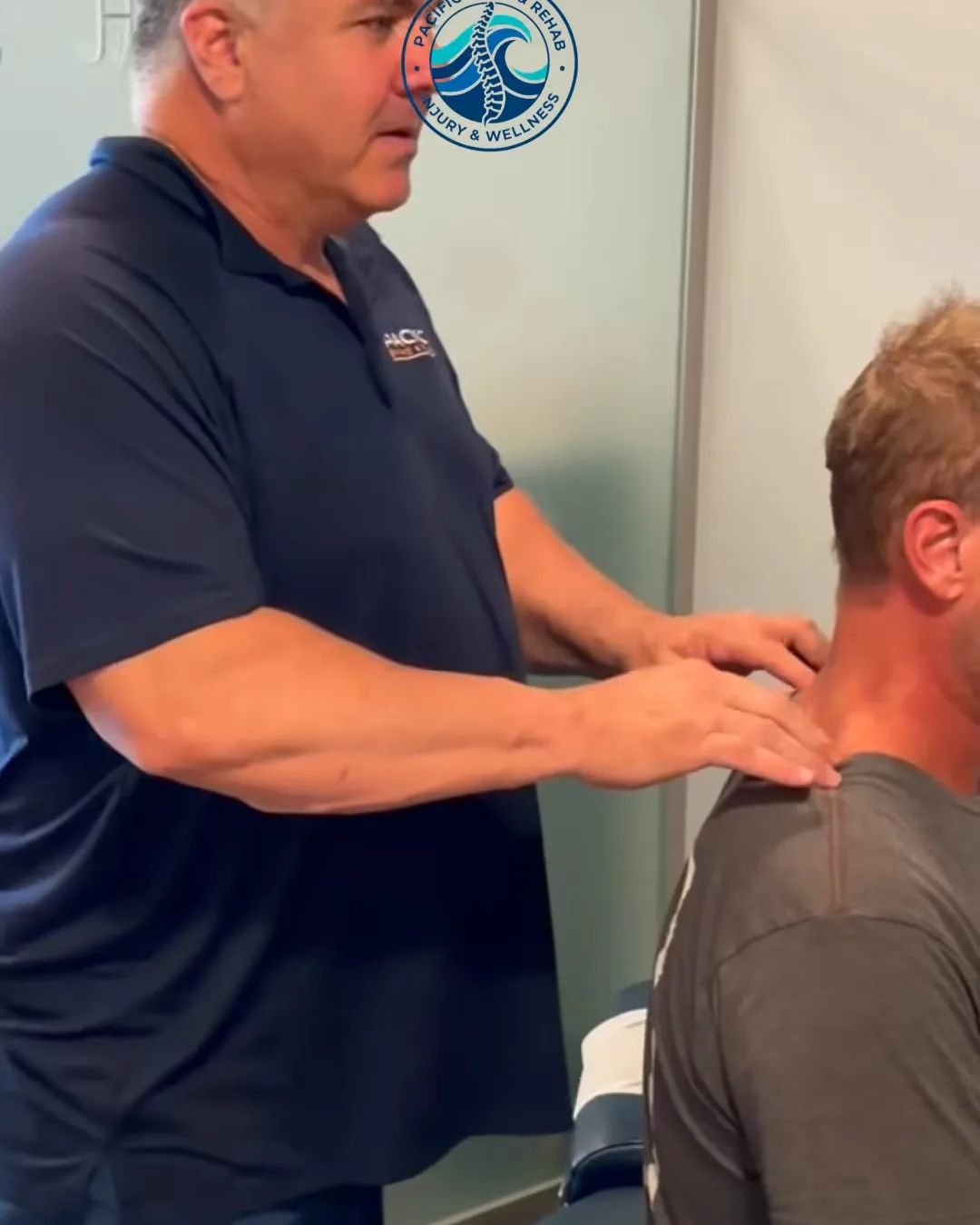
Posture, range of motion, joint mechanics and orthopedic or neurological tests.
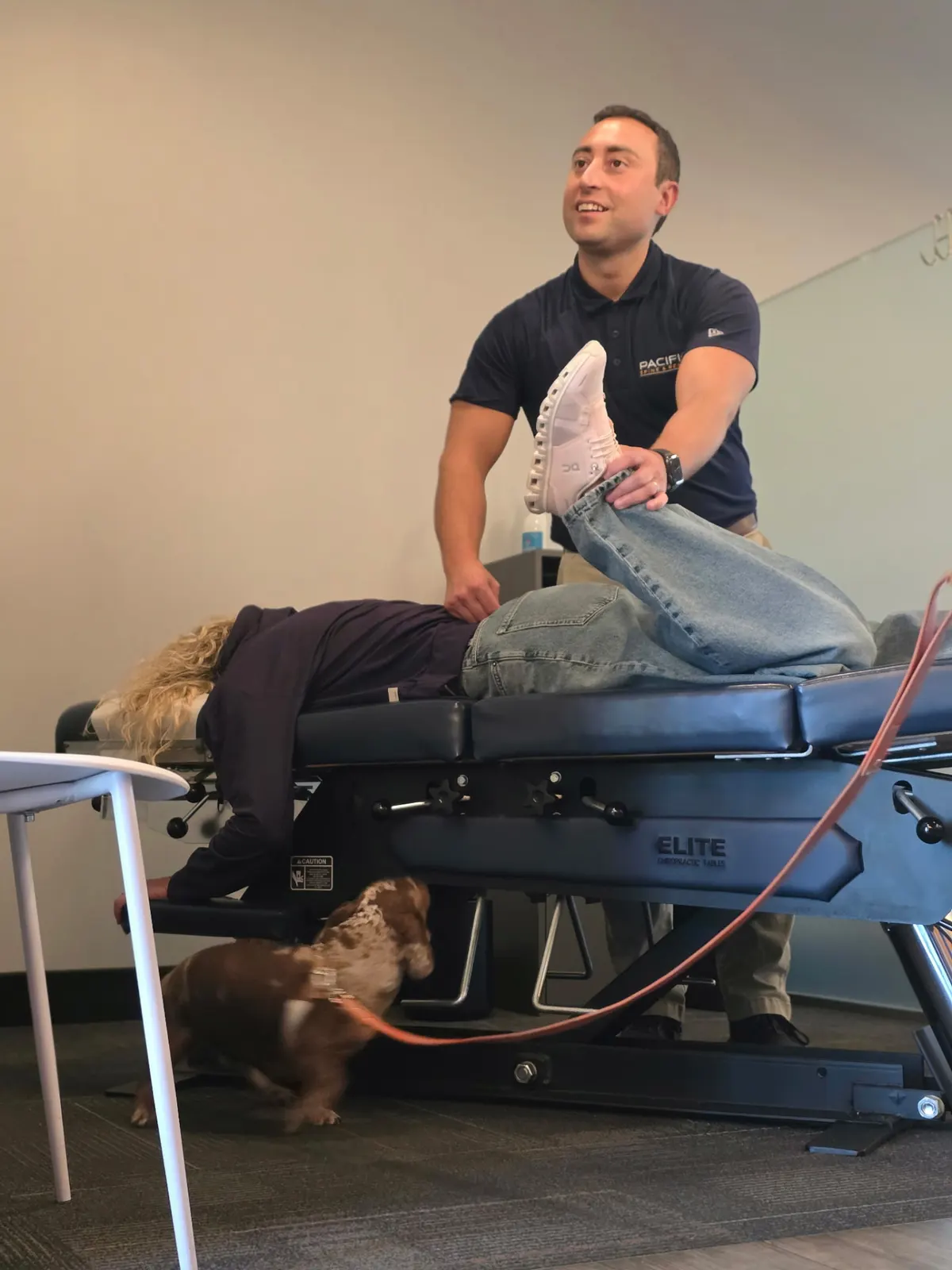
When the exam clears you, your first treatment happens the same visit.
Before you arrive
When to get seen
See a provider if elbow pain has lasted more than 2 weeks, limits gripping, or returns every time you train or work.
Seek urgent evaluation if you have any of these:
Treatment
Rest alone rarely solves chronic elbow tendinopathy. The tendon needs the right kind of load to remodel — and sometimes a stimulus like shockwave to restart the healing process.
Prevention
Tips
Your doctors
Oceanside
Carlsbad (Bressi Ranch)
FAQ
Most elbow tendinopathy protocols run 4–6 sessions, once weekly. Peak results show 8–12 weeks after the final session.
Braces can reduce symptoms during use but don't heal the tendon. They're a useful tool — not a cure.
Short-term, cortisone reduces pain. Long-term, multiple shots can weaken the tendon. We try conservative care first.
Usually yes — with specific modifications. We give you an ergonomic and activity plan.
Most patients see major relief in 6–8 weeks of structured care. Full tendon remodeling takes 3–6 months.
Common symptoms include: pain on the outside (tennis) or inside (golfer's) of the elbow; pain when gripping, lifting, or twisting (e.g., a door handle); weak grip strength; pain shaking hands or pouring coffee; tenderness at the bony bump near the elbow, and stiffness in the forearm after activity.
Seek urgent evaluation if you have: sudden severe pain with a "pop"; visible swelling or bruising; loss of elbow range of motion; numbness in the forearm or hand, and inability to use the arm.
These habits help: strength-train the forearm and grip 1–2x weekly; take micro-breaks during keyboard or tool use; warm up grip-heavy activities specifically; address shoulder weakness — it usually drives elbow overuse; replace racket grip size if it's wrong for your hand, and progress training load gradually.
Yes. Bring recent imaging on a disc, a portal link, or your phone. A photo of the report is also useful.
Ask the office to check your specific MedPay or personal injury claim. Pacific Spine & Rehab does not participate with most health plans.
Keep reading
Tendon
New-patient visit includes exam, diagnosis, and a written treatment plan — same-day appointments most weekdays at our Oceanside and Carlsbad offices.