
Chiropractic first visit
$49
- Consultation
- Full exam and movement screen
- First chiropractic treatment
Updated October 11, 2026
Acute and overuse injuries from sport — strains, sprains, tendinopathies, joint impingements, and stress-related pain.
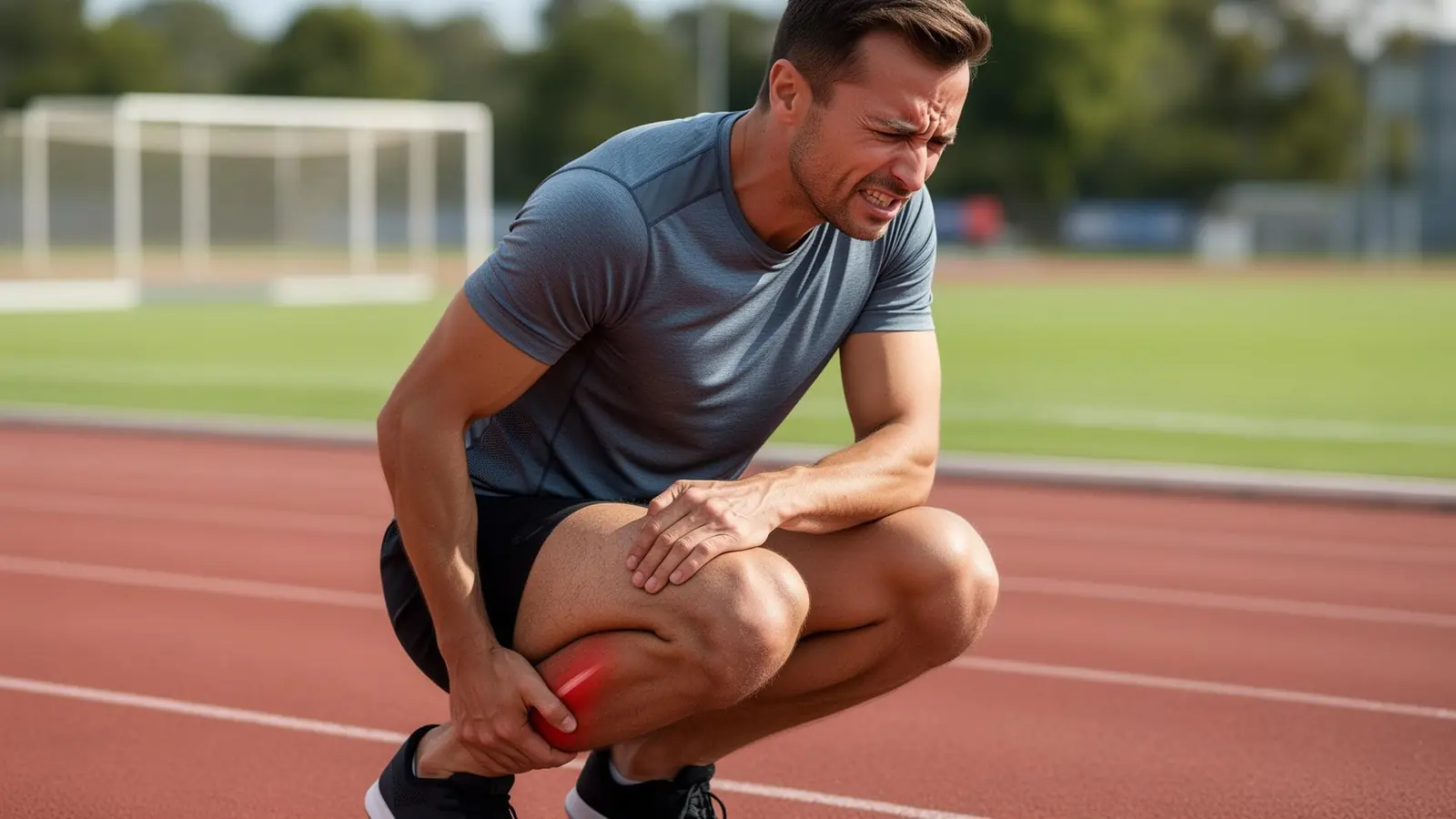
Quick answer
Acute and overuse injuries from sport — strains, sprains, tendinopathies, joint impingements, and stress-related pain. Surfers, runners, lifters, golfers, and weekend warriors all hit the same wall: an injury that doesn't quite go away with rest. New patients start with the $49 special: consultation, exam and first treatment in Oceanside or Carlsbad.
New patient offer
$49
First visit
About 45 to 60 minutes
Offices
Oceanside + Carlsbad (Bressi Ranch)
Insurance
PI and MedPay accepted. Most health plans not accepted.
Athletic
Surfers, runners, lifters, golfers, and weekend warriors all hit the same wall: an injury that doesn't quite go away with rest. Most sports injuries are mechanical — and mechanical problems need mechanical solutions, not just time.
We treat sports injuries with hands-on care, shockwave therapy for tendons, and rehab built around your sport. The goal isn't just pain-free — it's stronger than before.
Is this you?
New patient special
Pick your first visit at our Oceanside or Carlsbad office. Same-day appointments most weekdays.
Chiropractic first visit
$49
Shockwave first visit
$75
New patients only. Same-day first treatment when appropriate. Personal injury and auto accident claims are billed on lien instead. Available at both offices. See details
Causes
Sports injuries fall into two camps: acute trauma (a fall, a sudden twist, a contact hit) and overuse (the same motion done too many times without enough recovery). Both need accurate diagnosis — the treatment paths are very different.
We see overuse injuries far more often than acute ones, especially in endurance and repetitive-motion sports like running, surfing, swimming, and golf.
Risk factors
Diagnosis
We diagnose movement, not just structure. Knowing the injured tissue matters — but knowing why it got injured matters more, because that's what prevents re-injury.
Your first visit
We review your history and goals before any hands-on work.
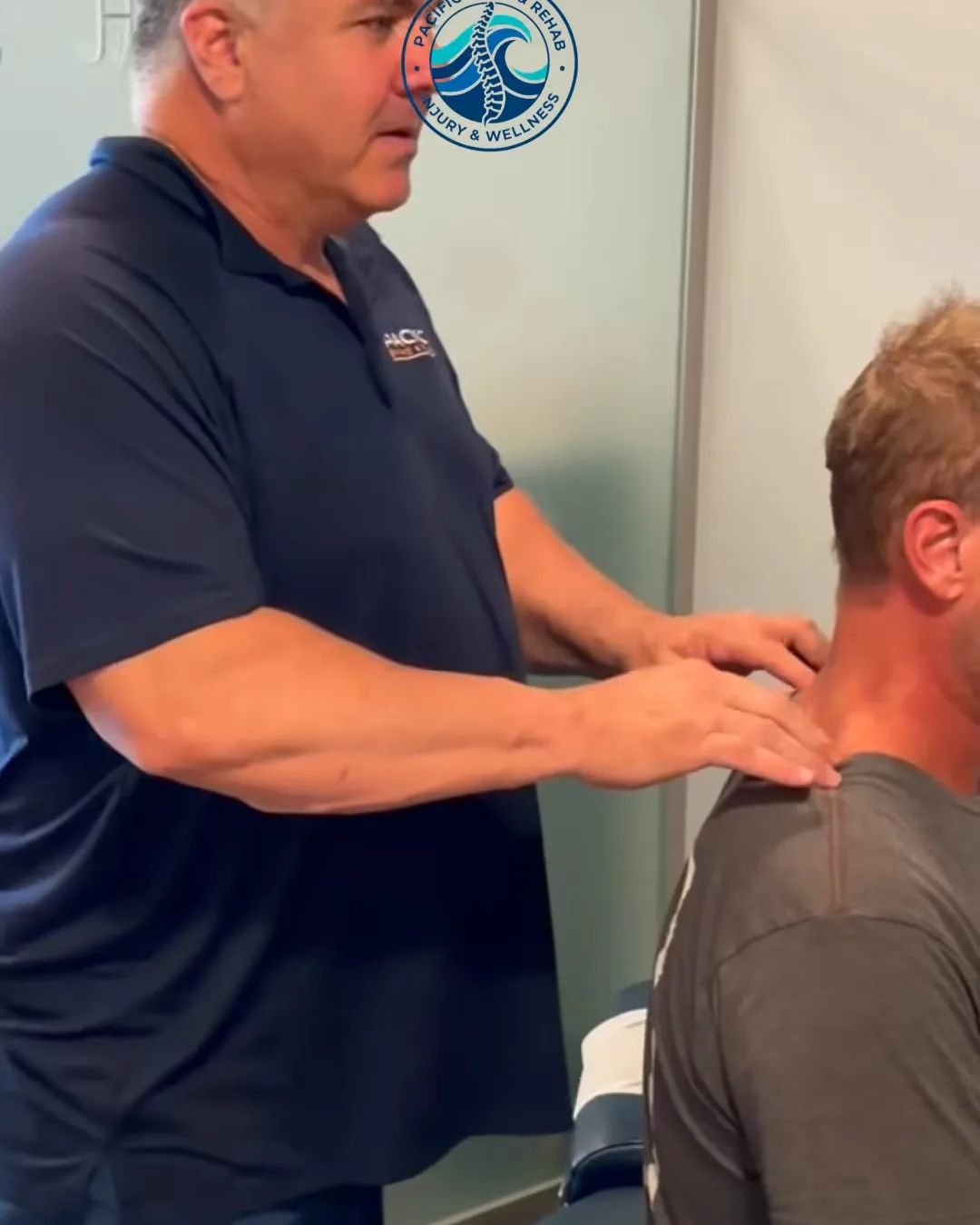
Posture, range of motion, joint mechanics and orthopedic or neurological tests.
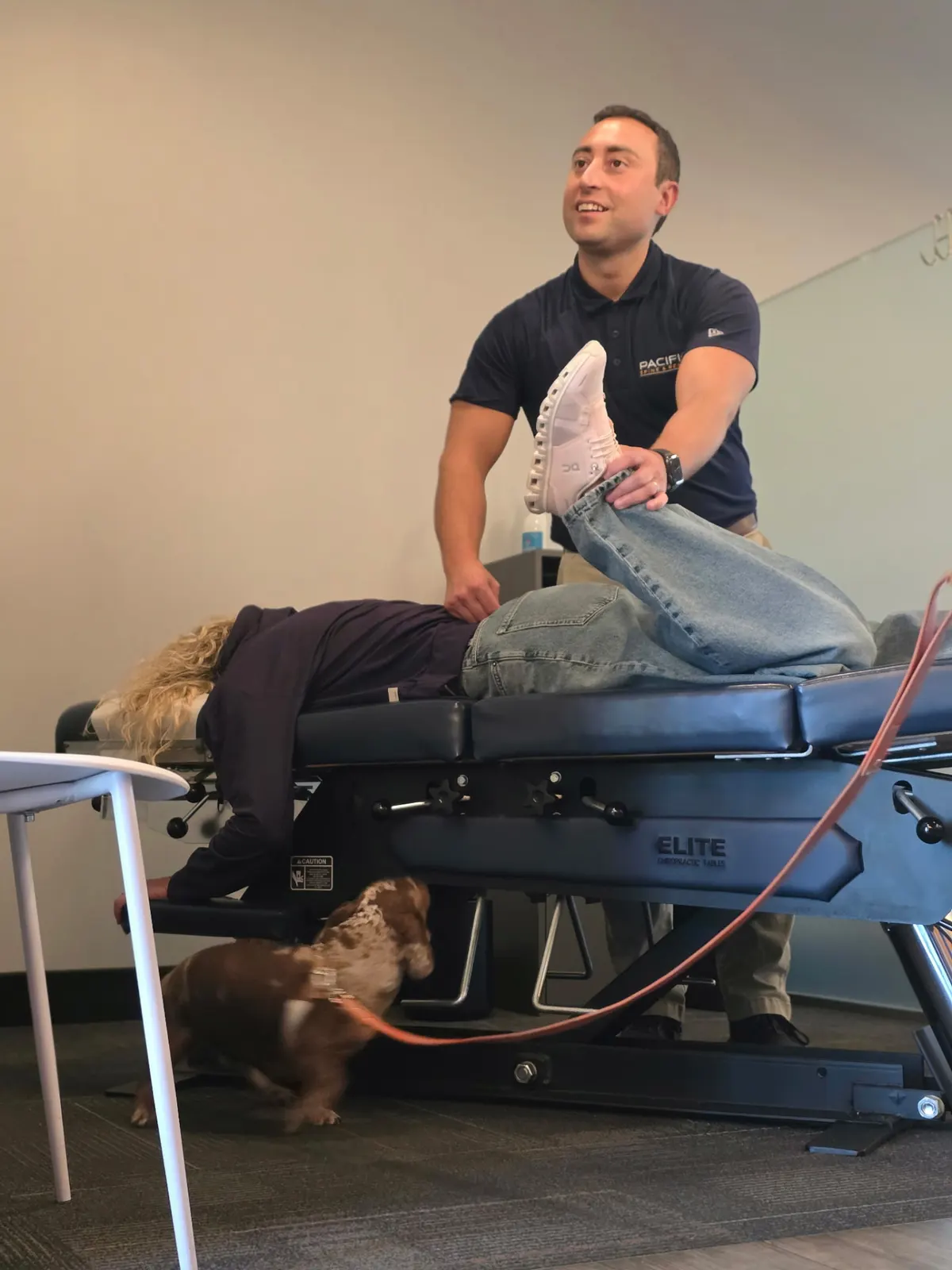
When the exam clears you, your first treatment happens the same visit.
Before you arrive
When to get seen
See a provider if pain persists more than 7–10 days, recurs every time you train, or causes a noticeable change in how you move.
Seek urgent evaluation if you have any of these:
Treatment
Prevention
Tips
Your doctors
Oceanside
Carlsbad (Bressi Ranch)
FAQ
Usually no. We modify, not eliminate. Most athletes keep training in some form while recovering.
Yes. Shockwave is one of the most evidence-supported treatments for chronic tendinopathies that haven't responded to rest or rehab alone.
Depends on the tissue and severity. Most overuse injuries respond in 4–8 weeks; ligament injuries take longer.
Yes — North County is full of both, and they're a large part of our practice.
Only when it changes the treatment plan. We don't order imaging by default.
Common symptoms include: pain only during or after activity; stiffness in the morning that loosens with movement; joint clicking, catching, or locking; swelling around a joint or tendon; weakness or instability; recurring pain in the same area, and reduced performance or range of motion.
Seek urgent evaluation if you have: inability to bear weight after injury; audible "pop" with sudden swelling; visible joint deformity; loss of pulse, sensation, or temperature in a limb, and severe swelling that worsens over hours.
These habits help: progress training load by no more than 10% per week; always warm up sport-specifically — not just static stretching; strength-train year-round, not just in-season; don't skip recovery days; address strength asymmetries early, and replace shoes regularly.
Ask the office to check your specific MedPay or personal injury claim. Pacific Spine & Rehab does not participate with most health plans.
Keep reading
Athletic
New-patient visit includes exam, diagnosis, and a written treatment plan — same-day appointments most weekdays at our Oceanside and Carlsbad offices.