
Chiropractic first visit
$49
- Consultation
- Full exam and movement screen
- First chiropractic treatment
Updated October 11, 2026
A soft-tissue and joint injury to the neck caused by a sudden back-and-forth motion — most often from a rear-end car collision.
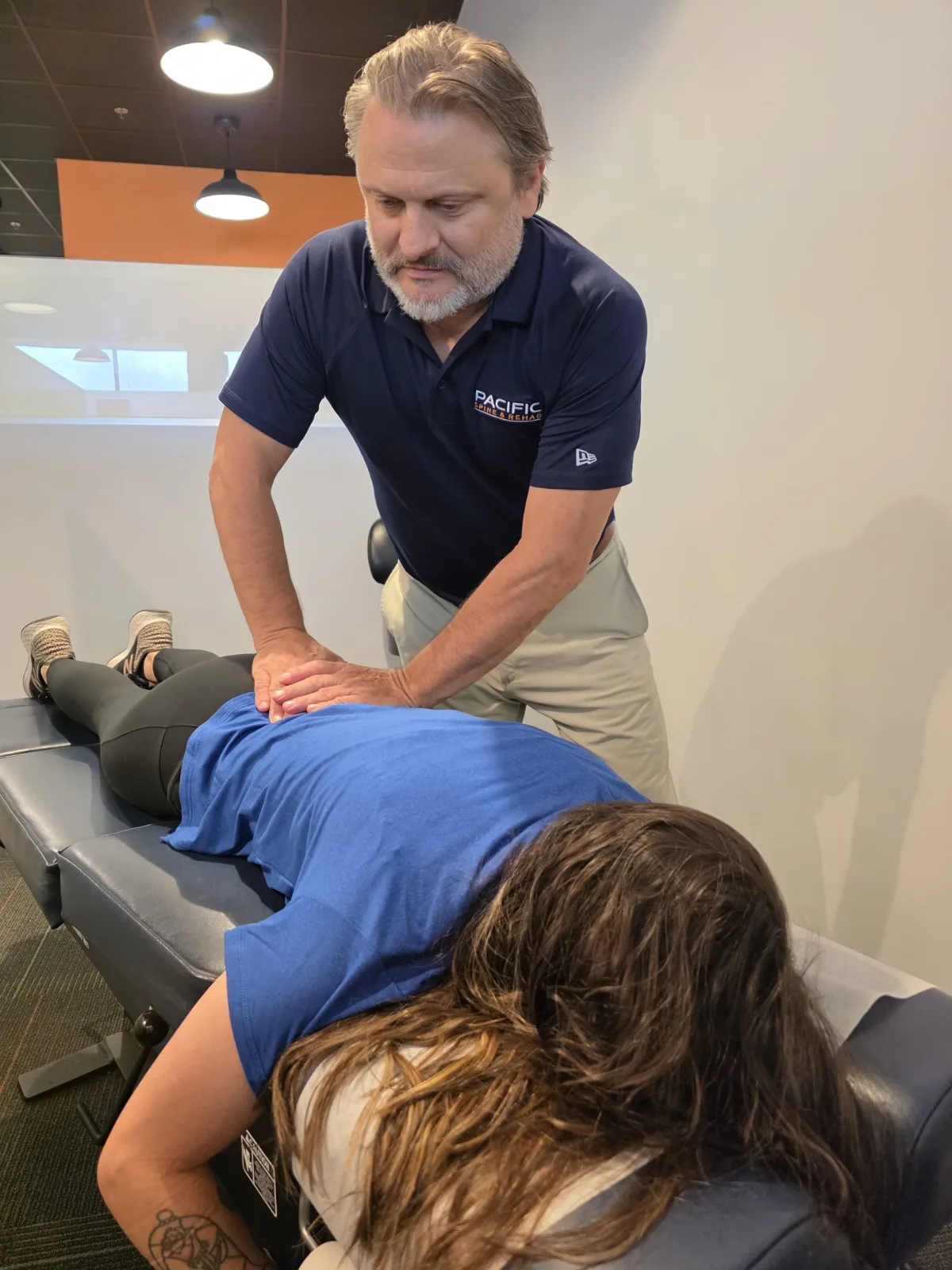
Quick answer
A soft-tissue and joint injury to the neck caused by a sudden back-and-forth motion — most often from a rear-end car collision. Whiplash care follows a phased protocol: calm the inflammation, restore motion, then rebuild stability. New patients start with the $49 special: consultation, exam and first treatment in Oceanside or Carlsbad.
New patient offer
$49
First visit
About 45 to 60 minutes
Offices
Oceanside + Carlsbad (Bressi Ranch)
Insurance
PI and MedPay accepted. Most health plans not accepted.
Auto injury
Whiplash injures the cervical joints, discs, and deep neck muscles in less than a second. Symptoms often appear hours or days after the accident — not immediately.
We document, diagnose, and treat whiplash at both offices, with treatment on lien for auto accident cases — no out-of-pocket cost while your claim is open.
Is this you?
Symptoms commonly appear 6–48 hours after the accident. Document everything early — it protects both your health and your claim.
New patient special
Pick your first visit at our Oceanside or Carlsbad office. Same-day appointments most weekdays.
Chiropractic first visit
$49
Shockwave first visit
$75
New patients only. Same-day first treatment when appropriate. Personal injury and auto accident claims are billed on lien instead. Available at both offices. See details
Causes
Whiplash happens when the head is rapidly snapped forward and backward, overstretching the cervical ligaments, joint capsules, and muscles. Rear-end auto collisions are the most common cause, but contact sports and falls can produce the same injury pattern.
Even low-speed collisions (under 15 mph) commonly cause whiplash injuries — vehicle damage is a poor predictor of soft-tissue injury severity.
Risk factors
Diagnosis
We use the Quebec Task Force whiplash grading system (Grades I–IV) to classify your injury — this guides treatment and documentation for your claim.
Your first visit
We review your history and goals before any hands-on work.
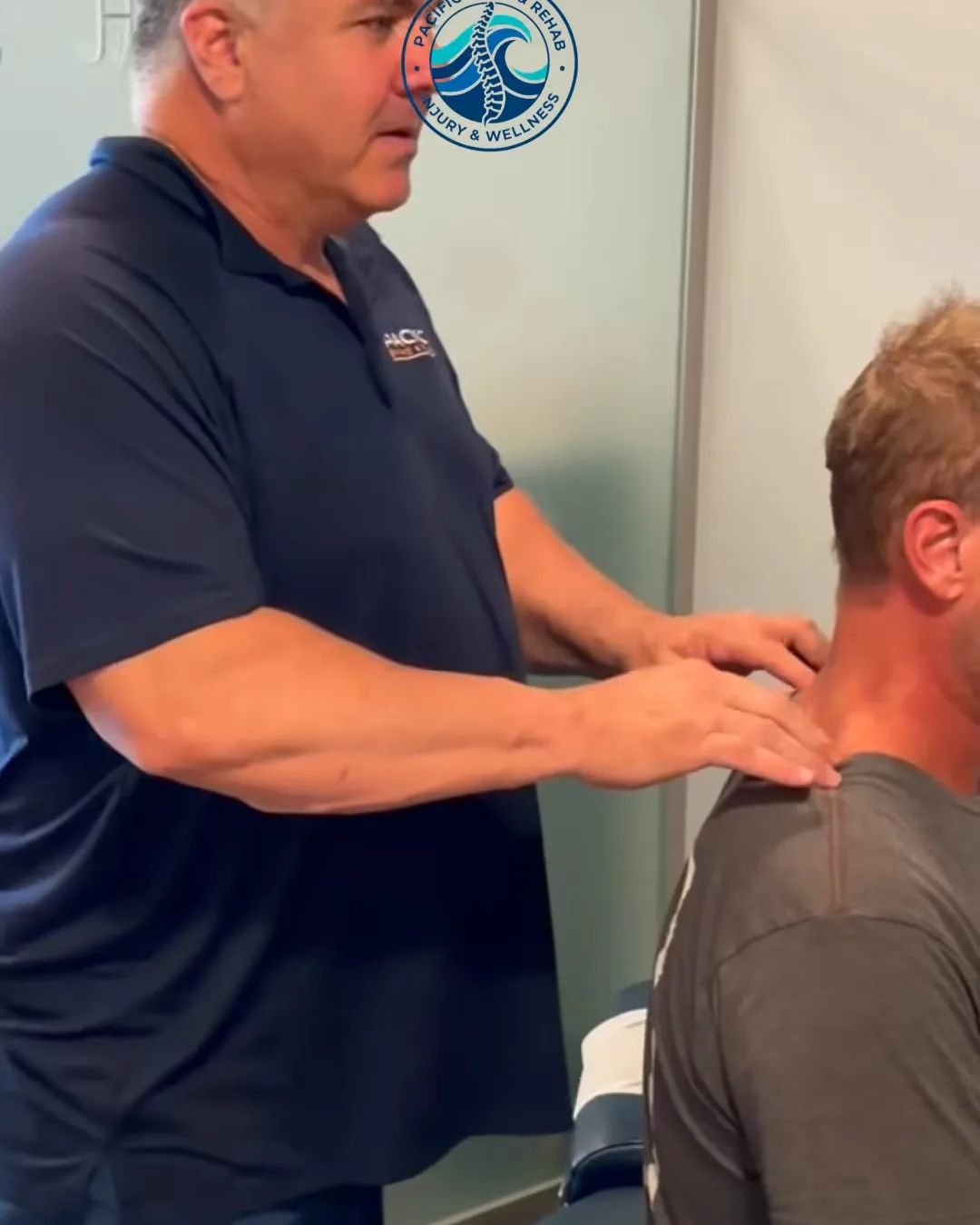
Posture, range of motion, joint mechanics and orthopedic or neurological tests.
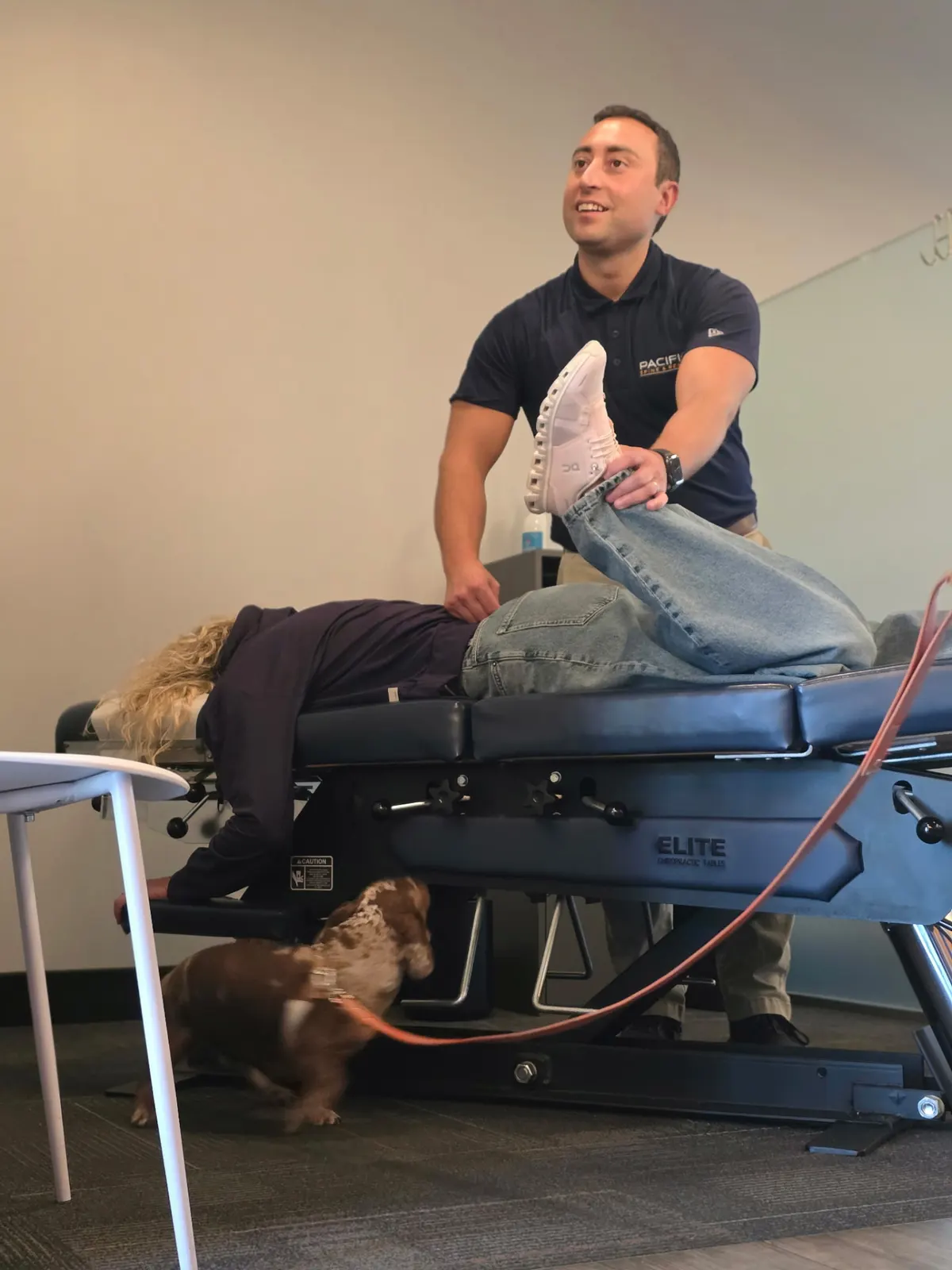
When the exam clears you, your first treatment happens the same visit.
Before you arrive
When to get seen
Always get evaluated within 72 hours of any motor vehicle accident — even if you feel fine. Documentation and early treatment dramatically improve recovery and protect your claim.
Seek urgent evaluation if you have any of these:
Treatment
Whiplash care follows a phased protocol: calm the inflammation, restore motion, then rebuild stability.
Prevention
Tips
Your doctors
Oceanside
Carlsbad (Bressi Ranch)
FAQ
Yes — many whiplash injuries don't show symptoms for 24–72 hours. Early documentation and treatment dramatically improve outcomes.
No. We treat auto-accident whiplash on lien — your treatment is paid from your settlement, not your wallet.
Mild whiplash (Grade I–II) typically resolves in 4–8 weeks with treatment. More severe cases take 3–6 months.
Up to 40% of untreated whiplash cases become chronic. Early, structured care significantly reduces that risk.
Yes — we coordinate documentation and reports with personal injury attorneys regularly.
Common symptoms include: neck pain and stiffness; headaches starting at the base of the skull; reduced neck range of motion; shoulder and upper-back pain; dizziness or visual disturbance; numbness or tingling in the arm; fatigue, irritability, or trouble focusing, and disturbed sleep.
Seek urgent evaluation if you have: severe headache or vomiting; loss of consciousness, even briefly; numbness or weakness in the arms or legs; loss of coordination or balance, and inability to remember the accident.
These habits help: set headrest level with the top of your head; sit upright — not reclined — while driving; brace your head against the headrest if a collision is imminent; don't return to contact sports until cleared, and maintain neck strength and mobility year-round.
Yes. Bring recent imaging on a disc, a portal link, or your phone. A photo of the report is also useful.
Ask the office to check your specific MedPay or personal injury claim. Pacific Spine & Rehab does not participate with most health plans.
Keep reading
Auto injury
New-patient visit includes exam, diagnosis, and a written treatment plan — same-day appointments most weekdays at our Oceanside and Carlsbad offices.