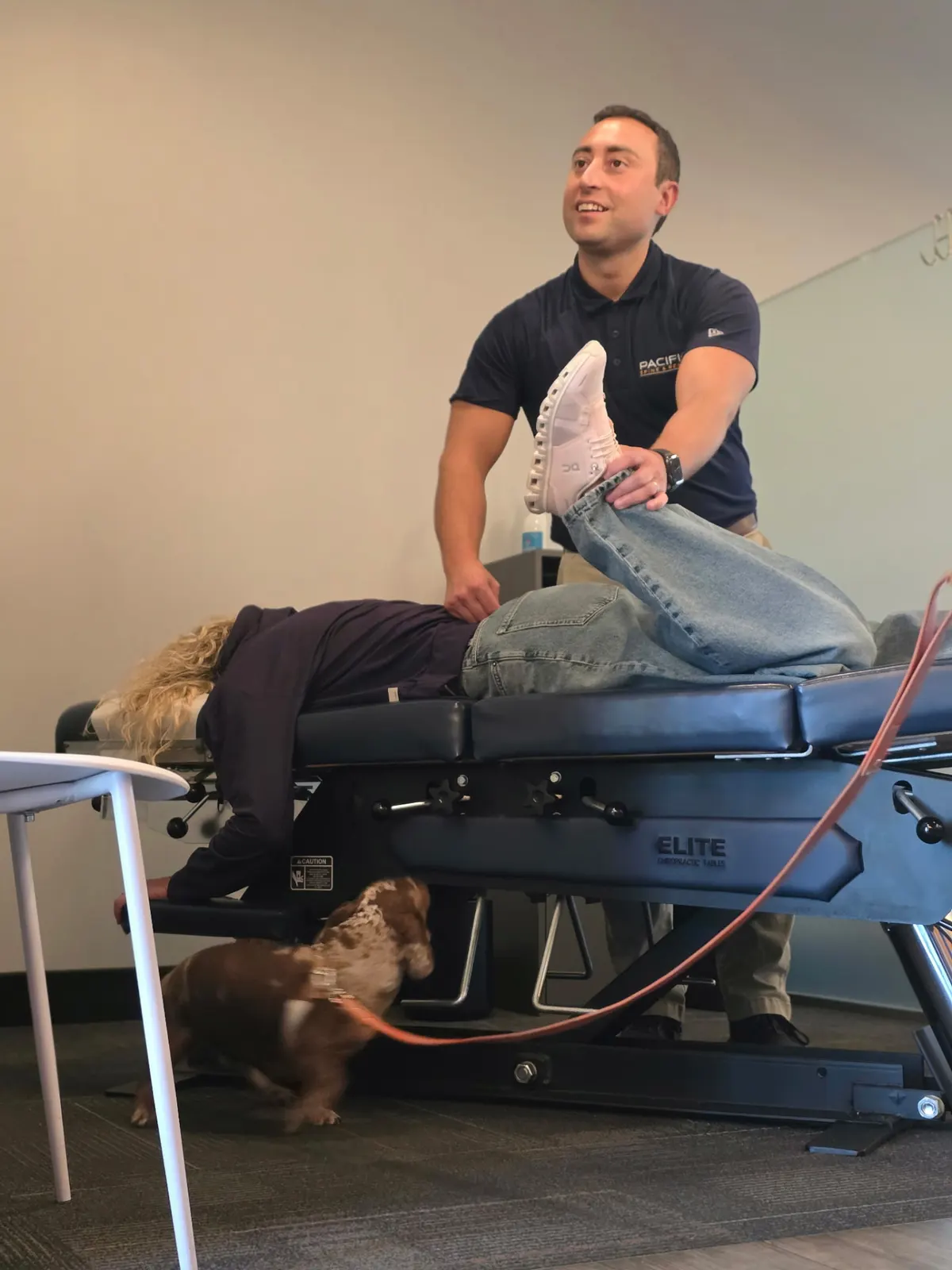
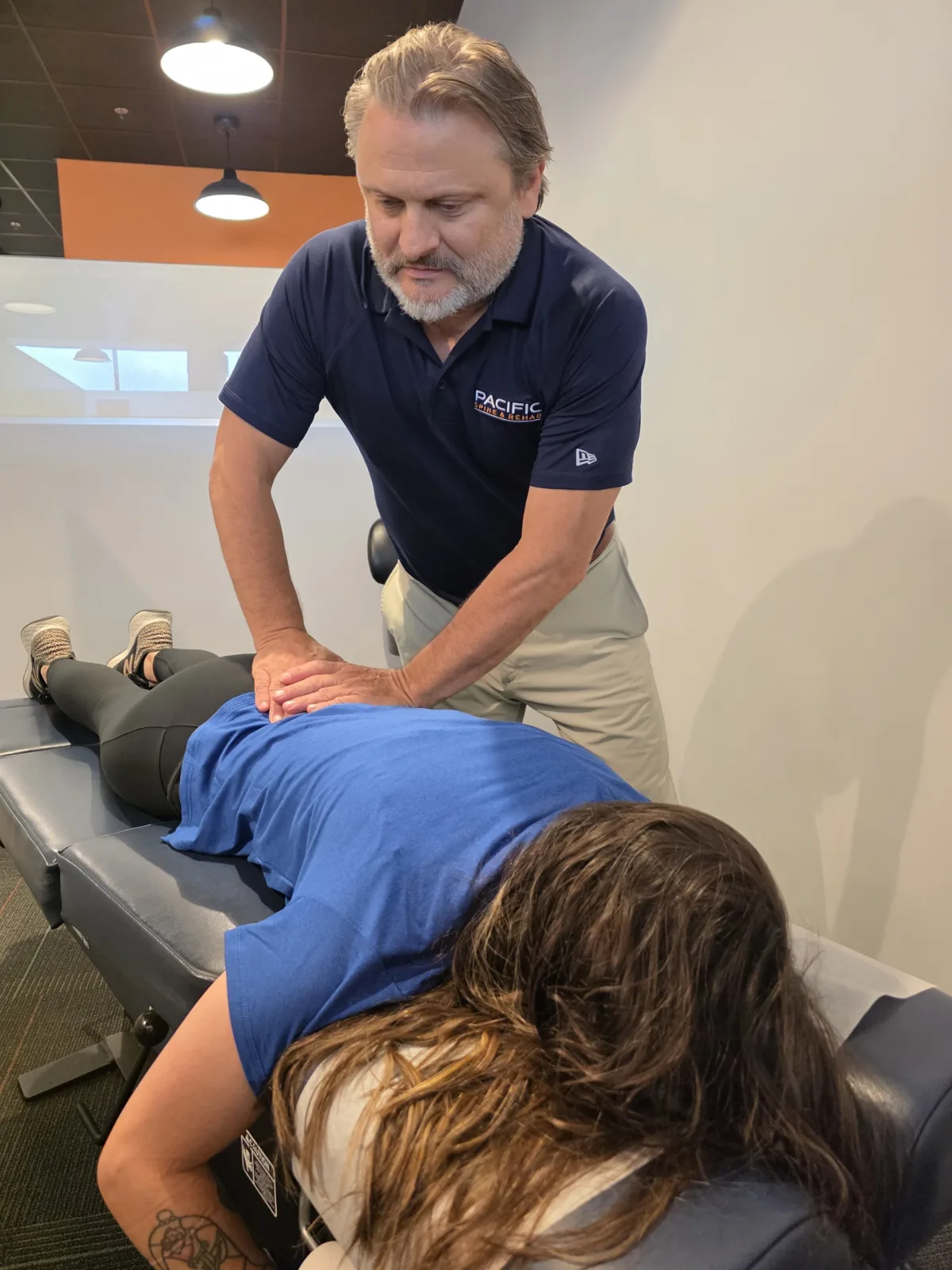
Chiropractic first visit
$49
- Consultation
- Full exam and movement screen
- First chiropractic treatment
Most herniated discs improve without surgery, and many people want hands on care while they heal. Here is what a chiropractor can and cannot do for a disc, how safe it is, how long recovery usually takes, and which symptoms need a medical doctor first.
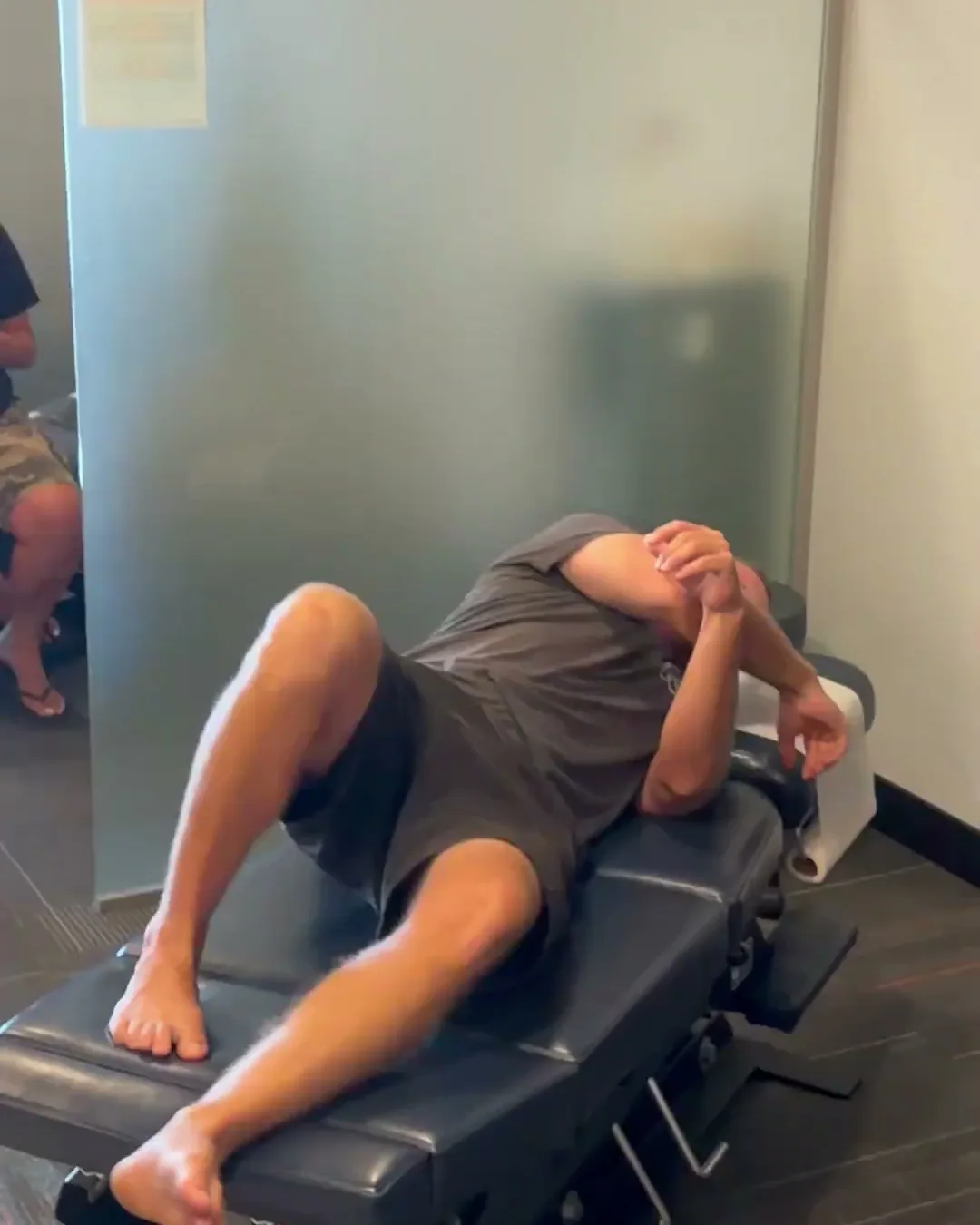
If an MRI report or another provider told you that you have a herniated disc, one of the first questions is whether to see a chiropractor for herniated disc pain or avoid one. It is a reasonable worry. A disc problem can cause sharp back pain, sciatica down the leg or arm pain, and nobody wants a treatment that makes it worse.
The short version: most disc herniations calm down without surgery, and conservative care is the usual first step. This guide explains how chiropractic care fits into that, what treatment actually looks like for a disc, how safe it is, a realistic recovery timeline, and the symptoms that mean you should see a medical doctor or go to the emergency room first.
Ready to get checked? See our chiropractor in Oceanside page or the new patient special offers.
Quick answer
Yes, for many people. A chiropractor for herniated disc pain examines your nerves first, then uses gentle adjustments or mobilization, soft tissue work and graded exercise to reduce pain and restore movement while the disc settles. Most herniated discs improve without surgery over weeks to a few months. Bladder or bowel changes, or worsening leg weakness, need emergency care first.
Key takeaways
Yes, for many people a chiropractor can help a herniated disc by easing pain, restoring motion and guiding you back to normal activity while the disc heals on its own. Chiropractic care does not push a disc back into place, and nobody can honestly promise that. What it can do is reduce the guarding, stiffness and nerve irritation that make a disc flare so painful.
Chiropractic first visit
$49
Shockwave first visit
$75
New patients only. Same-day first treatment when appropriate. Personal injury and auto accident claims are billed on lien instead. Available at both offices. See details
A herniated disc happens when the soft center of a spinal disc pushes through a tear in its tougher outer ring and irritates a nearby nerve. In the low back that often shows up as sciatica, pain that travels into the buttock and leg. In the neck it can send pain, tingling or weakness into the arm. Our herniated and bulging disc page explains the condition and how we treat it in more detail.
The American Academy of Orthopaedic Surgeons notes that for most patients a herniated disc slowly improves over days to weeks, and most are free of symptoms by about 3 to 4 months (OrthoInfo, AAOS). Conservative care aims to keep you moving and comfortable during that window.
Treatment for a disc is usually gentler and more exercise based than people expect. The mix depends on your exam, which nerve is involved and how irritable the disc is right now.
| Approach | What it does | When it fits |
|---|---|---|
| Gentle chiropractic adjustments or mobilization | Restores motion in stiff joints above and below the irritated level | When nerve tests are stable and movement eases symptoms |
| Soft tissue work | Calms muscle guarding around the spine and hip | Early, when muscles are locked up and sore |
| Directional exercises | Uses positions that reduce leg or arm symptoms (centralization) | From the first visit when a helpful direction is found |
| Corrective exercise and rehab therapy | Builds hip, trunk and back strength so the spine tolerates load again | Started early and progressed over weeks |
| Activity and sitting advice | Keeps you active without aggravating the disc | Every visit |
For most people with a stable disc problem, yes, when the chiropractor screens first and keeps treatment gentle. The safety step that matters most is the exam before any hands on care: reflexes, muscle strength, sensation and a check for red flag symptoms.
The National Center for Complementary and Integrative Health says mild to moderate side effects such as increased pain, stiffness or headache are common after spinal manipulation and most resolve within 24 hours, while serious complications are very rare (NCCIH, NIH). With a disc, we often use low force mobilization instead of quick thrusts near the irritated level, and we stop or change any technique that sends symptoms further down the leg or arm.
Many people notice meaningful change within the first 2 to 6 weeks of care, and most disc symptoms settle over about 3 to 4 months. Flare ups along the way are normal and do not mean the plan has failed.
We set a re-evaluation visit early in care and compare your strength, reflexes, walking and sitting tolerance against your first exam. If the numbers are not moving in the right direction, we change the plan or refer you, rather than adding visits.
| Stage | What people commonly notice | Focus of care |
|---|---|---|
| First 1 to 2 weeks | Sharp pain, trouble sitting, leg or arm symptoms | Calm the flare, find positions that help, stay gently active |
| Weeks 2 to 6 | Leg or arm pain eases first, back or neck pain lingers | Restore motion, start strength work |
| Weeks 6 to 12 | Longer sitting and walking, fewer flares | Load tolerance, return to work, sport and lifting |
| After 3 months | Most people are much better. Ongoing nerve symptoms need a medical opinion | Prevention or referral |
Both are reasonable conservative options, and the best care often blends them: hands on treatment to ease pain and motion, plus a progressive exercise plan. What matters more than the title is a careful nerve exam, a clear plan with a re-check date, and exercise you can continue on your own.
At our offices, adjustments and soft tissue work sit alongside active rehab in the same visit, so you do not have to coordinate two providers. If you are comparing options, our article on pinched nerve vs compressed disc explains how disc and nerve findings guide the choice.
A herniated disc needs emergency care when it presses on the nerves that control the bladder, bowel or legs. These cases are uncommon, but they should go to the emergency room, not a chiropractor or a wait and see approach.
Go to the ER or urgent care right away if you have
Loss of bladder or bowel control or new trouble urinating, numbness in the groin or inner thighs, leg weakness that is getting worse or foot drop, severe pain with fever, or back pain after a significant fall or crash. AAOS describes bladder or bowel loss as a medical emergency that requires immediate attention.
Pacific Spine & Rehab sees disc patients at our Oceanside office on Vista Way and our Carlsbad office in Bressi Ranch, with same day visits most weekdays. If leg pain is your main symptom, our Oceanside sciatica care page explains what local treatment looks like, and you can read more about lower back pain treatment. New patients can start with the $49 New Patient Special on our special offers page, and our what to expect page walks through the first visit.
No one can push a herniated disc back into place. A chiropractor can reduce pain, restore motion and guide exercise while the disc heals on its own, which most herniations do over weeks to a few months. Care should start with a full nerve exam.
If you have no red flags, either is a reasonable first step, and a chiropractor will refer you if the exam calls for imaging or a medical opinion. See a medical doctor or go to the ER first for bladder or bowel changes, groin numbness, fever or worsening weakness.
It depends on how irritable the disc is and how you respond. Plans usually start with more frequent visits, then taper as you improve. A re-evaluation early in care compares your strength and symptoms to the first exam so the plan can be adjusted or ended.
Forceful self cracking is not a treatment for a disc. In the clinic, many disc patients do best with gentle mobilization, soft tissue work and directional exercise. Any technique that sends pain further down the leg or arm should be stopped and the plan reviewed.
Usually not. Most people with suspected disc pain do not need an MRI unless they have red flags, worsening weakness or symptoms that are not improving after several weeks. Bring any imaging reports you already have to your first visit so we can review them.
Same-day appointments
Get an exam, a diagnosis, and a written plan — two North County offices, treatment on lien for injury cases.
Written by
Dr. Peter Thompson, DC
Doctor of Chiropractic
Dr. Peter Thompson is a doctor of chiropractic at Pacific Spine & Rehab, which has offices in Oceanside and Carlsbad (Bressi Ranch). He writes about back and neck pain, sports injuries, shockwave therapy, and recovery after auto accidents.