Chiropractic first visit
$49
- Consultation
- Full exam and movement screen
- First chiropractic treatment
Most people with new back or neck pain do not need an X ray before seeing a chiropractor. Here are the exceptions, what to bring and how a first exam works.

Many people call us before booking and ask the same thing: do I need an x ray before chiropractor care, or should I get one from my doctor first? It is a fair question, because some offices X ray everyone and others rarely do.
For most people with a new episode of back or neck pain, the answer is no. This guide explains when imaging actually changes care, why it is skipped for most new pain, what to do after a car accident or fall, which records to bring and what happens at a first visit without an X ray.
Ready to get checked? See our chiropractor in Oceanside page or the new patient special offers.
Quick answer
Usually not. Most people with new back or neck pain do not need an X ray before seeing a chiropractor. A history and hands on exam guide care, and imaging is saved for red flags such as a recent fall or crash, numbness or weakness, fever, unexplained weight loss, a cancer history, or pain that does not improve.
Key takeaways
A chiropractor needs an X ray when your history or exam raises the chance of a problem that imaging can find and that would change your care, such as a fracture, an infection, a tumor or significant instability. These warning signs are often called red flags.
Chiropractic first visit
$49
Shockwave first visit
$75
New patients only. Same-day first treatment when appropriate. Personal injury and auto accident claims are billed on lien instead. Available at both offices. See details
The table shows the situations that commonly lead to imaging and the ones that usually do not. Your provider weighs them together with your exam.
| Situation | Imaging usually needed? | Why |
|---|---|---|
| New low back or neck pain, no injury, no red flags | Usually no | Most cases improve with conservative care, and images rarely change the plan |
| Recent car crash, fall or sports collision with significant pain | Often yes | Rule out fracture or instability before hands on care |
| Numbness, weakness or reflex changes in an arm or leg | Sometimes, often MRI | Checks for nerve compression when findings are significant or worsening |
| History of cancer, unexplained weight loss or fever | Yes, with medical evaluation | Rule out serious disease |
| Osteoporosis, long term steroid use or older age with new pain after minor strain | Often yes | Higher risk of compression fracture |
| Pain not improving after about 4 to 6 weeks of care | Consider it | Reassess the cause and the plan |
Most new back and neck pain comes from muscles, joints and ligaments that an X ray does not show well, so the picture rarely changes the plan. The American Chiropractic Association's Choosing Wisely recommendation says not to obtain spinal X rays during the six weeks after low back pain starts in the absence of red flags.
There are other reasons to skip routine films. X rays use a small dose of ionizing radiation, they add cost, and they often show age related changes such as disc narrowing or bone spurs in people with no pain at all. Seeing those findings can make people more worried without pointing to the cause. Our lower back pain page and neck pain page explain the common causes an exam looks for.
After a car accident, fall or hard sports hit, imaging is more likely to be needed, and some symptoms mean you should go to the emergency room before seeing anyone else. Once serious injury is ruled out, a chiropractor can treat the neck and back strain that follows most crashes.
If you were seen in an emergency room or urgent care after the crash, ask for copies of any imaging reports and bring them. Our whiplash page covers the common neck injury after a rear end collision.
Go to the emergency room first if you have
Loss of consciousness, confusion, a severe or worsening headache, numbness or weakness in the arms or legs, loss of bladder or bowel control, severe neck pain after a high speed crash, or back pain after a significant fall. These need medical imaging and evaluation before chiropractic care.
Yes. Bring the written reports from any X ray, MRI or CT of the area that hurts, especially from the last few years. The report is usually more useful than the images themselves, and it can save you from repeating a test.
Also bring a list of medications, any surgeries, and notes from other providers you have seen for this problem. If a past MRI showed a disc problem, our herniated and bulging disc page explains how those findings relate to symptoms.
Each test answers a different question, which is why the right one depends on what your exam suggests. X rays show bone, MRI shows soft tissue and nerves, and CT shows bone in more detail.
| Test | Best at showing | Commonly used for |
|---|---|---|
| X ray | Bones, alignment, fractures, arthritis changes | Trauma, suspected fracture, instability, structural concerns |
| MRI | Discs, nerves, ligaments, spinal cord | Significant or worsening nerve symptoms, suspected serious disease |
| CT | Detailed bone anatomy | Complex fractures, cases where MRI is not possible |
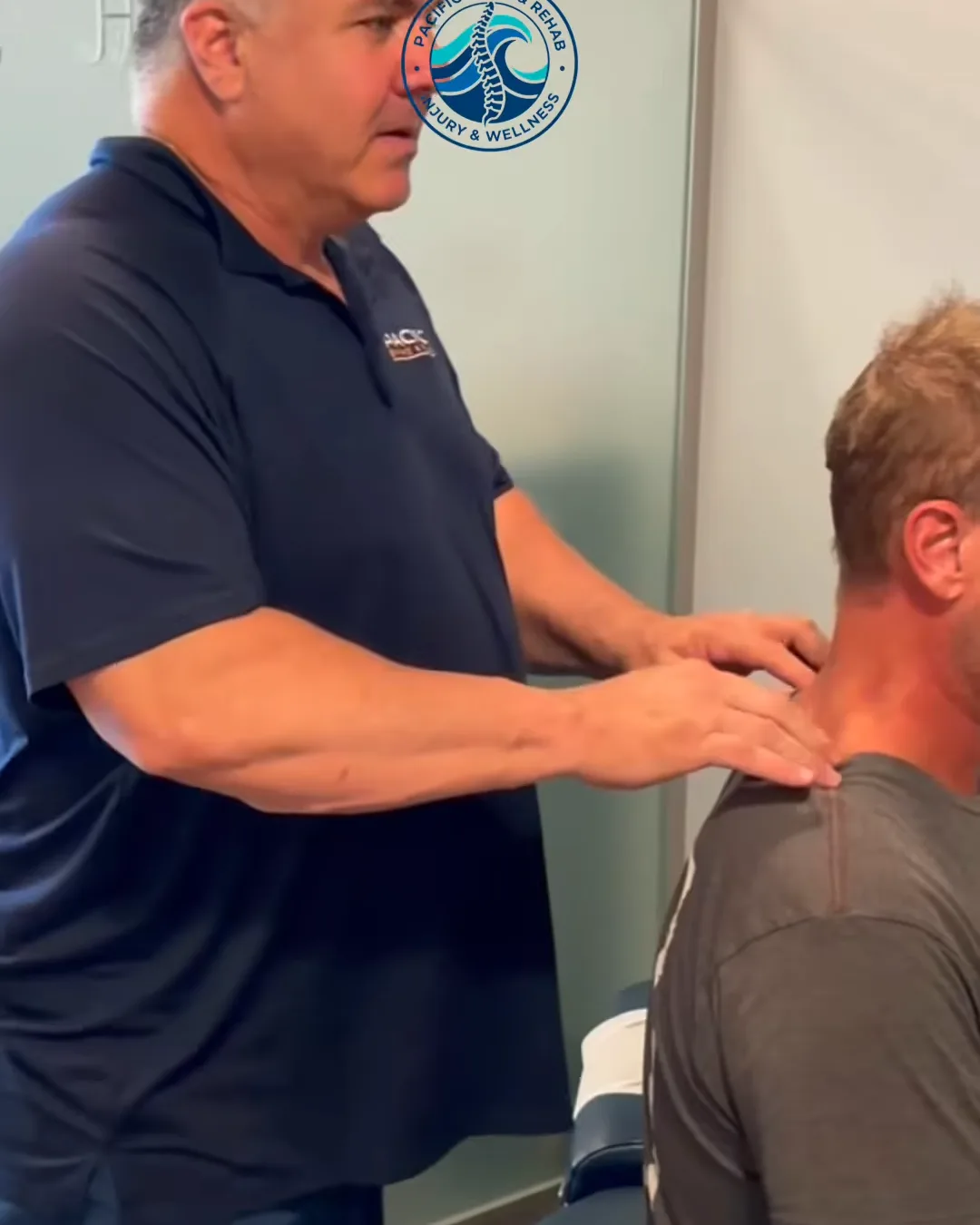
Without an X ray, your first visit relies on a careful history and a hands on exam, which is how most chiropractic care is planned. If anything in the exam points to imaging or a medical evaluation, we order or refer for it before treatment. Our what to expect page walks through the visit, and our article on what happens during a chiropractic adjustment covers the treatment itself.
You do not need a referral or an X ray to book a first visit at Pacific Spine & Rehab. Our Carlsbad office in Bressi Ranch and our Oceanside office on Vista Way offer same day visits most weekdays. Hours are Monday to Friday 10 AM to 6 PM and Saturday 10 AM to 4 PM, with free parking and Spanish spoken.
New patients can start with the $49 New Patient Special. See our new patient special offers for what it includes. If you were hurt in a crash, we accept MedPay and third party personal injury claims on lien.
Some offices X ray most new patients, but current guidance favors imaging only when the history or exam suggests a reason, such as trauma or nerve symptoms. At a first visit, expect a detailed history and exam. If imaging would change your care, your chiropractor can order it or refer you.
Chiropractors can recommend and often order or refer for imaging, including MRI, when exam findings call for it, such as significant or worsening nerve symptoms. In many cases an MRI is coordinated with a medical provider. Most people with new back pain do not need an MRI early on.
For most people with new back or neck pain and no red flags, yes. A careful history, red flag screening and a neurological exam identify the people who need imaging first. Tell your chiropractor about any falls, cancer history, osteoporosis, fever or numbness so they can decide correctly.
Usually you do not need to. If you have recent trauma, numbness or weakness, fever, unexplained weight loss or a cancer history, see a medical provider first. Otherwise you can book directly, and the chiropractor will refer you for imaging if the exam shows it is needed.
A spine X ray uses a small dose of ionizing radiation, more than a chest X ray but far less than a CT scan. The dose is low, but avoiding unnecessary imaging is still good practice, which is one reason guidelines discourage routine X rays for new back pain.
Same-day appointments
Get an exam, a diagnosis, and a written plan — two North County offices, treatment on lien for injury cases.
Written by
Dr. Peter Thompson, DC
Doctor of Chiropractic
Dr. Peter Thompson is a doctor of chiropractic at Pacific Spine & Rehab, which has offices in Oceanside and Carlsbad (Bressi Ranch). He writes about back and neck pain, sports injuries, shockwave therapy, and recovery after auto accidents.