Chiropractic first visit
$49
- Consultation
- Full exam and movement screen
- First chiropractic treatment
Sciatica often feels worse at night, and the wrong position can keep you up for hours. Here are the sleeping positions and pillow setups that usually help, the ones to avoid, how to get out of bed with less pain and when night pain needs a doctor.
Sciatica has a way of getting louder once you lie down. The pain that was manageable during the day turns into a deep ache in the buttock or a burning line down the leg, and every turn in bed wakes you up. Finding the best sleeping position for sciatica can make a real difference to how you feel the next day.
This guide covers the positions that usually help, which side to sleep on, simple pillow setups, the positions to avoid, how to get out of bed with less pain and the night time symptoms that mean you should see a doctor.
Ready to get checked? See our sciatica treatment in Oceanside page or the new patient special offers.
Quick answer
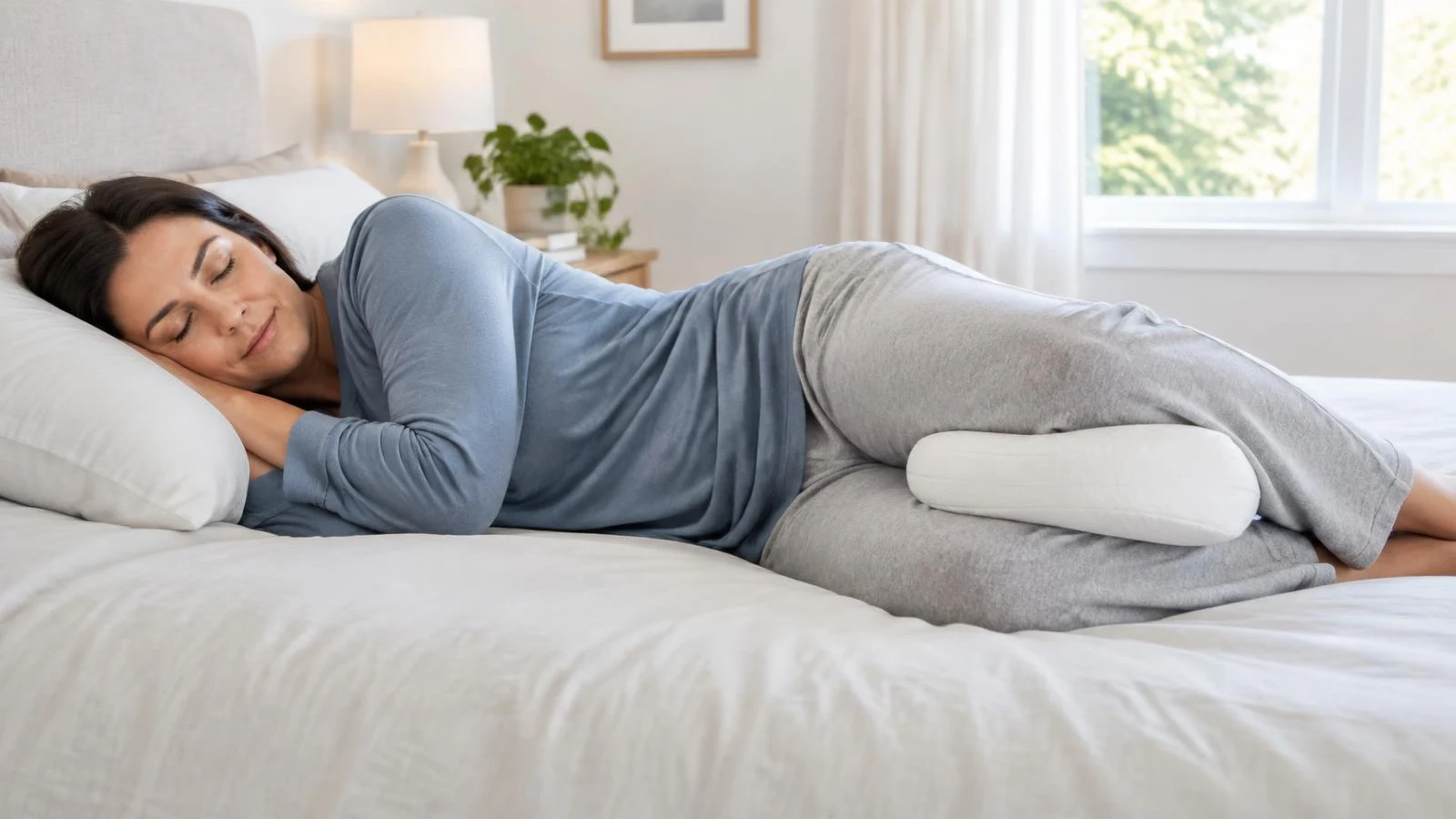
The best sleeping position for sciatica is usually on your side with a pillow between your knees, or on your back with a pillow under your knees. Both keep the pelvis and lower back neutral and take tension off the sciatic nerve. Avoid sleeping on your stomach and twisted positions, and choose whichever position eases your leg pain most.
Key takeaways
For most people the best sleeping position for sciatica is side lying with a pillow between the knees, followed by lying on the back with a pillow under the knees. Both keep the pelvis level and the lower back in a neutral curve, which reduces pull on the irritated nerve root.
Chiropractic first visit
$49
Shockwave first visit
$75
New patients only. Same-day first treatment when appropriate. Personal injury and auto accident claims are billed on lien instead. Available at both offices. See details
Sciatica is a symptom of an irritated sciatic nerve or nerve root, often from a herniated disc or narrowing in the lower spine (MedlinePlus, NIH). Because the cause varies, test each setup for a few nights and keep the one that reduces your leg symptoms. Our sciatica page explains the common causes.
| Position | How to set it up | Who it often suits |
|---|---|---|
| Side lying with pillow between knees | Knees slightly bent, a firm pillow between knees and ankles so the top leg does not drop | Most people with sciatica, including disc related pain |
| Back lying with pillow under knees | One or two pillows under the knees, small rolled towel under the low back if comfortable | People who wake stiff or prefer the back |
| Reclined | Recliner or wedge pillow with knees supported | People with spinal stenosis who feel better bending forward |
| Fetal position, loose | Side lying with knees drawn up a little more | Some people with stenosis or a disc that likes gentle flexion |
| Stomach lying | If you must, a thin pillow under the hips and none under the head | Rarely a first choice for sciatica |
Most people are more comfortable sleeping with the painful side up, so the irritated leg is not pressed into the mattress. If lying on the painful side actually feels better, that is fine too. Comfort and fewer leg symptoms are the best guide.
Yes, for many people. Lying on your back with a pillow under the knees flattens the lower back slightly and relaxes the hamstrings, which reduces stretch on the sciatic nerve. Adding a small rolled towel under the low back helps some people and bothers others, so try it both ways.
If your sciatica comes from spinal stenosis, you may sleep better slightly reclined, because bending forward opens space for the nerves. Our herniated and bulging disc page explains how disc related sciatica often behaves differently from stenosis.
Positions that twist the pelvis or arch the lower back tend to make sciatica worse. Stomach sleeping is the most common culprit, followed by side lying with the top leg dropped forward over the bottom leg. If your pain sits deep in one buttock and flares with sitting, read sciatica vs piriformis syndrome to see which pattern fits.
Sciatica often feels worse at night because you are still for longer, joints stiffen, there are fewer distractions from pain and some positions keep the nerve under tension. MedlinePlus notes that sciatica pain can be worse at certain times of day, such as at night.
There is an important exception. MedlinePlus also lists back pain that is worse when you lie down or wakes you at night as a reason to contact your provider right away, because constant night pain that does not change with position can point to a problem other than a simple nerve irritation.
Contact a doctor right away if you have
Pain that wakes you every night no matter how you lie, unexplained fever or weight loss with back pain, new weakness or numbness in the leg or groin, loss of bladder or bowel control, or sciatica after a serious fall or crash. Bladder or bowel changes and numbness in the groin are an emergency.
A medium firm mattress that keeps the spine level is a common recommendation. Very soft beds let the hips sink and very hard beds can press on sore spots, so if your mattress sags, a firmer topper or a temporary switch to a firmer surface is worth trying before buying a new one.
Getting out of bed is often the most painful moment of the night. The log roll keeps your spine from twisting.
If sciatica is still keeping you up after a week or two of good sleep setups and gentle activity, an exam can find what is irritating the nerve and which positions and exercises suit your back. Care often combines chiropractic care, soft tissue work and corrective exercise that builds hip and core endurance. Learn more about lower back pain treatment.
Pacific Spine & Rehab treats sciatica at our Oceanside office on Vista Way and our Carlsbad office in Bressi Ranch. Our Oceanside sciatica care page explains local treatment, and new patients can start with the $49 New Patient Special on our special offers page. We offer same day visits most weekdays, free parking and Spanish spoken.
A medium firm mattress is a common recommendation because it keeps the spine level without pressing hard on sore spots. A sagging or very soft bed lets the hips sink and can aggravate sciatica. A firmer topper is an inexpensive way to test whether more support helps.
Yes, if you sleep on your side. A firm pillow between the knees, ideally reaching the ankles, keeps the top leg from dropping forward and twisting the pelvis. That reduces pull on the lower back and the sciatic nerve, and many people notice less leg pain overnight.
A loose fetal position helps some people, especially those with spinal stenosis who feel better bending forward. Curling up very tightly can bother disc related sciatica. Try a gentle knee bend first and keep the position that reduces your leg symptoms rather than the one that should work in theory.
A recliner or wedge pillow can help for a few nights, particularly if your sciatica eases when you bend forward or sit. It is fine as a short term option. If you need a recliner for weeks to sleep, get an exam to find out what is driving the nerve irritation.
Night pain often improves as the overall flare settles, which for many people takes a few weeks. Pain that wakes you every night regardless of position, comes with fever or weight loss, or keeps worsening is different and should be checked by a doctor promptly.
Same-day appointments
Get an exam, a diagnosis, and a written plan — two North County offices, treatment on lien for injury cases.
Written by
Dr. Peter Thompson, DC
Doctor of Chiropractic
Dr. Peter Thompson is a doctor of chiropractic at Pacific Spine & Rehab, which has offices in Oceanside and Carlsbad (Bressi Ranch). He writes about back and neck pain, sports injuries, shockwave therapy, and recovery after auto accidents.