Chiropractic first visit
$49
- Consultation
- Full exam and movement screen
- First chiropractic treatment
If your lower back aches after an hour in a chair or a long drive, slumped sitting is usually part of the story. Here are the likely causes, the desk fixes that help, and when to get checked.
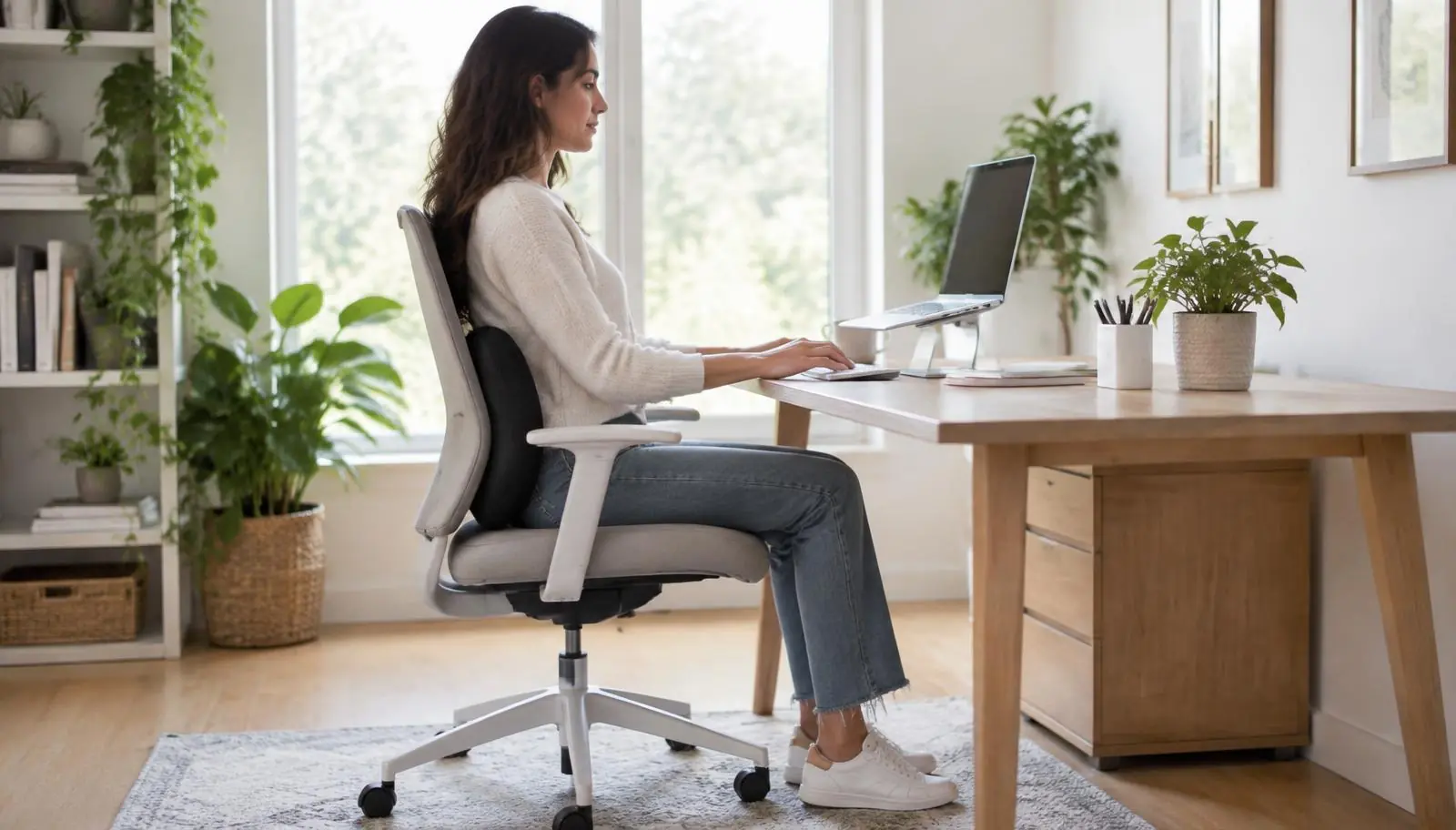
Many people who come into our Oceanside office with back pain describe the same pattern. Mornings are fine, standing and walking are fine, but an hour at the desk or a drive down the I-5 leaves the lower back aching and stiff when they finally stand up.
Sitting is not bad for you, but the way most of us sit, slumped and still for long stretches, puts steady load on the lower spine. The good news is that sitting related back pain usually responds well to a few setup changes, regular movement, and some targeted strength work. Here is what is going on and what to do about it.
Ready to get checked? See our back pain treatment in Oceanside page or the new patient special offers.
Quick answer
Lower back pain when sitting usually comes from slumping, which rounds the lower spine and loads the discs and joints for hours. Fix it by supporting your lower back, keeping your hips level with or slightly above your knees, standing up every 30 minutes, and strengthening your hips and core. Pain spreading down a leg needs an exam.
Key takeaways
When you sit without support, the pelvis tends to roll backward and the lower back rounds. That posture increases pressure on the discs between the vertebrae and stretches the ligaments at the back of the spine. Hold it for an hour and the muscles that support your spine fatigue, which shifts even more load onto those passive structures.
Chiropractic first visit
$49
Shockwave first visit
$75
New patients only. Same-day first treatment when appropriate. Personal injury and auto accident claims are billed on lien instead. Available at both offices. See details
At the same time, the hip flexors at the front of the hip sit in a shortened position, and the glute muscles switch off. When you stand up, tight hip flexors can pull on the lower spine, which is why the first few steps after a long meeting often feel stiff. If the pain travels into the buttock or leg, an irritated disc or nerve may be involved. Our pages on herniated and bulging discs and sciatica explain those patterns.
Habits matter too. Sitting on the edge of a soft couch with a laptop, perching forward on a stool, or spending a long commute with the seat reclined too far all push the lower back into the same rounded position. Most people do not notice how they sit until the ache shows up, which is why small reminders and a better default setup help so much.
| What you notice | Common contributor | What usually helps |
|---|---|---|
| Ache builds the longer you sit, eases when you stand | Muscle fatigue and sustained load from slumped posture | Lumbar support, position changes every 30 minutes |
| Sharp pain getting up from a chair, then it loosens | Stiff joints and tight hip flexors | Hip flexor stretches, glute strengthening, short walks |
| Pain worse sitting, better walking, sometimes into the buttock | Disc irritation | Avoid long slumped sitting, gentle walking, an exam if it persists |
| Pain on one side near the dimple of the low back | Sacroiliac (SI) joint irritation | Even weight through both hips, avoid crossing legs, targeted exercise |
| Burning, tingling, or numbness down the leg | Nerve irritation such as sciatica | Professional evaluation, especially if it is getting worse |
The targets below follow the OSHA computer workstation guidance. A good setup lowers the load on your back, but it does not replace movement.
No posture is good if you hold it all day. Set a reminder to stand, walk to refill your water, or take a phone call on your feet every 30 minutes. Even one or two minutes of movement resets the load on your spine.
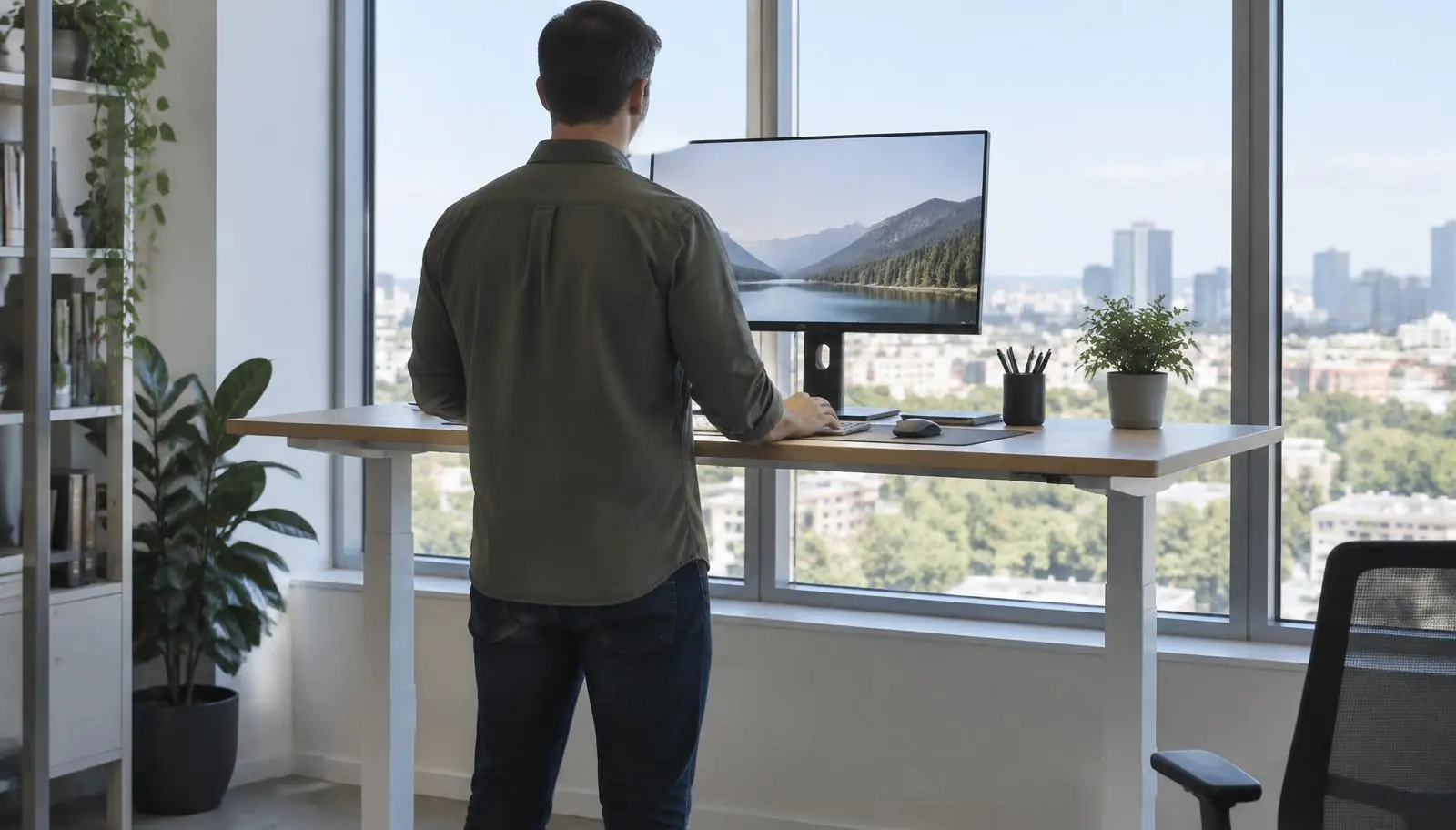
A sit stand desk can help if you actually alternate. A systematic review and meta analysis published through the CDC's National Institute for Occupational Safety and Health found that sit stand workstations may reduce low back discomfort for people who spend their day at a desk (CDC Stacks). The key is switching positions, not standing all day instead.
Do this short routine once or twice a day. Stop any exercise that sends pain further down the leg or causes numbness. A guided program through our corrective exercise service adjusts these to your specific pattern.
Get checked if any of the situations below apply to you. The National Institute of Neurological Disorders and Stroke notes that most low back pain improves with time and staying active, and that bed rest is not recommended for most people. When pain lingers, chiropractic care combined with rehab therapy can restore movement and build the strength that makes sitting comfortable again.
Our Oceanside back pain office on Vista Way and our Carlsbad office in Bressi Ranch offer same day visits most weekdays, and new patients can start with the $49 New Patient Special. Learn more about lower back pain treatment.
Seek urgent medical care if you have
Numbness in the groin or inner thighs, new trouble controlling your bladder or bowels, leg weakness that is getting worse, back pain with fever, or back pain after a fall or with a history of cancer. These can signal a serious condition that needs emergency evaluation.
Slumped sitting rounds the lower back and increases load on the discs and ligaments. Standing and walking restore the natural curve, so pain often eases. Pain that is clearly worse sitting can point to disc irritation.
Sit all the way back with your lower back supported, feet flat, hips level with or slightly above your knees, and your screen at eye level. Then change position every 30 minutes.
A chair without lumbar support or one that is too low can contribute, but how long you sit without moving usually matters more than the chair itself.
It can help if you alternate between sitting and standing. Standing all day creates its own problems, so the goal is regular position changes.
Get an exam if pain lasts more than two weeks or spreads into the leg. Numbness in the groin, bladder or bowel changes, or worsening leg weakness need emergency care.
Same-day appointments
Get an exam, a diagnosis, and a written plan — two North County offices, treatment on lien for injury cases.
Written by
Dr. Peter Thompson, DC
Doctor of Chiropractic
Dr. Peter Thompson is a doctor of chiropractic at Pacific Spine & Rehab, which has offices in Oceanside and Carlsbad (Bressi Ranch). He writes about back and neck pain, sports injuries, shockwave therapy, and recovery after auto accidents.