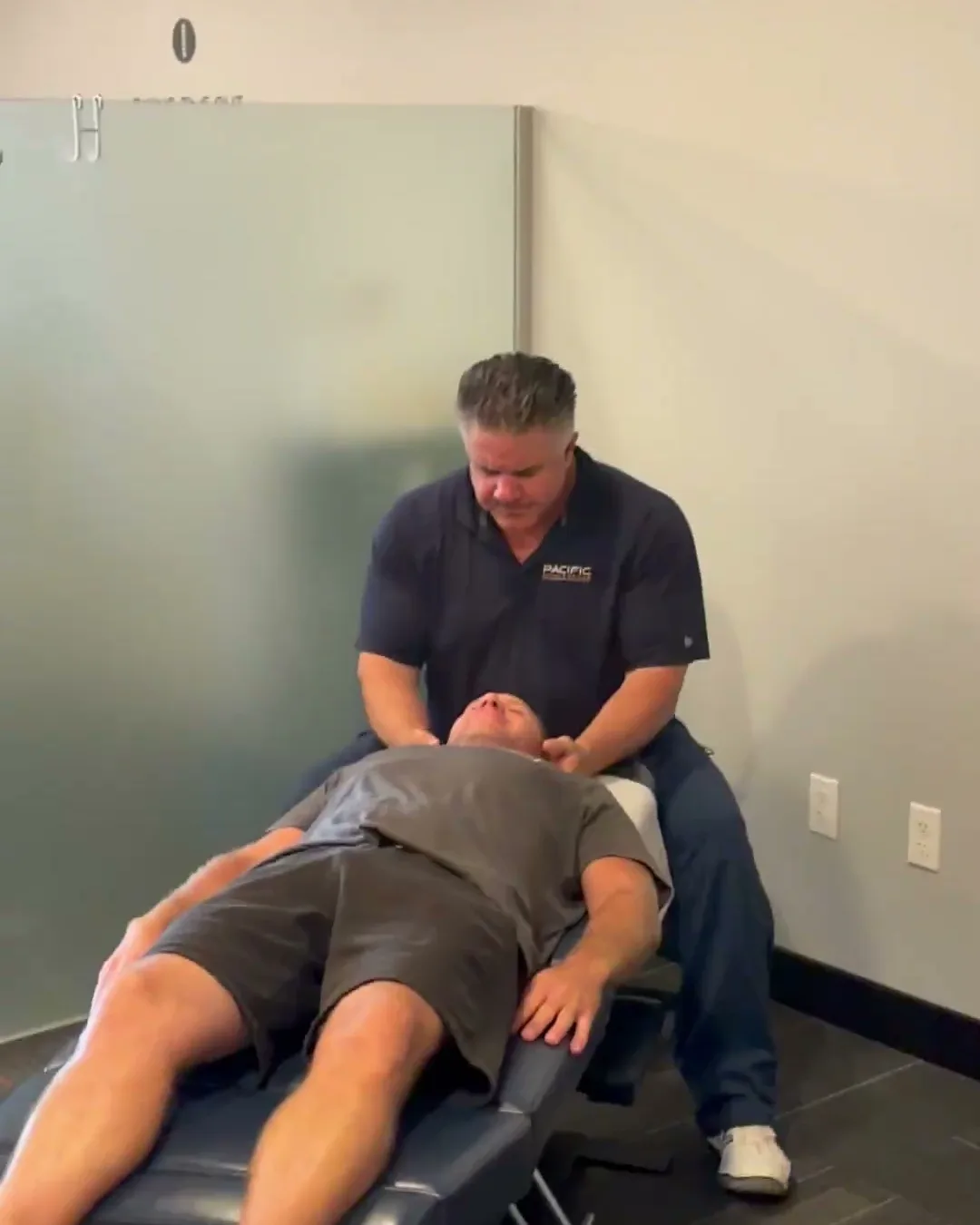
Chiropractic first visit
$49
- Consultation
- Full exam and movement screen
- First chiropractic treatment
You felt fine at the scene, then woke up two days later with a stiff neck and a headache. Here is why whiplash symptoms are often delayed, what to watch for, and when to get checked.

One of the most common stories we hear at our Oceanside and Carlsbad offices goes like this: the crash seemed minor, you exchanged information, drove home, and felt mostly okay. Then a day or two later your neck would not turn, a headache settled in behind your eyes, and your shoulders felt like concrete.
That delay is normal, and it is exactly why whiplash is easy to dismiss at first. This guide covers why symptoms show up late, what a typical timeline looks like, which symptoms need the emergency room, and what to do once you notice something has changed.
Ready to get checked? See our auto injury treatment in Oceanside page or the new patient special offers.
Quick answer
Whiplash symptoms often appear hours to days after a crash rather than at the scene. Common delayed signs include neck stiffness, headaches at the base of the skull, shoulder and upper back pain, dizziness, and tingling into the arms. Get examined within a few days, and go to the ER right away for severe or neurological symptoms.
Key takeaways
Whiplash is a neck injury caused by a fast back and forth movement of the head, most often in a rear end collision. The force strains the muscles, ligaments, and small joints of the neck and upper back. In the moments after a crash, adrenaline and stress hormones can mask pain, and you are focused on the car, the other driver, and getting home.
Chiropractic first visit
$49
Shockwave first visit
$75
New patients only. Same-day first treatment when appropriate. Personal injury and auto accident claims are billed on lien instead. Available at both offices. See details
Over the next several hours, inflammation in the strained tissue builds. Muscles tighten to guard the injured area, and stiffness sets in, often worst after a night of sleep. The National Library of Medicine notes that whiplash pain may not appear right away and can take hours to weeks to develop (MedlinePlus). Learn more about the injury itself on our whiplash page.
Every injury is different, but many people follow a similar pattern:
| When | What people commonly notice |
|---|---|
| At the scene and first few hours | Little or no pain, mild soreness, feeling shaken or wired |
| 24 to 72 hours | Neck stiffness, reduced turning, headache at the base of the skull, upper back and shoulder pain |
| First week | Pain with driving or computer work, poor sleep, fatigue, trouble concentrating, sometimes jaw pain |
| Weeks 2 to 6 | Most people improve steadily with activity and care. Lingering stiffness or headaches deserve a re-check |
| Past 3 months | Ongoing symptoms are less likely to resolve on their own and need a structured plan |
Headaches after a crash are common enough that they have their own page: see headaches and migraines. For neck pain that lingers, see our neck pain page.
There is no way to predict exactly who will develop delayed symptoms, and a low speed crash can still strain the neck. Damage to the car is a poor guide to injury, because a bumper that does not crumple can transfer more of the force to the people inside.
In our experience, a few situations tend to come with more noticeable delayed symptoms. None of them mean you will have a long recovery, but they are good reasons not to wait and see.
A chiropractor is a good first stop for most muscle and joint injuries after a crash. Some symptoms are different and need emergency medical care before anything else.
Call 911 or go to the emergency room if you have
Loss of consciousness, confusion, a headache that keeps getting worse, repeated vomiting, slurred speech, numbness or weakness in the arms or legs, trouble walking, loss of bladder or bowel control, severe neck pain after a high speed crash, or chest or abdominal pain. Once you are cleared, we can take over care of the soft tissue injury.
These steps protect your health first and your claim second. A gap of several weeks between the crash and your first visit is one of the things insurance adjusters question most.
Try not to swing to either extreme. Complete rest tends to make stiffness worse, while pushing through hard workouts or heavy lifting in the first week can aggravate strained tissue. Normal daily activity, gentle range of motion, and short walks are a reasonable middle ground until you have been examined.
Your first visit starts with a detailed history of the crash and every symptom since, followed by range of motion, orthopedic, and neurological testing. If findings suggest a fracture, disc injury, or nerve involvement, we refer for imaging or to a medical specialist. When care is appropriate, plans usually combine gentle chiropractic care, soft tissue work, and rehab therapy that rebuilds neck strength so the injury is less likely to linger.
Every visit is documented for your attorney or adjuster. We accept MedPay and third party personal injury claims on lien, so most accident patients start care without paying up front. We do not participate with most health plans, including TRICARE. Read more on our auto accident care page and personal injury page.
Our Oceanside auto accident office on Vista Way and our Carlsbad office in Bressi Ranch offer same day visits most weekdays. Hours are Monday to Friday 10 AM to 6 PM and Saturday 10 AM to 4 PM, with free parking and Spanish spoken.
Most people notice symptoms within 24 to 72 hours, but some develop headaches or stiffness a week or more later. Get checked as soon as something changes.
Yes. Some people feel only mild soreness at first and notice headaches, stiffness, or arm symptoms several days to a week after the crash.
A prompt exam is a good idea even if you feel fine, because delayed injuries are common and early documentation helps if symptoms appear later.
Loss of consciousness, confusion, a worsening headache, vomiting, numbness or weakness, trouble walking, or bladder or bowel changes need emergency care right away.
Usually not. We accept MedPay and third party personal injury claims on lien, so qualifying accident patients can start care without paying up front.
Same-day appointments
Get an exam, a diagnosis, and a written plan — two North County offices, treatment on lien for injury cases.
Written by
Dr. Peter Thompson, DC
Doctor of Chiropractic
Dr. Peter Thompson is a doctor of chiropractic at Pacific Spine & Rehab, which has offices in Oceanside and Carlsbad (Bressi Ranch). He writes about back and neck pain, sports injuries, shockwave therapy, and recovery after auto accidents.