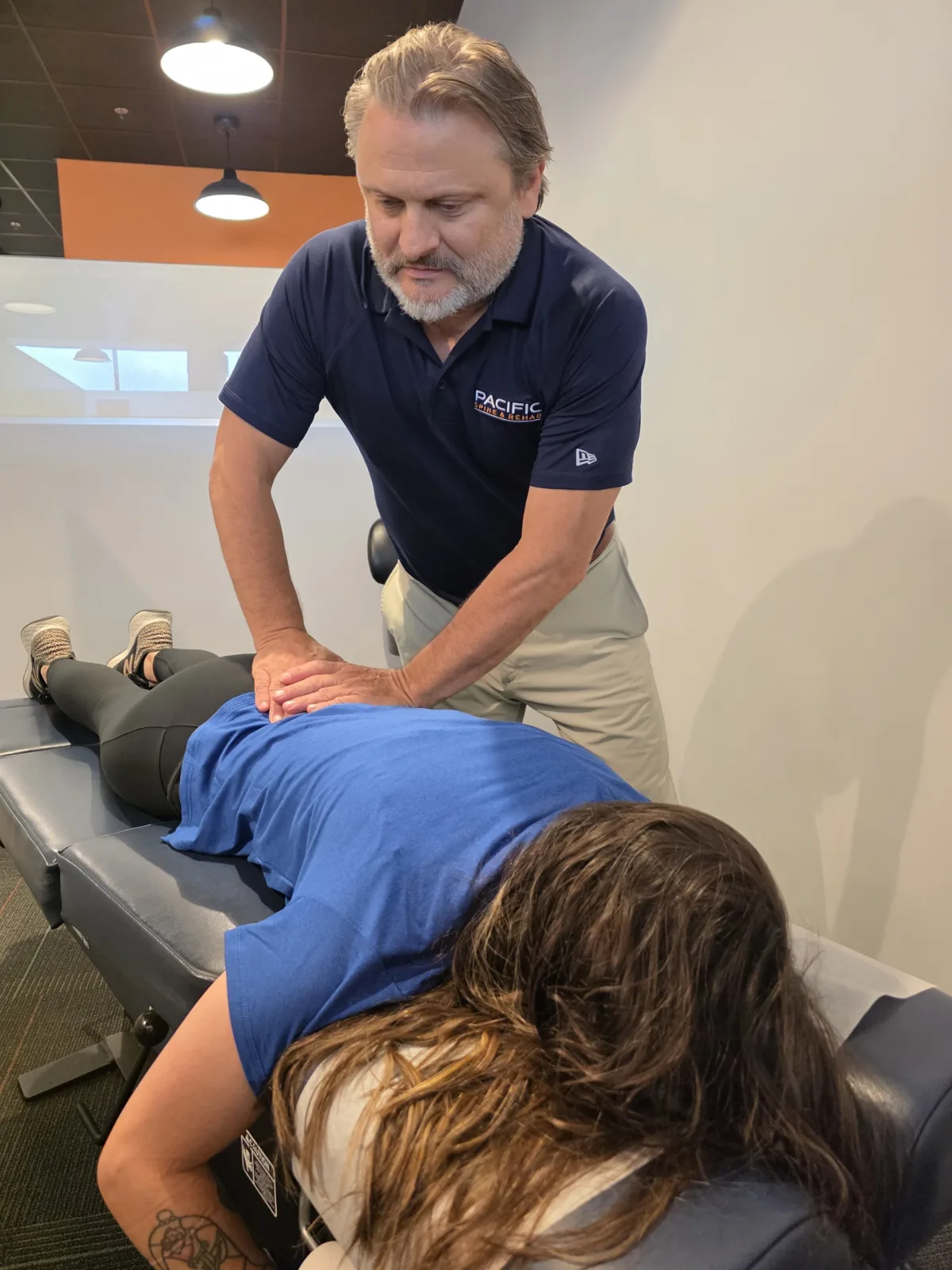
Chiropractic first visit
$49
- Consultation
- Full exam and movement screen
- First chiropractic treatment
Most whiplash improves within weeks, but some people still feel it months later. Here is a realistic recovery timeline by severity, what slows healing, what speeds it up and the warning signs that need a doctor first.

If your neck has been sore since a rear end collision on the 78 or a fender bender in a parking lot, the first question is usually simple: how long does whiplash last? The honest answer is that it depends on how hard your neck was strained, which symptoms you have and what you do in the first few weeks.
This guide walks through typical recovery times by severity, why some people heal slower, what you can do to speed things up and the warning signs that mean you should see a medical doctor before anyone else. It is general information, not a diagnosis.
Ready to get checked? See our auto injury treatment in Oceanside page or the new patient special offers.
Quick answer
Mild whiplash usually improves within a few days to a few weeks, and many people feel close to normal within about three months. Injuries with more pain, limited movement or nerve symptoms take longer, and research suggests about half of people still report some neck pain a year later. Staying gently active and getting checked early helps.
Key takeaways
For most people whiplash pain is worst in the first few days, then eases steadily over the next several weeks. Many feel close to normal within about three months, while a smaller group keeps some neck pain, stiffness or headaches for longer.
Chiropractic first visit
$49
Shockwave first visit
$75
New patients only. Same-day first treatment when appropriate. Personal injury and auto accident claims are billed on lien instead. Available at both offices. See details
Symptoms often start later than people expect. Stiffness may show up the next morning or two to three days after the crash, so the recovery clock really starts when symptoms appear. Our guide to delayed whiplash symptoms explains what can show up days later and why.
Longer term outcomes are more mixed than many people realize. A review by the Bone and Joint Decade Task Force on Neck Pain found that about 50 percent of people with whiplash still report neck pain symptoms one year after the injury (Spine, 2008, PubMed). That is not a reason to worry, but it is a good reason not to ignore symptoms that are not improving.
How long whiplash takes to heal also follows the normal stages of soft tissue healing. These stages overlap, and they describe tissue repair, not exactly how you will feel on a given day.
Clinicians often describe whiplash with the Quebec Task Force grades, which sort injuries by what the exam finds. Higher grades usually mean a longer recovery, though every person heals at a different pace.
| Grade | What it means | Typical recovery range |
|---|---|---|
| Grade 1 (mild whiplash) | Neck pain, stiffness or tenderness, but normal movement on exam | A few days to a few weeks |
| Grade 2 (moderate) | Neck pain plus reduced range of motion and tender spots | Several weeks to about 3 months |
| Grade 3 (with nerve signs) | Neck pain plus numbness, tingling, weakness or reflex changes | Often several months. Needs a medical evaluation |
| Grade 4 | Fracture or dislocation | Emergency and specialist care |
Yes, for some people. When neck pain, headaches or stiffness are still present after about three months, the problem is often called chronic whiplash or a chronic whiplash associated disorder. It does not mean something was missed or that it will never improve, but it usually needs a more active, structured plan.
Long lasting whiplash symptoms often include neck pain that flares with desk work or driving, headaches that start at the base of the skull, shoulder blade tightness and poor sleep. Our headaches and migraines page explains how neck related headaches are treated, and our neck pain page covers longer term neck problems.
The strongest predictor of a slow recovery is how intense the symptoms are at the start. The Task Force review found that greater initial pain, more symptoms and greater initial disability predicted slower recovery, while details of the crash itself, such as collision direction or headrest type, predicted very little.
The most helpful thing you can do is stay gently active within comfort. Most current guidance favors early movement and a gradual return to normal routines over bed rest or wearing a soft collar for weeks.
See a medical doctor or go to the ER before any chiropractic care if you have warning signs of a more serious injury. These are uncommon, but they matter more than any recovery timeline.
Go to the ER or urgent care first if you have
Loss of consciousness, confusion or memory problems, a severe or worsening headache, repeated vomiting, numbness, tingling or weakness in the arms or legs, trouble walking, speaking or swallowing, or severe neck pain after a high speed crash or rollover.
At your first visit we take a full history of the crash, check neck movement, strength, reflexes and sensation, and screen for red flags. If anything suggests imaging or a medical referral, we refer you before starting care. Care usually combines gentle chiropractic care, soft tissue work and rehab therapy that rebuilds neck and upper back strength so the recovery holds. The National Center for Complementary and Integrative Health reports that spinal manipulation or mobilization may help neck pain, with mostly mild, short lived side effects (NCCIH, NIH).
Pacific Spine & Rehab treats whiplash at our Oceanside office on Vista Way and our Carlsbad office in Bressi Ranch, with same day visits most weekdays and Spanish spoken. Read more about whiplash treatment, see our Oceanside auto accident chiropractor page, or learn how car accident care works. We accept MedPay and third party personal injury claims on lien, and new patients without a claim can start with the $49 New Patient Special on our special offers page.
Yes. Whiplash pain and stiffness often peak one to three days after the crash, once inflammation and muscle guarding build. If symptoms keep worsening after the first several days, or you develop numbness, weakness or a severe headache, get checked by a doctor promptly.
Most people notice steady improvement over several weeks, and many feel close to normal within about three months. Injuries with more pain, limited movement or nerve symptoms take longer. Research suggests about half of people still report some neck pain one year after the injury.
Usually not for long. Most current guidance favors gentle movement and a gradual return to normal activity over wearing a soft collar for weeks, because holding the neck still tends to prolong stiffness. A collar is different if a doctor suspects a fracture or instability.
Yes. Headaches that start at the base of the skull are a common whiplash symptom and can appear or linger for weeks. A sudden, severe or worsening headache, or one with confusion, vomiting or vision changes, needs emergency care rather than waiting.
Within the first few days to a week is a reasonable goal once a doctor has ruled out serious injury, or sooner if pain is building. An early exam documents your injury and starts a plan before stiffness settles in. Red flag symptoms always mean the ER first.
Whiplash headaches usually start at the base of the skull and often ease along with the neck pain over days to a few weeks. Some people have headaches for longer, especially when neck stiffness lingers. A sudden, severe or worsening headache, or one with confusion or vomiting, needs emergency care.
Same-day appointments
Get an exam, a diagnosis, and a written plan — two North County offices, treatment on lien for injury cases.
Written by
Dr. Peter Thompson, DC
Doctor of Chiropractic
Dr. Peter Thompson is a doctor of chiropractic at Pacific Spine & Rehab, which has offices in Oceanside and Carlsbad (Bressi Ranch). He writes about back and neck pain, sports injuries, shockwave therapy, and recovery after auto accidents.