Chiropractic first visit
$49
- Consultation
- Full exam and movement screen
- First chiropractic treatment
Pickleball elbow is the outer elbow tendon pain that shows up after a few weeks of extra games or a new paddle. Here is how to treat it, how long it takes, whether you can keep playing and how to stop it from coming back.
Pickleball elbow is one of the most common reasons players in Carlsbad and Oceanside call us after a busy season of open play. It usually starts as a dull ache on the outside of the elbow after games, then turns into sharp pain when you grip the paddle, shake hands or lift a coffee cup.
The good news is that most cases respond to conservative care. This guide explains what pickleball elbow is, why it happens, how to treat it, how long it takes, whether you can keep playing and the paddle and technique changes that help prevent it.
Ready to get checked? See our chiropractor in Oceanside page or the new patient special offers.
Quick answer
Pickleball elbow is tendon irritation on the outside of the elbow, the same condition as tennis elbow, caused by repeated gripping and backhand strain. Treatment combines reduced play, a counterforce brace, progressive forearm strengthening and grip or paddle changes. Most players improve without surgery. Shockwave therapy is an option when pain lasts more than about three months.
Key takeaways
Pickleball elbow is overuse irritation of the forearm tendons that attach to the outside of the elbow, the same condition doctors call lateral epicondylitis or tennis elbow. The American Academy of Orthopaedic Surgeons explains that it often involves small tears in the tendon of one forearm muscle, the extensor carpi radialis brevis, where it attaches to the outer elbow bone (OrthoInfo, AAOS).
Chiropractic first visit
$49
Shockwave first visit
$75
New patients only. Same-day first treatment when appropriate. Personal injury and auto accident claims are billed on lien instead. Available at both offices. See details
Less often, players get pain on the inside of the elbow, which is golfer's elbow. Our tennis elbow and golfer's elbow page explains both, and the treatment principles below apply to either side.
Pickleball elbow is caused by repeated load on the wrist extensor tendons faster than they can adapt. The most common trigger we hear about is a sudden jump in playing time, such as going from two sessions a week to daily open play or a weekend tournament.
Pickleball elbow treatment works best as a combination: reduce the load that irritates the tendon, then rebuild the tendon's capacity with progressive exercise. Passive treatments help with pain, but strength work is what lets you return to the court.
Most of the work happens between visits. Isometric holds, slow wrist extension with a light weight and grip work, progressed every week or two, are the core of most programs. Our corrective exercise and rehab therapy services build and progress that plan with you.
| Option | What it does | When it fits |
|---|---|---|
| Relative rest | Cuts the painful shots and session count, not all activity | From day one |
| Counterforce brace | Spreads load away from the sore tendon attachment | During play and heavy gripping |
| Isometric and slow strengthening exercises | Rebuilds tendon capacity and grip strength | Started early and progressed weekly |
| Soft tissue work and joint mobility | Eases forearm tension and stiffness in the elbow, wrist and neck | When muscles are tight and sore |
| Shockwave therapy | Stimulates a healing response in a stalled tendon | Pain lasting more than about 3 months |
| Paddle and technique changes | Lowers the load on every shot | Before you return to full play |
Mild pickleball elbow often settles in 6 to 12 weeks when load is managed early, while long standing cases can take several months. Tendons heal slowly, so steady progress matters more than speed.
AAOS reports that about 80 to 95 percent of patients have success with nonsurgical treatment, and surgery is usually only considered when symptoms do not respond after 6 to 12 months. If your elbow has hurt for more than three months despite rest and a home program, that is the point to ask about shockwave or a structured rehab plan.
Often yes, at a reduced level, if pain during play stays mild and is no worse the next morning. A simple rule: pain up to about 3 out of 10 during play that settles by the next day is usually acceptable, while pain that builds through the session or lingers into the next day means you did too much.
Prevention comes down to load, equipment and strength. Increase playing time gradually, check that your grip size fits your hand, and test a lighter paddle if your elbow is sensitive. AAOS notes that equipment changes in racquet sports can reduce forearm strain.
Keep up a short forearm and shoulder strengthening routine two or three times a week, and spread heavy gripping tasks off the court across the week. Players who also surf, golf or lift should count that load too. Our sports injuries page covers other overuse problems we see in North County athletes.
See a doctor or urgent care first if you have
A pop with sudden pain and bruising, an elbow you cannot fully straighten or bend after a fall, a hot, red, swollen joint or fever, or numbness and tingling in the fingers. These are not typical pickleball elbow and need a medical evaluation.
At your first visit we confirm whether the pain is tendon related, check the neck and shoulder for referred pain, test grip strength and build a plan around your playing schedule. Many players keep playing at a reduced level while they rehab.
Pacific Spine & Rehab offers shockwave therapy at our Carlsbad office in Bressi Ranch and our Oceanside office on Vista Way. Our Carlsbad shockwave therapy page explains local care, and our article on shockwave for tennis elbow, Achilles and shoulder pain covers the evidence. New patients can start with the $75 shockwave new patient special or the $49 New Patient Special. See current details on our pricing page.
Yes. Pickleball elbow is a nickname for lateral elbow tendinopathy, the same condition as tennis elbow. It affects the forearm tendons on the outside of the elbow. Pain on the inside of the elbow is golfer's elbow, which is treated with similar principles.
Not always. Many players can keep playing at a reduced level if pain stays mild during play and is no worse the next morning. If pain builds during games, lingers the next day or your grip is getting weaker, take a short break and start a structured rehab plan.
A counterforce brace worn just below the sore spot can reduce pain during play by spreading load away from the tendon attachment. It does not heal the tendon on its own, so pair it with strengthening exercises and smart changes to your playing load.
A lighter paddle with a grip that fits your hand often helps, because it reduces how hard you squeeze on each shot. Try a demo paddle before buying, and change one thing at a time so you can tell what actually eases your elbow.
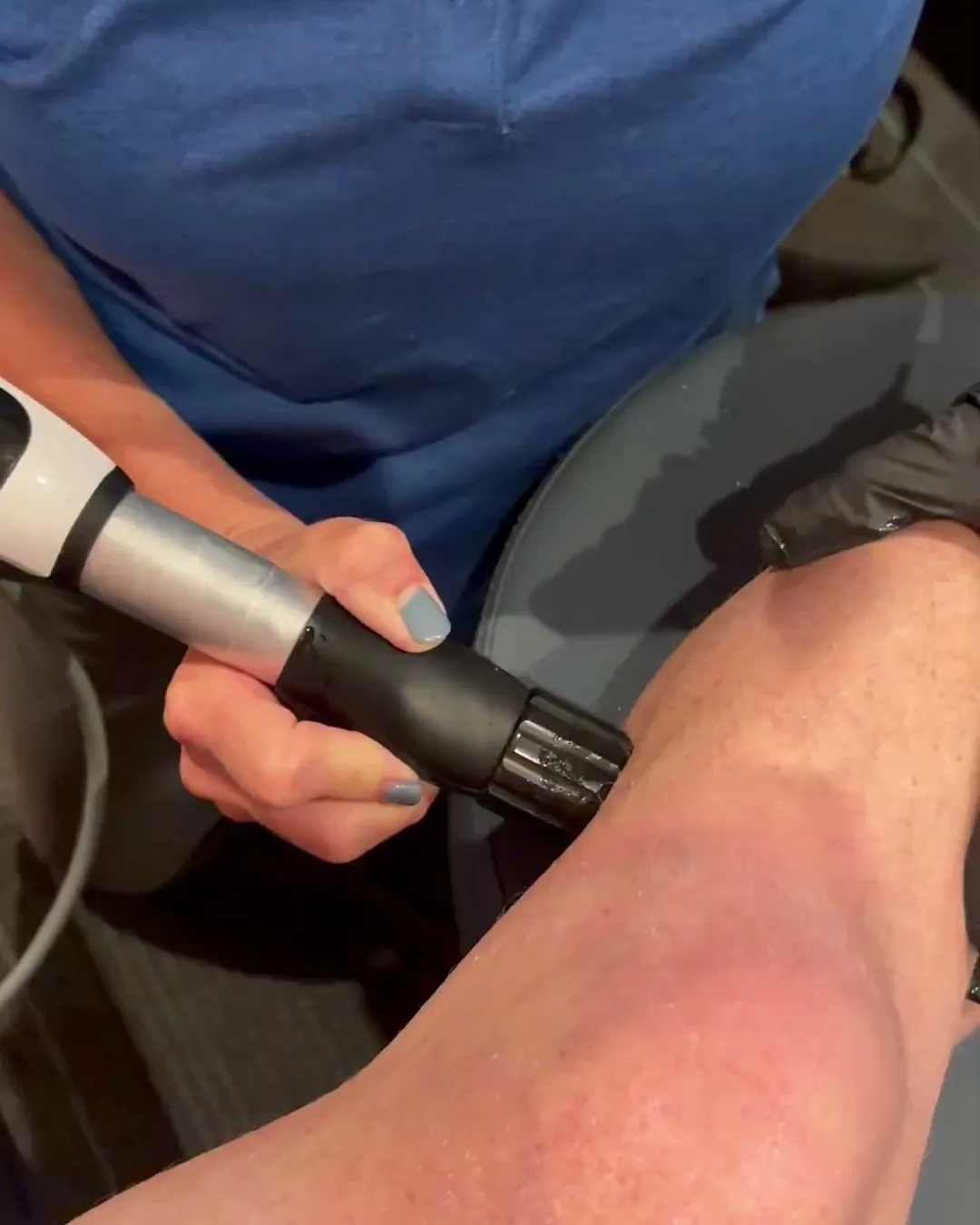
Shockwave therapy is an option for elbow tendon pain that has lasted more than about three months and has not improved with rest and exercise. AAOS notes some evidence suggests it can help, while many doctors still consider it experimental. It works best paired with a strengthening program.
Same-day appointments
Get an exam, a diagnosis, and a written plan — two North County offices, treatment on lien for injury cases.
Written by
Dr. Peter Thompson, DC
Doctor of Chiropractic
Dr. Peter Thompson is a doctor of chiropractic at Pacific Spine & Rehab, which has offices in Oceanside and Carlsbad (Bressi Ranch). He writes about back and neck pain, sports injuries, shockwave therapy, and recovery after auto accidents.